
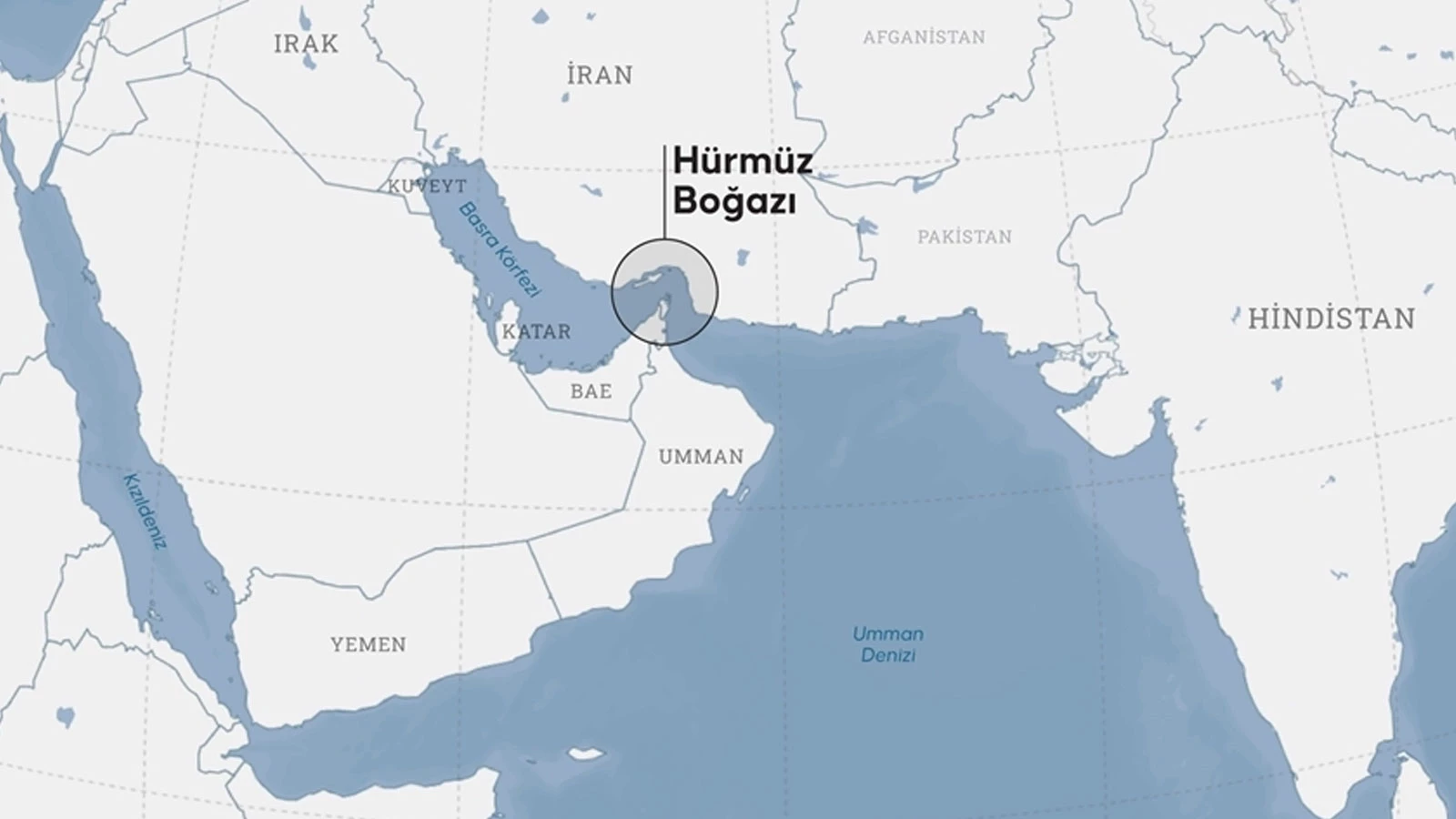
While the virtual closure of the Strait of Hormuz creates a shock wave in global energy and fertilizer markets, rising costs directly threaten farmers’ production schedule and global food supply security.
The military tension in the Middle East, which started with the US and Israel’s attacks on Iran on February 28, triggered a “chain” increase in agricultural input costs.
Disruptions in fertilizer and energy lines in the Middle East have paralyzed trade routes, which are considered the “jugular vein” of world agriculture, creating a risk of a deeper food shock than the Ukrainian crisis in 2022.
The halt of ship traffic in the Strait of Hormuz interrupted 38 percent of the global nitrate fertilizer supply and 20 percent of the phosphate fertilizer supply.
The halt in shipments from the Persian Gulf poses a direct food safety risk for farms around the world and shakes the global agricultural supply chain.
According to the information compiled by the AA correspondent from real-time data analytics company Kpler and global commodity analysis company CRU data, the crisis is deepening day by day in the Middle East, which is the epicenter of the global fertilizer and energy supply chain.
It is estimated that the closure of the Strait of Hormuz caused a total contraction of 33 percent in the global fertilizer supply chain. While the annual urea export of 22 million tons from the region came to a halt, approximately 46 percent of the global urea supply was provided directly from the Gulf region, further deepening the current situation.
While approximately one-third of the world’s urea exports are made through the Strait of Hormuz, 45 percent of global sulfur exports, which are the critical raw material in phosphate fertilizer production, are shipped through this strategic waterway.
Due to logistics disruptions, approximately half of the more than 2.1 million tons of urea stock planned to be exported in the last 2 weeks could not be loaded onto ships. Experts warn that this blockage in shipments may lead to yield losses during the global harvest period.
EXPECTATION TO CAUSE IRREVERSIBLE DECREASES IN RECORD
According to data from the Food and Agriculture Organization of the United Nations (FAO), the sustainability of modern agricultural production depends on the uninterrupted supply of more than 190 million tons of plant nutrition products used worldwide every year. The 110 million-ton nitrogen fertilizer group, which is at the center of this supply, is the most sensitive link to geopolitical crises due to the excessive dependence of the production process on natural gas. Fluctuations in energy prices put this largest group of the global fertilizer market in a direct cost grip.
After nitrogen, the other two pillars of global food security are the supply of 45 million tons of phosphorus and 40 million tons of potassium. Experts evaluate that the slightest disruption in the supply chain of these 3 basic agricultural inputs could lead to irreversible decreases in global yield estimates.
The Strait of Hormuz route is the world’s most important line not only for energy shipment but also for the delivery of strategic raw materials such as urea and ammonia to world markets.
In addition to Iran, Saudi Arabia, Qatar, the United Arab Emirates and Bahrain are among the largest suppliers of the global nitrogen fertilizer market. The start of the planting season in the northern hemisphere means that any disruption in shipping lines will directly affect agricultural productivity and food supply.
INCREASING ENERGY COSTS HIT PRODUCTION
The second major factor underlying the global fertilizer crisis was the sharp rise in energy prices. Natural gas prices, which account for approximately 80 percent of the cost of nitrogen fertilizer, have increased sharply. This situation forced giant facilities to stop production.
Developments in the Strait of Hormuz have triggered dramatic price increases in key fertilizer commodities such as urea and ammonia. Urea prices, which were at $482.50 per ton on February 27, increased by approximately 50 percent and reached $720 as of mid-March.
In the same period, ammonia prices ex-Middle East increased by 24 percent and reached the 600 dollar mark.
Attacks on the energy infrastructure in the region and successive “force majeure” declarations are narrowing global supply security day by day.
India, one of the world’s largest fertilizer consumers, made a strategic change in natural gas allocation in order to maintain domestic market balances and reduced the fertilizer sector to the second priority level.
Limiting the gas supply to the industry to the 70-75 percent band led to a net loss of approximately 800 thousand tons in India’s monthly urea production of 2.6 million tons. Disruptions in ammonia imports of the country, which meets 80 percent of its needs from the Gulf region, brought local production to a halt.
China, which is the center of global phosphate fertilizer production, imposed export restrictions due to half of its sulfur imports from the Middle East and the extreme volatility in sulfur prices.
With China’s withdrawal from the market and the interruption of shipments from Saudi Arabia, agricultural countries such as Brazil were unable to meet 30 percent of their phosphate needs and faced a serious “stock crisis”.
While the existing stocks in Australia, which supplies more than 60 percent of its urea needs from the Middle East, are expected to be exhausted by mid-April, the search for alternative sources is blocked by high logistics costs.
The European market, on the other hand, expects extraordinary bureaucratic steps to be taken, such as the suspension of the “Carbon Border Adjustment Mechanism” (CBAM) in the face of rising fertilizer costs.
While state-owned QAFCO in Qatar closed its urea facility with an annual capacity of 5.6 million tons due to disruptions in energy fields, giant producers such as Agritech Limited in Pakistan and Bangladesh stopped production completely.
On the other hand, international credit rating agency Fitch Ratings increased its 2026 price expectations for ammonia and urea by approximately 25 percent.
The organization pointed out that there are uncertainties about how long the conflict and disruptions in transit will last, and warned that a longer closure in Hormuz could push fertilizer price assumptions even higher.
Fitch stated that the products that will be most affected by the closure of the Strait of Hormuz are nitrogenous fertilizers.
US FARMERS WRITE A LETTER TO TRUMP
In the United States, the world’s largest food exporter, farmers enter the spring planting season with a heavy financial burden.
The American Farm Bureau Federation (AFBF) has warned that corn and grain production is facing “catastrophic” timing as diesel prices exceed $5 per gallon.
AFBF President Zippy Duvall, in his letter to US President Donald Trump last week, requested that agricultural inputs be declared a “strategic priority” immediately.
Duvall stated that this situation would not only be a threat to food security, but could also contribute to inflationary pressures throughout the US economy, and made suggestions such as ensuring shipment security by using the US navy and overcoming insurance and financing obstacles with federal tools.
SECOND LARGEST CUT IN GLOBAL FERTILIZER PRODUCTION AFTER 2022
Global fertilizer production was previously severely disrupted with the start of the Russia-Ukraine War in 2022.
US Fertilizer Institute (TFI) Chief Economist Veronica Nigh stated that if the conflict in the Middle East continues, the situation will become much worse than when the Ukraine-Russia War began.
FAO Chief Economist Maximo Torero also stated that the energy shock triggered by the conflicts in the Middle East hit the global food system through the fertilizer markets, and emphasized that the insurance crisis in maritime transportation brought the supply to a halt.
“The loss of Gulf exports causes a sudden global deficit with no quick replacement. Moreover, there are no strategic international stocks for fertilizer as there are for oil,” Torero said. he said.
Stating that the most concrete blow of the crisis was experienced in logistics costs, Torero noted that the insurance premium, which was 0.25 percent of the ship value before the crisis, jumped to 10 percent for high-risk ships.
Stating that the insurance industry focuses on concrete damage records rather than diplomatic progress, Torero said, “Even if the conflicts end tomorrow, it will take months to return to normal transportation capacity. Insurance companies will reduce premiums only after seeing that there are no new damage records for a long time.” he said.
Stating that this situation means “high transportation costs and a great loss in global competitiveness” for fertilizer exporters in the region, Torero underlined that the only way to stabilize the global food system is to reopen the Strait of Hormuz to traffic through diplomacy.
On the other hand, analysts stated that Russia reached a record export level of 45 million tons in fertilizer last year, and that it does not seem possible to fill the huge gap created by the military conflicts in the Middle East in the short term, since existing facilities operate at full capacity and new export-oriented facilities will only come into operation after 2027.
