
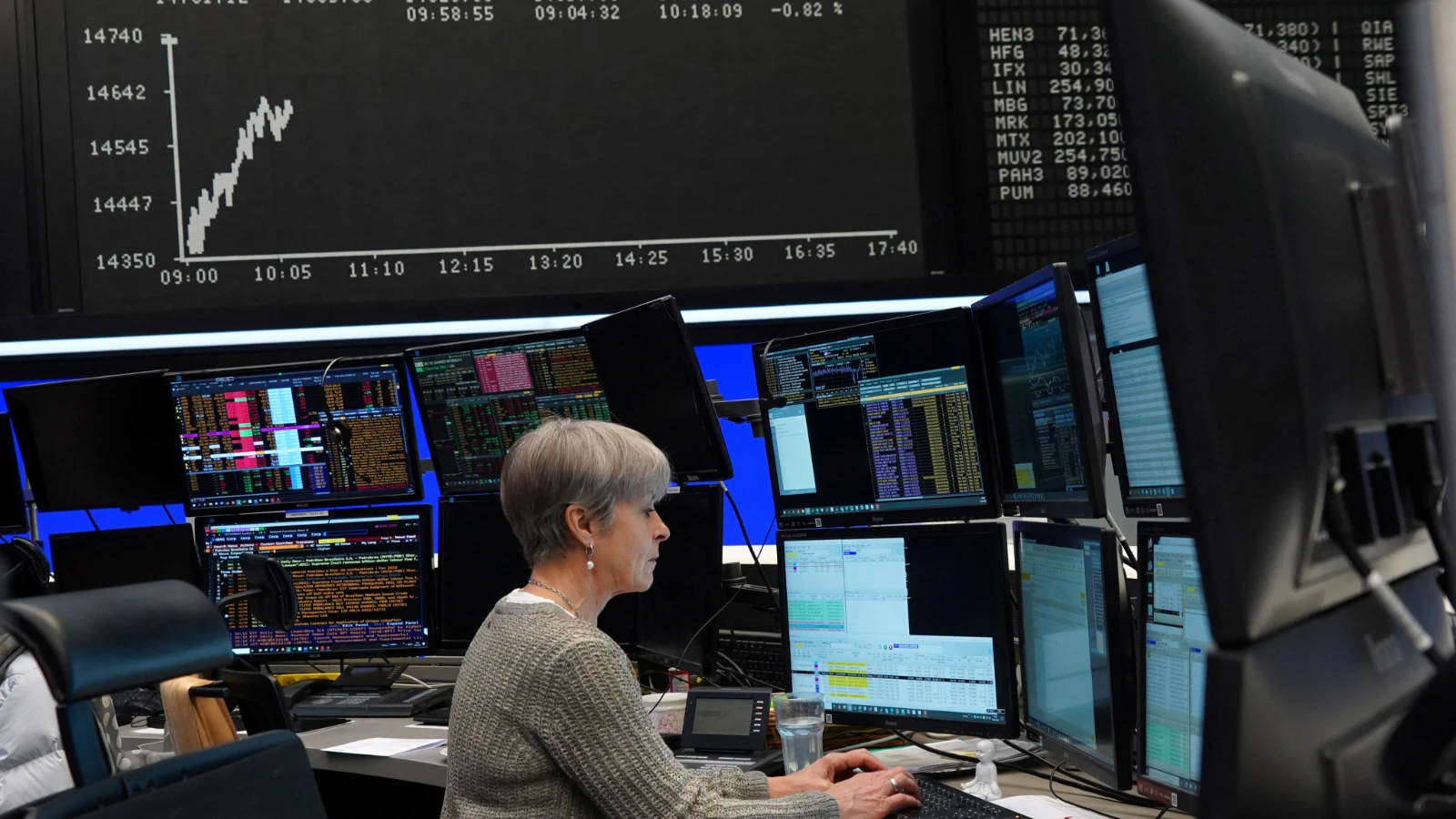
While European stock markets followed a negative course due to the tension in the Middle East and the rise in energy prices, the interest rate decisions to be taken by the European Central Bank (ECB) and the Bank of England (BoE) on the new day became the focus of investors.
The increase in oil and natural gas prices, due to the fact that the Strait of Hormuz remains closed and an agreement has not yet been reached between the USA and Iran, puts pressure on the stock markets. This situation also threatens the stability of the global economy in the future.
Energy costs continue to rise, increasing risks in terms of inflation and growth. In this process, leading central banks are expected to maintain their cautious stance.
In the money markets, it is considered certain that the ECB will keep the three main policy rates and the BoE will keep the policy rate constant. The verbal guidance of ECB President Christine Lagarde and BoE Governor Andrew Bailey will be closely followed by investors.
A negative trend stands out in the region due to increasing global risk perception and investors’ aversion to risk ahead of important central bank decisions.
As of 10.15 in European markets, the Stoxx Europe 600 indicator index is at 599 points, with a 0.5 percent decrease, and the FTSE 100 index in the UK is at 10,200 points, with a 0.1 percent decrease.
In Germany, the DAX 40 index is at 23,794 points with a 0.6 percent loss of value, in Italy the FTSE MIB 30 index is at 47,224 points with a 1.2 percent loss, in France the CAC 40 index is at 7,984 points with a 1.1 percent decrease and in Spain the IBEX 35 index is at 17,210 points with a 2.6 percent decrease.
European Union (EU) Commission President Ursula von der Leyen, in her statement at the European Parliament (EP) General Assembly held in Strasbourg, said that the EU spent more than 27 billion euros on fossil fuel imports in 60 days due to the ongoing war in the Middle East, and that the effects of the conflict could last for years.
EU PREPARATIONS TO AID TO SECTORS AFFECTED BY THE WAR
On the other hand, the EU Commission announced that a temporary state aid framework was adopted to ensure that member countries can support their economies during the crisis originating from the Middle East.
The framework will be implemented as a targeted and temporary support mechanism for companies operating in agriculture, fisheries, transportation and energy-intensive sectors.
Analysts stated that an intense data agenda will be followed for the rest of the day, especially inflation and growth in the Eurozone, personal consumption expenditures and growth data in the USA, as well as developments in the Middle East and energy prices.
