

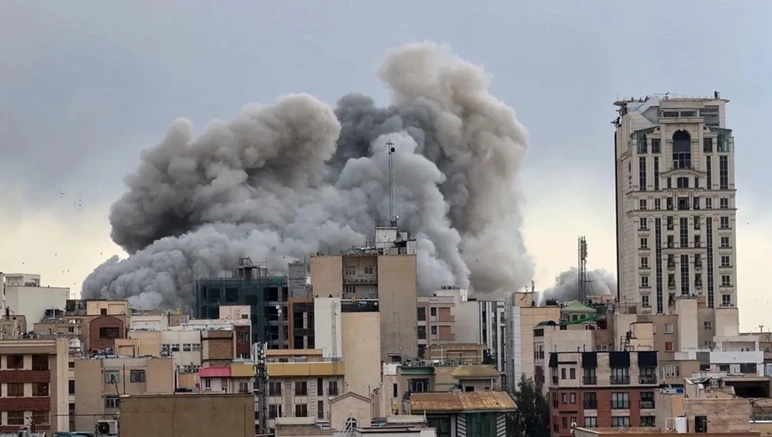
The war, which started with the attacks of the USA and Israel against Iran, is evolving into a global economic crisis. While Iran’s announcement that it will continue its strategy of keeping the Strait of Hormuz closed creates a shock wave in the oil markets, the rise in energy prices puts pressure on a wide range of areas, from global production costs to Türkiye’s current account deficit. While Deutsche Bank Turkey Economist Yiğit Onay’s increase in the year-end inflation forecast to 25 percent and the policy rate expectation to 31 percent reflects possible risks, Treasury and Finance Minister Mehmet Şimşek’s warning that “if the war is prolonged, there will be a serious inflation risk” also increases concerns. On the other hand, the 40.1 percent annual increase in the Agricultural Products Producer Price Index in February reveals that food inflation will be one of the main risk items in the coming period. In particular, the possible increase in diesel and fertilizer costs is expected to deepen price pressure by further increasing agricultural production costs.
COST INCREASE
While the rise in oil prices increases inflation pressure around the world, it creates an impact that may disrupt economic balances, especially in countries dependent on energy imports. The increase in energy costs directly affects not only fuel prices but also many areas of the global production system. According to analysis by BMO Capital Markets Every 10 percent increase in oil prices leads to serious cost increases in energy-intensive sectors. This increase increases iron ore production costs by approximately 4.2 percent, copper mining costs by 3.5 percent and gold production costs by approximately 2 percent.
IT AFFECTED INVESTORS
On the other hand, as the war drags on, Türkiye’s financial market is also negatively affected. While increasing geopolitical risks cause global investors to turn to safer havens, this situation also weakens capital flows to emerging markets such as Türkiye. In the analysis, attention is drawn to the exit of foreign investors from Turkish markets. According to Central Bank data In the week after the start of the war, foreign investors sold 1 billion 725.5 million dollars of government bonds and 755.6 million dollars of stocks, making a total outflow of 2 billion 422 million dollars. Thus, Turkish markets faced one of the harshest foreign sales of the last 11 months.
CURRENT ACCOUNT DEFICIT IS INCREASING
The environment of uncertainty created by the war also affected the Central Bank’s monetary policy decisions. The bank kept the policy rate constant at 37 percent at the second Monetary Policy Committee meeting of the year. Overnight lending interest was left at 40 percent and overnight borrowing interest was left at 35.5 percent. The rise in energy prices is seen as one of the most critical risks for Türkiye. Since Türkiye is an economy that meets most of its energy needs through imports, the rise in oil prices directly affects the current account deficit.
INFLATION WILL RISE
The rise in energy prices also affects inflation expectations. According to the results of the Central Bank’s Market Participants Survey, the 12-month inflation expectation increased from 22.10 percent to 22.17 percent, while the year-end inflation expectation increased to 25.38 percent. The squeeze in the economy continues to be reflected in the real sector. The number of enforcement files, which was 23 million 444 thousand at the end of last year, increased to 24 million 402 thousand as of March 11. Thus, there was an increase of 407 thousand files in the first months of the year. The number of enforcement files increased by 80 thousand 529 in the 11-day period after the US and Israel’s attack on Iran. According to UYAP data, the number of new daily enforcement files increased by 4.2 percent compared to last year’s average, reaching 5 thousand 827.
INTEREST EXPENSES
Commenting on the negative effects of the war on the economy, Institutional Economics Expert Gülsev Durun said, “The prolongation of the war is shaking the markets. So that; The current account deficit, previously announced as 25.2 billion dollars, was increased to 30.1 billion dollars with the update of interest expenses. Net errors and omissions item was revised from 16.6 billion dollars to 12.7 billion dollars. “After this update, the ratio of current account deficit to national income was increased from 1.6 percent to 1.9 percent.”
ESTIMATED 26 PERCENT
Economics Expert Tuğrul Belli drew attention to the economic risks that could be caused by the prolongation of the war and brought the following findings to the agenda: “Although the transition to the Esel mobile system has prevented all price increases from being reflected in pump prices, if they remain at these levels, fuel prices can be expected to contribute approximately 2.5 percent to inflation. Therefore, “It will not be a surprise if the market’s year-end inflation expectation, which is around 23 percent, rises to 25-26 percent.”
(email protected)
