
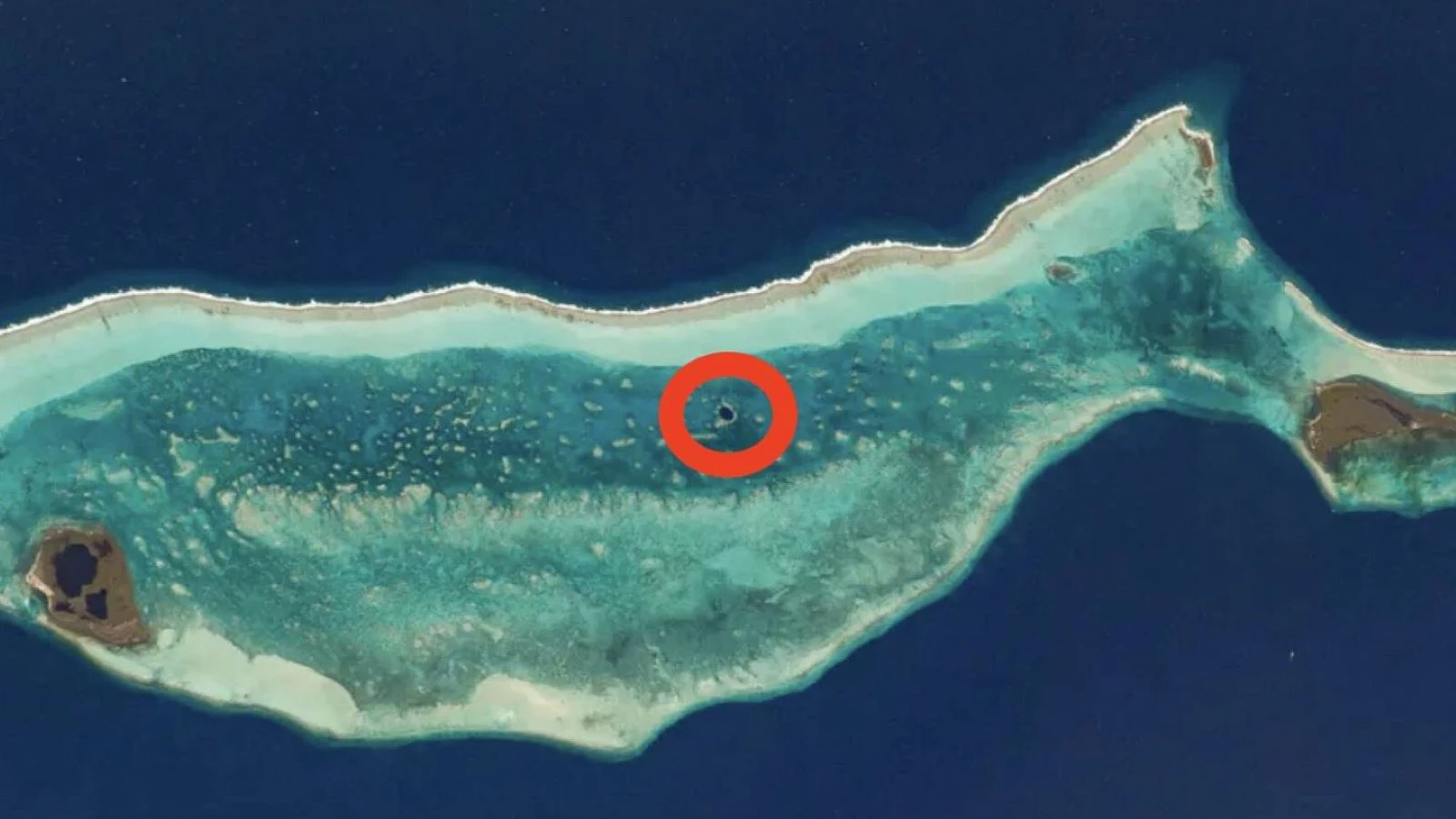
The photo shared by NASA’s Earth Observatory reveals the unusual geological structure of this region. The structure, which is located in the middle of the approximately 42 kilometer long atoll and looks like a whale’s breathing hole when viewed from above, is actually known as one of the most striking marine formations in the world.
The secret at its center: The Great Blue Hole
At the center of this impressive image is a giant underwater pit known as the “Great Blue Hole”. This formation, which has a width of approximately 318 meters and a depth of 124 meters, is clearly distinguished by its dark color amidst the turquoise shallow waters.
According to scientists, this structure was actually a cave system that existed outdoors thousands of years ago. It was submerged about 10 thousand years ago as sea levels rose after the last ice age. The stalactites and stalagmites still found in the region today are among the important evidence supporting this theory.
Both fascinating and dangerous
The Great Blue Hole, which gained international fame after the famous explorer Jacques Cousteau discovered the region in the 1970s, is one of the most popular spots in diving tourism today. In more recent research, the first three-dimensional map of the structure was produced.
However, this natural wonder is very interesting not only from an aesthetic point of view but also from a scientific point of view. Research has revealed that there is no oxygen in the depths of the pit and there is a layer of hydrogen sulfide approximately 33 meters thick. This layer creates a deadly environment for most marine creatures.
It is included in the UNESCO heritage
Lighthouse Reef is also part of the Belize Coral Reef System and is on the UNESCO World Heritage list. Area; It hosts a rich ecosystem with fish, sea turtles, crocodiles and various bird species.
