
According to experts, Pompeii was not destroyed only by the eruption of Mount Vesuvius in 79 AD. The city was founded about a century ago, B.C. It was surrounded by the Roman army in 89 and various damages occurred on the walls during this process. Until now, most of these traces were considered to be classic battle scars created by stones thrown from catapults.
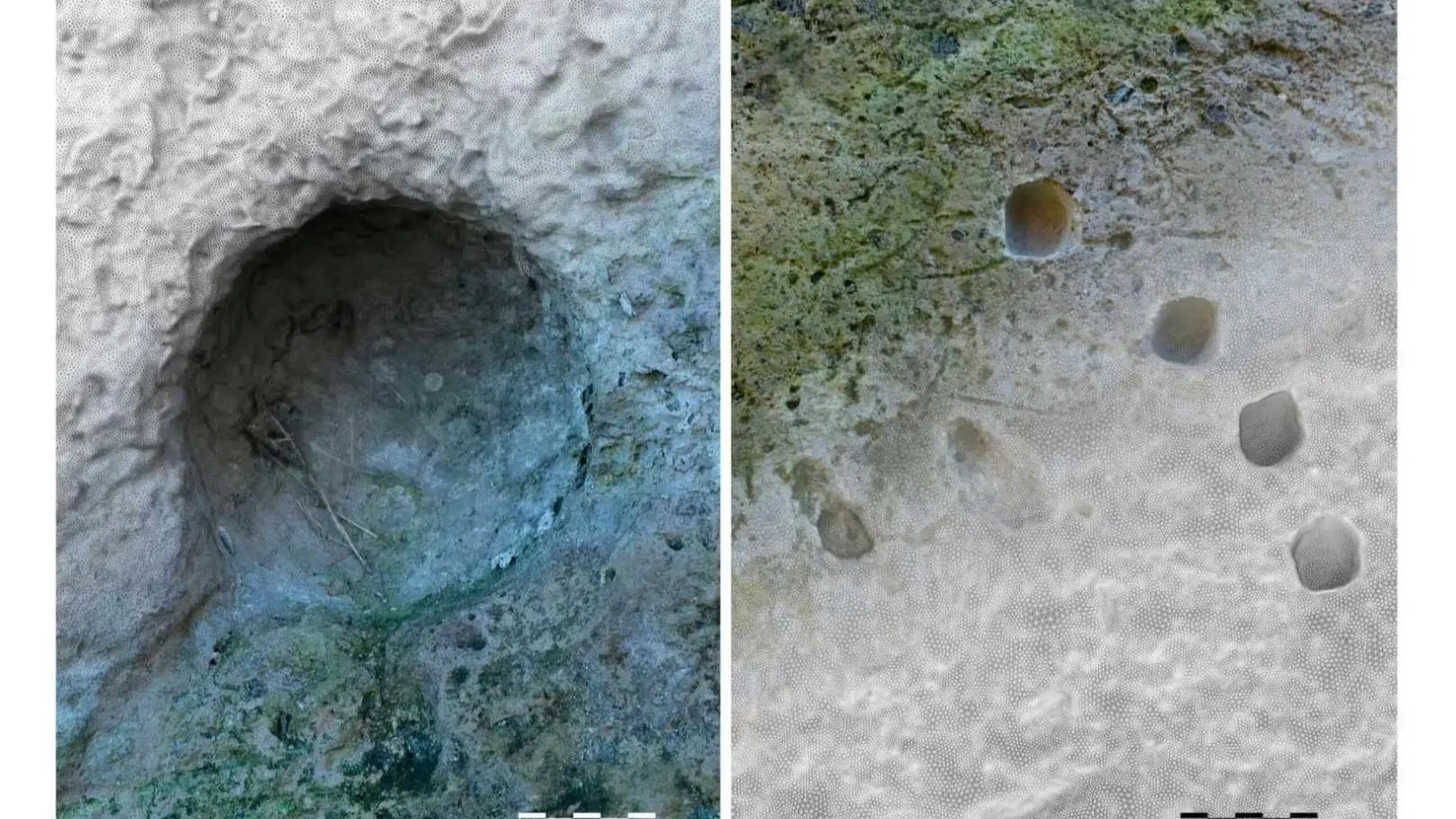
However, recent research has revealed that some of the small and angular marks seen on this surface do not correspond to any known Roman weapons. Using advanced laser scanning and three-dimensional modeling techniques, Italian researchers determined that these traces were not formed randomly, but were clustered in a certain order and directed towards the same target.
According to scientists, the most likely explanation for these traces is a war machine called “polybolos” mentioned in ancient sources. B.C. This system, described in the 3rd century, is known as a mechanical mechanism that can fire bullets sequentially. In this respect, it is considered a primitive version of modern automatic weapons.
Researchers believe that the shape and distribution of the tracks indicate small metal-tipped bullets that were fired repeatedly at high speed. This indicates that the goal during the siege may not have been to directly destroy the walls, but to neutralize the defending soldiers.
The findings show that the war technology of the Roman army may have been more advanced than thought. According to experts, the use of such a system reveals that Rome had not only military power but also advanced engineering knowledge.
Another striking aspect of the research is that these traces have survived to the present day. The fact that the city was buried under layers of ash and stone after the eruption of Mount Vesuvius ensured the preservation of these details on the walls. In this way, Pompeii became a unique site for studying ancient warfare techniques.
You can read the original article in question here.
