
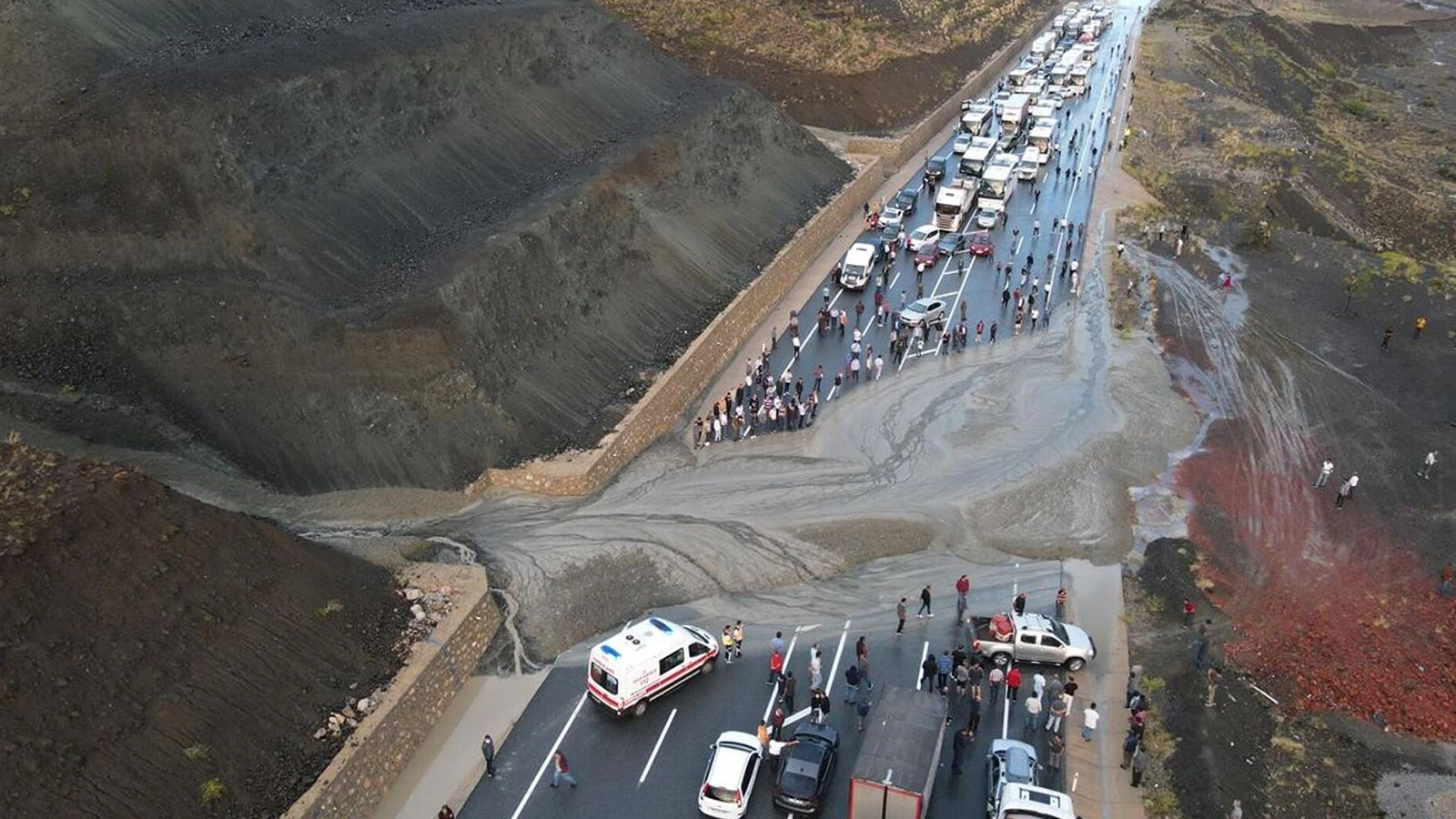
Disaster risk in Türkiye is increasing day by day due to human-induced interventions. In climate models, the increase in fatal landslides reveals the extent of disaster risk. A comprehensive study published in the journal Science Advances revealed alarming findings regarding the Western Black Sea. According to the research, while Türkiye ranks first in Europe in terms of fatal landslides, the cool and humid climate structure of the Western Black Sea will be dragged into a hotter, drier and more fragile character in the coming years. The research, published in Science Advances and examining approximately 60 years of land use and 45 years of population data of 46 countries, revealed that landslide deaths cannot be explained only by natural factors such as rainfall, slope and geological structure.
Türkiye IS ABOVE AVERAGE
According to the research, landslide risk is no longer explained only by rain, slope or ground structure. Destruction of forests, expansion of agricultural areas, road and infrastructure works and unplanned construction are among the main factors that increase the risk. Moreover, it is stated that in many places the impact of these human-induced interventions has become more decisive than even natural conditions. Globally, human intervention in mountainous areas reaches up to 50 percent in low- and lower-middle-income countries, while this rate remains at approximately 7 percent in high-income countries. TuWith 32 percent, rkiye is well above the 13 percent average of the group of upper-middle income countries it is in.
389 FATAL LANDSLIDE
According to the FATALDOT database, there were 389 fatal landslide events in Türkiye between 1929 and 2019, and 1,343 people lost their lives. Of the 1,375 landslide deaths recorded in Europe between 1995 and 2014, 335 occurred in Türkiye alone. The research points out that Türkiye’s mountainous landscape has been reshaped not only by natural processes but also by long-term human interventions. 1It is stated that while the share of forests in mountainous areas increased from 13.6 percent to 18 percent between 2019 and 2019, the share of urban areas increased approximately 6.5 times. It is emphasized that the most striking transformation took place in the transition from grassland and scrub areas to pasture and agricultural areas.
WESTERN BLACK SEA WILL DRY!
On the other hand, according to the climate modeling study published in the Natural Hazards magazine by scientists from Kastamonu University, the cool and humid climate structure of the Western Black Sea will change significantly in the coming period. According to the study, dry areas will begin to appear in the region as of 2040. In the pessimistic scenario where emissions continue to increase at their current rate, yAt the end of the century, 41 percent of the Western Black Sea region will become arid and 57 percent will become semi-arid.. Thus, the very humid areas that dominate the region today will almost completely disappear. This result points to a radical break in the climate identity of the Western Black Sea region, which has been prominent until today. This makes Türkiye the country where landslide-related deaths attract the most attention in Europe.
TEMPERATURE RECORD WILL BE BREAKED
Temperature projections also reveal the extent of the transformation. According to model results, average temperatures in the region are expected to rise to 20-22 degrees by the end of the century. Today, average temperatures in the Western Black Sea region are between 8-10 degrees. This increase means longer heat waves, more evaporation and a higher risk of fire.
FLOODS WILL BE DESTRUCTIVE
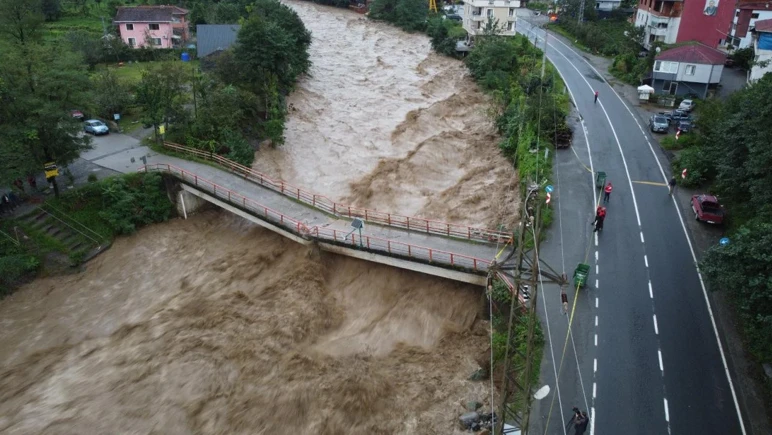
Water Policy Expert Dursun Yıldız pointed out that the disaster situation in Türkiye has now become a much more complex structure and said, “Landslide research, It reveals that changing precipitation regimes with climate change and more intense precipitation in a short period of time further increase the danger on slopes that have already been weakened by human intervention.. Since rainfall is expected to increase especially in the northeast of Türkiye, it will inevitably increase the risk in areas prone to landslides. While the major floods experienced in the Western Black Sea region and the forest fires seen throughout Turkey in recent years show that the effects of climate change are now felt in the field, modeling results reveal that floods may be more sudden and destructive in the coming period, drought periods may extend and forest fires may spread to larger areas. “Decrease in agricultural productivity, deterioration in forest ecosystems and fluctuation in hydroelectric production are among the prominent risks,” he says.
(email protected)
