
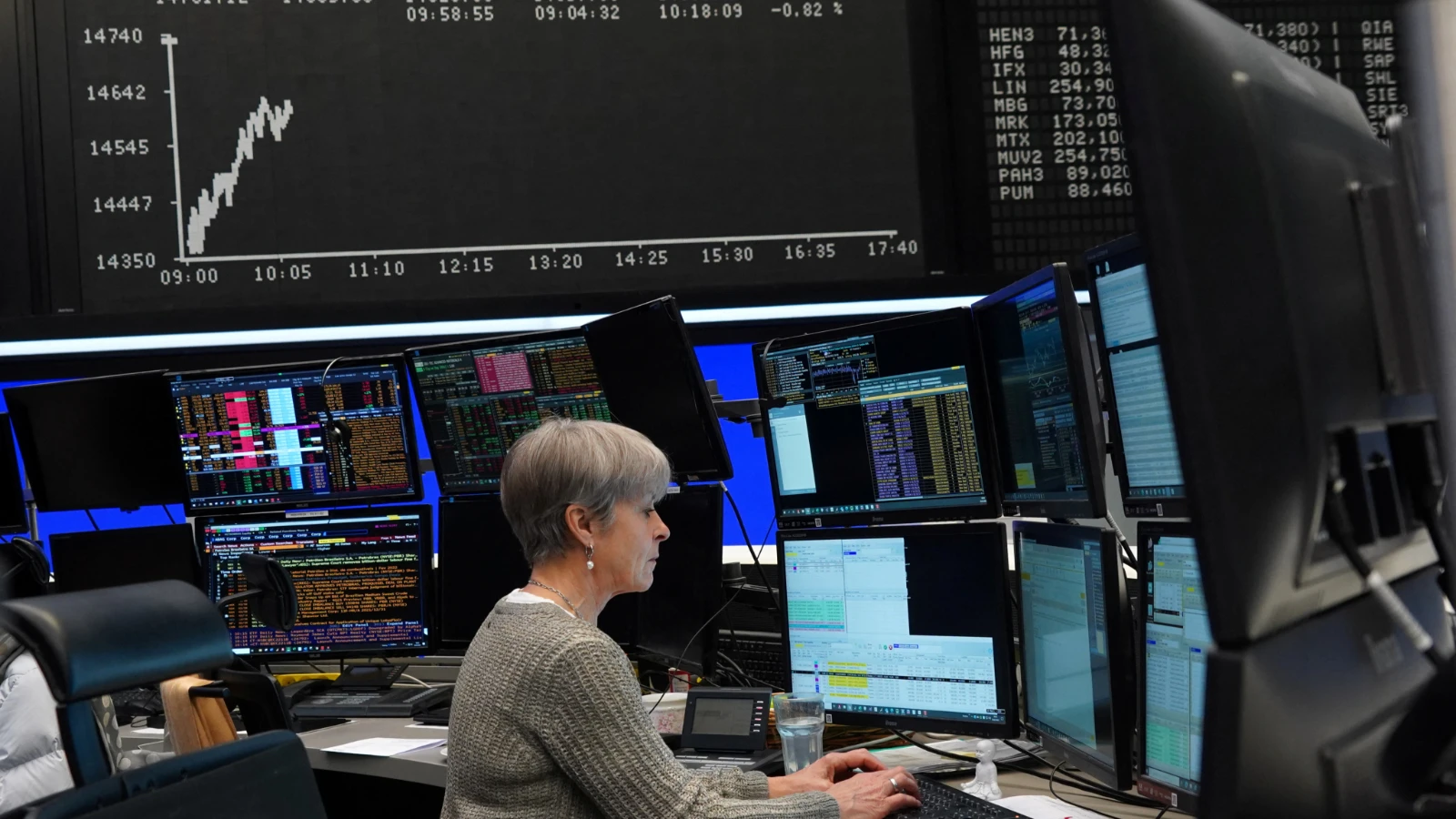
While European stock markets were negative due to the conflict in the Middle East increasing oil prices, investors’ focus turned to the monetary policy decisions of the European Central Bank (ECB) and the Bank of England (BoE).
As of 11.20 in European markets, the Stoxx Europe 600 indicator index is traded at 590.5 points, with a 1.2 percent decrease, and the FTSE 100 index in the UK is traded at 10,182 points, with a 1.2 percent decrease.
In Germany, the DAX 40 index is traded at 23,143 points, with a 1.6 percent decrease in value, in Italy, the FTSE MIB 30 index is traded at 44,158 points, with a 1.3 percent decrease, in Spain, the IBEX 35 index is traded at 17,048 points, with a 1.5 percent decrease, and in France, the CAC 40 index is traded at 7,877 points, with a 1.2 percent decrease in value.
Following the targeting of oil refineries by the US-Israel, Iran’s statements that it would strike US-linked oil facilities in Saudi Arabia, the United Arab Emirates and Qatar, and attacks on some energy facilities supported the rise in oil prices.
Increasing energy costs increased concerns about the inflation outlook and put pressure on global markets.
On the monetary policy front, the Fed kept the policy rate constant in the range of 3.5-3.75 percent, in line with expectations.
While it is certain that the ECB will not change the 3 main policy rates today, it is predicted that the bank may tighten earlier than expected due to the tensions in the Middle East.
BoE, whose interest rate cut expectation came to the fore at the beginning of the month, is expected to keep its policy rate unchanged.
Analysts stated that geopolitical and political developments in the region and oil prices will be monitored for the rest of the day, and that the intense data agenda, especially the ECB and BoE interest rate decisions, will be closely followed.
