
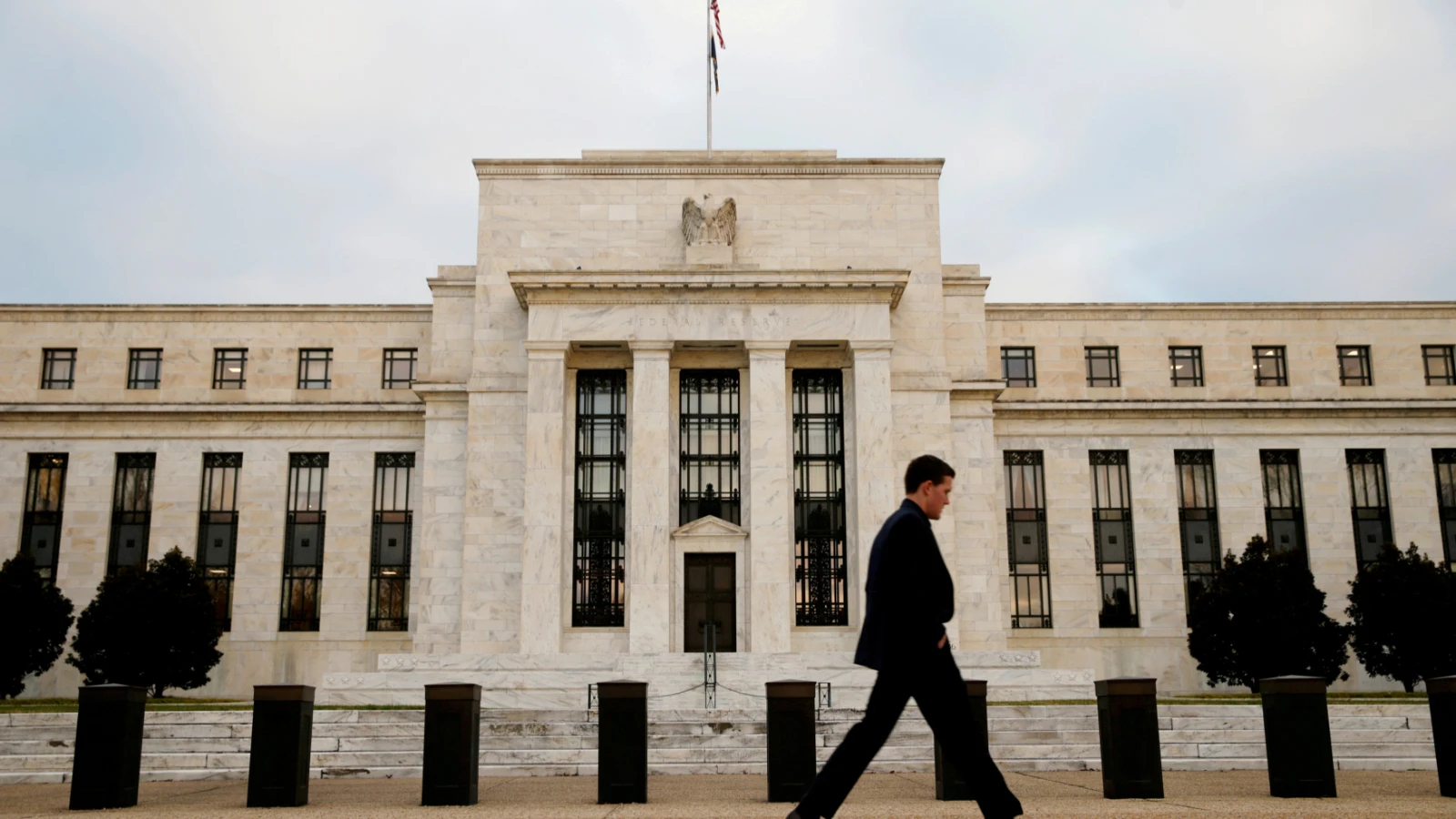
As global central banks prepare to enter April under the shadow of ongoing conflicts in the Middle East, inflationary concerns arising from rising energy costs are being followed as the main agenda item.
After Israel and the USA launched an attack against Iran on February 28, the rising tension in the Middle East has completed its first month. Iran’s almost complete halt of transit through the Strait of Hormuz has deeply shaken the global energy supply network.
While the conflicting messages received by the USA and Iran regarding the course of the war caused the global risk perception to remain high, the continued increase in oil prices led to a strengthening of global inflation concerns.
Significant changes in the interest rate paths of major central banks in the last month were noticeable in the pricing in money markets. The previous “dovish” expectations for the banks in question were replaced by “hawkish” predictions.
In the shadow of these developments, a busy calendar awaits central banks in April. Next month, the monetary policy decisions of many central banks, including the US Federal Reserve (Fed), the European Central Bank (ECB), the Bank of England (BoE), the Bank of Japan (BoJ), the Central Bank of New Zealand (RBNZ), the Central Bank of South Korea and the Central Bank of the Republic of Turkey (CBRT), will be followed.
FED’S EXPECTATIONS ARE TURNED TO THE MIDDLE EAST
In the USA, the Fed is expected to pass on its decision to be announced on April 29. Concerns that rising energy costs due to conflicts in the Middle East could increase inflationary pressures postponed this year’s interest rate cut expectations for the Fed.
During the period when geopolitical tensions are in focus, Fed Chairman Jerome Powell’s verbal guidance is expected to shed light on the Fed’s road map for the upcoming period.
In his latest monetary policy decision, Powell stated that the effects of the developments in the Middle East on the US economy are uncertain and said, “In the short term, rising energy prices will push up general inflation, but it is too early to know the scope and duration of possible effects on the economy.” he said.
In the money markets, it is considered certain that the bank will keep the policy rate constant in April. Possibilities of interest rate cuts by the Fed have given way to possible, albeit weak, price hikes by the end of the year.
On the other hand, it is estimated that the Bank of Canada, which will announce its monetary policy decisions on the same day, will keep the policy rate constant at 2.25 percent.
– “Tightening” is expected in Europe after sharp pricing changes
In Europe, expectations for a 25 basis point increase in the three main policy rates at the ECB’s monetary policy meeting on March 30 stand out. Before the tensions in the Middle East, the ECB was expected to keep the 3 main policy rates constant for the next month.
It is predicted that fluctuations in energy prices in the Eurozone may increase inflationary pressures in regional economies that are fragile in terms of energy supply. It is noteworthy that the region, which is currently experiencing energy problems resulting from the Russia-Ukraine War, is hit harder by increasing oil and natural gas prices.
While it is priced in the money markets that there is a 65 percent probability that the ECB will increase the 3 main policy rates by 25 basis points, predictions that the bank may increase 3 interest rates of 25 basis points each throughout the year stand out.
On the other hand, the decisions of the Central Bank of Hungary (MNB) and the Central Bank of Poland (NBP), as well as the monetary policy decisions of the Central Bank of Russia (CBR), will be followed in the region.
EXPECTATIONS HAVE BECOME DUMB IN BOE
In the UK, the expectation that the BoE may take “hawkish” steps due to concerns that inflationary risks may gain strength again in the coming period after the conflicts in the Middle East have pushed energy prices up, has an impact on pricing.
It is priced in the money markets that the BoE may increase the main policy rate with a 55 percent probability in the monetary policy decisions to be announced on April 30.
In its policy decision in March, where the BoE kept the policy rate constant at 3.75 percent, it was pointed out that there was a continuous decline in domestic prices and wages before the tension in the Middle East, and said, “As a result of the shock in the economy, inflation will rise to higher levels in the near term.” evaluation was made.
In the statement, it was stated that it remains unclear how long the tension in the Middle East and the decrease in energy supply from there will last, and it was stated that even if the tension subsides, it may take time for the energy supply to return to normal.
FIRST INTEREST RATE INCREASE OF THE YEAR MAY COME FROM BOJ
On the Asian side, it is priced in the money markets that there is a 69 percent probability that the BoJ in Japan will increase the policy rate by 25 basis points at the meeting to be held on April 28, and if this increase occurs, the bank will take the first tightening step of the year.
While predictions of two interest rate increases of 25 basis points for the bank throughout the year come to the fore, the messages of economic officials regarding the effects of the tension in the Middle East are followed closely.
The monetary policy decision of the Central Bank of South Korea will be announced on April 10. Although the predictions regarding the decision are not yet clear, opinions that the policy rate will be kept constant at 2.5 percent are gaining ground.
On the other hand, the interest rate decision of RBNZ, one of the other important central banks in New Zealand, is also in the focus of investors. Based on the pricing in the money markets, it is considered certain that the bank will keep the policy rate constant in its decision to be announced on April 8.
DOMESTIC INVESTORS WILL FOCUS ON THE INTEREST RATE DECISION OF THE CBRT
Domestically, the CBRT’s monetary policy decision is the focus of investors. CBRT’s third monetary policy decision of the year will be announced on April 22.
In its last decision, the CBRT kept the policy rate constant at 37 percent. In the policy text, it was stated that the effects of geopolitical developments on the inflation outlook through the cost channel and economic activity were closely monitored.
Analysts stated that the signals to be received from the interest rate decision and policy text to be announced next month are closely followed by investors, and that the March inflation data to be announced is the focus of economic circles.
