
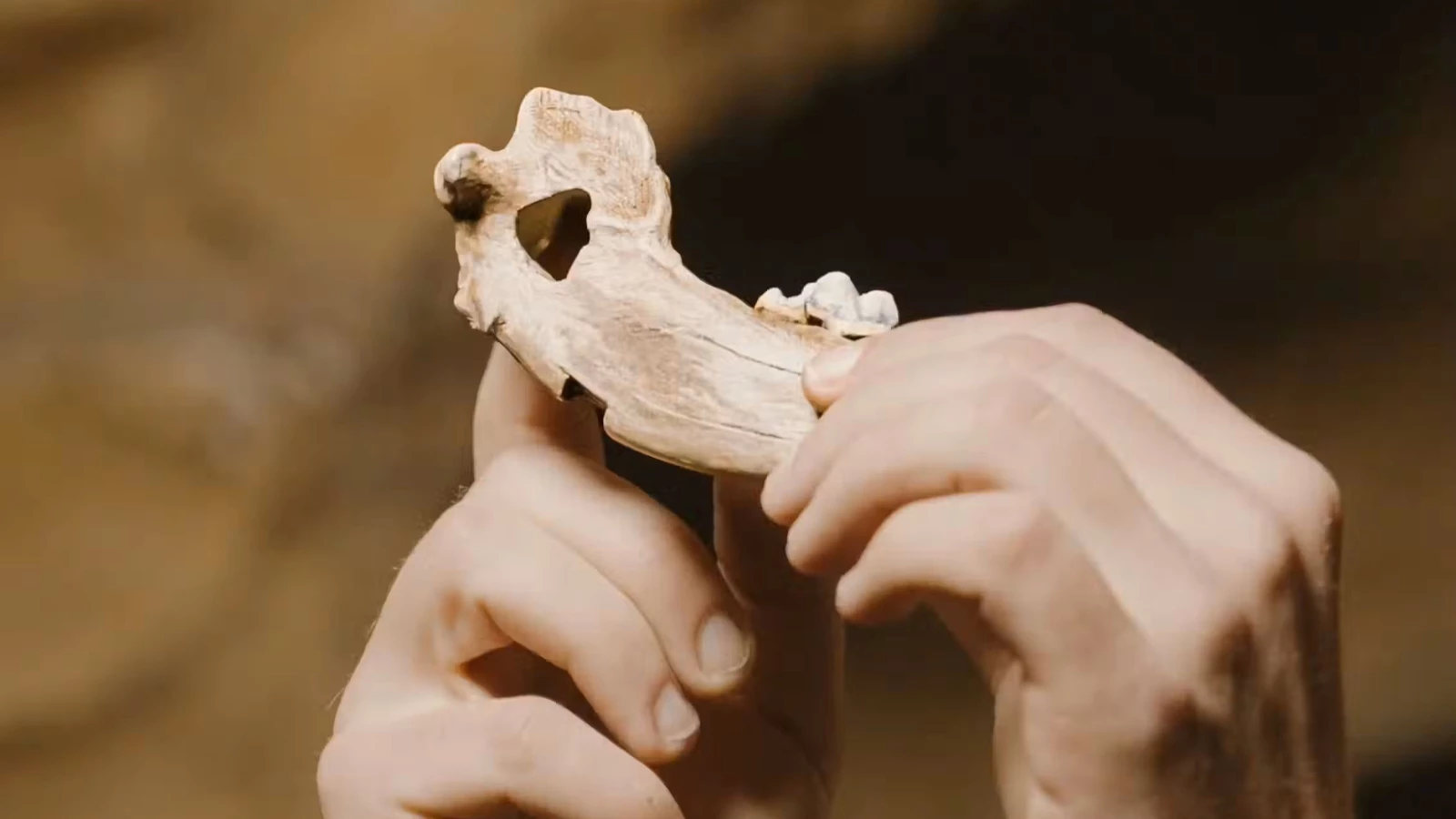
Previous genetic studies dated the emergence of dogs to approximately 10-11 thousand years ago. However, new findings strongly suggest that the relationship between humans and dogs began much earlier, towards the end of the last Ice Age.
Dog or wolf? That was the big challenge.
One of the biggest obstacles to understanding this historical relationship was the similarity of early dogs to wolves. Distinguishing the bones of these animals, which have almost the same appearance as their ancestors, has been a major problem for scientists for many years.
However, thanks to advances in ancient DNA analysis technologies, this problem has been largely overcome. Studies on highly fragmented and sensitive genetic materials have begun to provide much clearer data about the past.
The oldest genetic evidence is from Türkiye
One of the studies was led by William Marsh of the Natural History Museum, London. In the study, dog remains dating back approximately 15,800 years were identified in Pınarbaşı, located in today’s Turkey. Additionally, approximately 14,300-year-old specimens were found in Gough’s Cave in England.
These findings show that dogs spread to different parts of Europe and Anatolia 14 thousand years ago. In other words, this situation was a process that spread over a wide geography rather than a local development.
Intimate relationships with humans began very early
Archaeological findings show that dogs not only lived together but also formed a close relationship with humans. For example, some analyzes indicate that people feed fish to dogs. In addition, findings regarding the burial of dogs reveal that this relationship may have a social and even symbolic dimension.
Genetic comparisons reveal another interesting detail: These ancient dogs are more similar to today’s European and Middle Eastern dog breeds (for example, boxers or Persian greyhounds). In contrast, they bear less similarity to arctic breeds such as the Siberian husky.
The genetic heritage of dogs has survived to the present day
In the second study, more than 200 dog genomes dating back 14 thousand to 1,000 years ago were examined in Europe. The results revealed that genetic continuity was quite strong in European dogs.
In other words, even after the transition to agricultural societies, dogs continued to carry the genetic characteristics of hunter-gatherer period dogs to a large extent. New dogs from Southwest Asia during the Neolithic period mixed with the European population, but did not completely replace existing breeds.
What were the first dogs used for?
Scientists do not know exactly what the first dogs were used for. However, according to available data, these animals may have helped in hunting, served as an alarm against dangers, and supported humans in activities such as fishing.
This cooperation may have provided a great advantage in terms of survival in harsh living conditions.
The origin of friendship is being rewritten
For many years, dogs were thought to originate from East Asia. But new research shows that this process also played an important role in Western Eurasia.
Although it is still unclear exactly where and how dogs were domesticated, one thing is now certain: the bond between man and dog was born not in villages and agricultural societies, but much earlier, in a harsh and uncertain world.
And this bond remains one of the oldest friendships that still endures today.
