
US birthright
Supreme Court examines: US citizen by birth or not?
Updated April 1, 2026 – 5:46 amReading time: 4 minutes

Anyone born in the USA automatically receives citizenship. Actually, the Supreme Court made that clear more than a hundred years ago. President Trump doesn’t care.
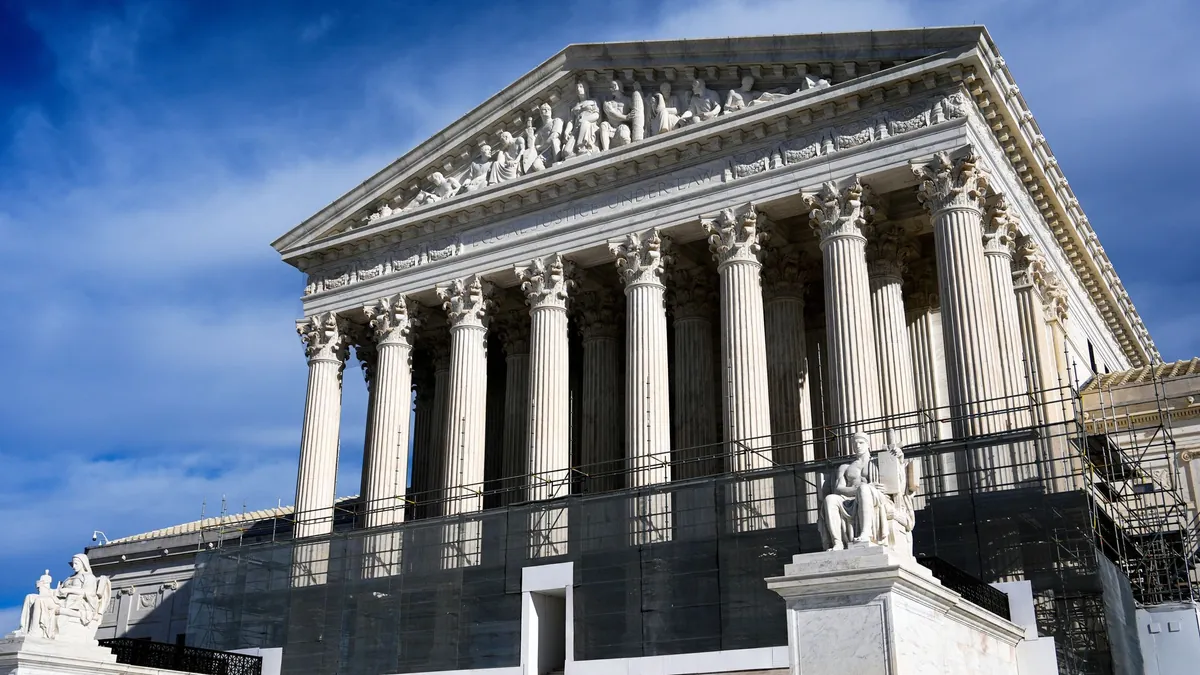
One of the most explosive cases of recent years is being heard before the US Supreme Court: Are children automatically US citizens if they are born in the United States of America – even if their parents are not legally in the country? US President Donald Trump says: No. He wanted to restrict the right to US citizenship at birth by decree.
A class action lawsuit against the project is being heard in court today. According to his official schedule, Trump will be present at the hearing. According to US media, it would be the first time that a sitting president would take part in such a hearing by the US Supreme Court. An overview of the case:
What is it all about anyway?
Currently, a baby born in the USA automatically receives US citizenship. The basis for this is the 14th Amendment to the US Constitution: “All persons born or naturalized in the United States and subject to the jurisdiction thereof are citizens of the United States.” This so-called Jus Soli (right of the soil) has guaranteed automatic citizenship to almost every child born on US territory since 1868.
Trump wants to change the law for those children whose parents are only in the USA temporarily or without valid residence documents – although there is nothing about this in the wording of the amendment. This means that in addition to babies born to migrants without valid residence status, those born to asylum seekers, foreign students, tourists or foreigners who have been temporarily transferred to the USA by companies could also be affected.
If at least one parent has citizenship or a permanent residence permit (green card), the child should continue to be granted US citizenship. The order that Trump signed right at the beginning of his second term in office has not yet come into force due to blockages by lower courts. However, parents have since struggled with the uncertainty of whether their child is a US citizen or whether their citizenship will not be subsequently revoked.
What’s the Barbara vs. Trump class action lawsuit all about?
In the case, several organizations have filed a class action lawsuit against the Trump administration. At its core is the question of whether Trump is violating the 14th Amendment of the US Constitution with his decree. According to the civil rights organization Asian Law Caucus, the group automatically represents all children who:
- were born in the USA on or after February 20, 2025 – the planned entry into force of Trump’s decree,
- whose father is neither a US citizen nor a green card holder
- and whose mother either does not have valid documents or is only in the USA temporarily
The civil rights activists expect a decision from the Supreme Court in June or July at the latest.
Why is the case so explosive?
The case shakes the foundations of America’s self-image as a nation of immigrants. Critics not only see the project as a violation of the 14th Amendment, but also warn of the creation of a group of children born in the USA without secure status. The number of people without a residence permit could increase by 2.7 million by 2045 and by 5.4 million by 2075, according to forecasts by the Migration Policy Institute and Penn State University.
