
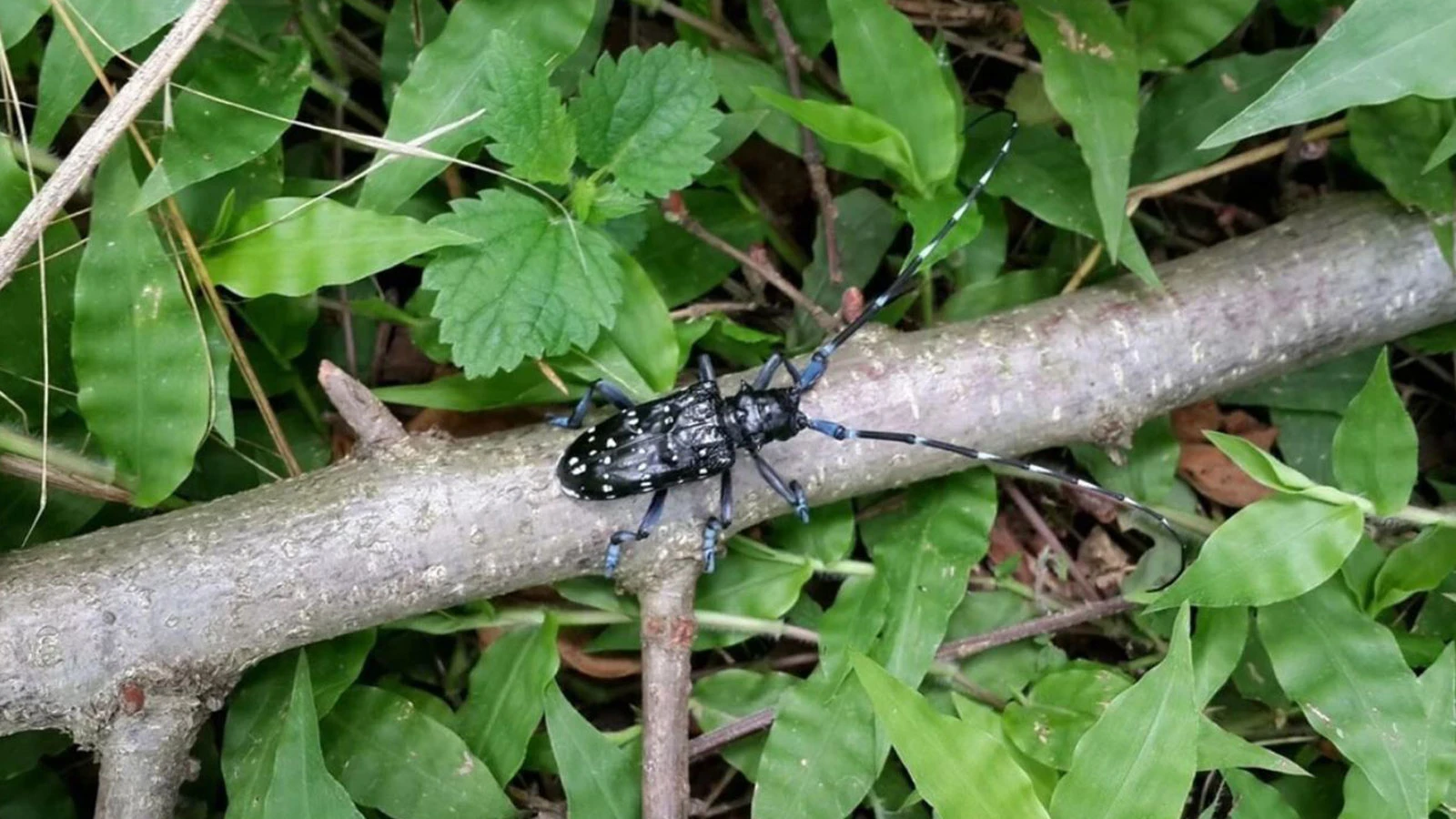
While the Black Sea hazelnut has been struggling with the brown skunk in recent years, another invasive species is now on the agenda again. The Citrus Long-Antensted Beetle, namely Anoplophora chinensis, which is popularly known as the “Dracula bug” due to its appearance and the heavy damage it causes, continues to exist despite the struggle for years, especially in the hazelnut fields in Trabzon. The pest of East Asian origin; While it is shown as one of the most dangerous pests of trees in a wide geography, especially in China, Japan and Korea, the species in question was detected for the first time in Turkey in 2014 in a nursery in Şile, Istanbul. Scans carried out in subsequent years revealed that the pest had moved to different regions. According to EPPO records, the insect was first seen in the Black Sea region in 2014 in a nursery in Bartın, and in 2016 in another nursery in Trabzon’s Maçka district.
SPREAD TO HAZELNUT ORCHARDS
The real alarm started when the pest left the nurseries and reached the production areas. Following the first detection in Maçka, the insect was also seen in the surrounding hazelnut orchards in 2017. A year later, during checks carried out around Esiroğlu, Öğütlü, Bahçekaya, Günay and Alaçam, it was determined that the pest had spread to hazelnut areas. According to EPPO data, by 2021, the contaminated area in Trabzon reached approximately 409 hectares, that is, 4 thousand 90 decares. It is considered that the pest has spread to the environment both through the transportation of infected saplings and through natural spread. The records of the Ministry of Agriculture and Forestry reveal the extent of the threat more clearly. While hazelnut gardens were dismantled and destroyed in an area of approximately 4 thousand 145 decares in Trabzon during the 2018-2024 period, approximately 29.9 million TL plant quarantine compensation was paid to 822 producers in the same period.
IT EATS THE TREE FROM THE INSIDE
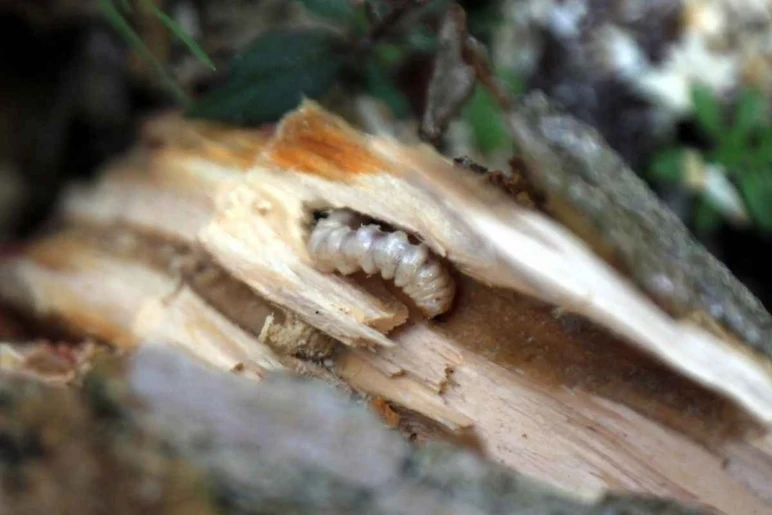
The main feature that distinguishes the Dracula beetle from many other agricultural pests is that the damage it causes occurs largely inside the tree, not outside it. While female insects lay their eggs in the root collar, on the roots coming to the surface and in the lower parts of the trunk, the hatched larvae enter the wood tissue of the tree and open galleries there. The channels opened by the larvae deteriorate the water and nutrient-carrying tissues of the tree over time. A hazelnut tree that looks completely healthy from the outside in the first stages begins to show growth retardation, dry its branches and lose strength over time. According to EPPO’s biological records, adults generally begin to appear from May and can remain active until autumn under suitable climatic conditions.
HAZELNUT IS NOT THE ONLY TARGET
Another reason for the danger posed by the pest is that it is not dependent on a single plant species. According to the data of the Directorate of Agriculture and Forestry, the citrus long-antennae beetle can damage the trunks and roots of apples, pears, tangerines and oranges, especially hazelnuts. The species, which can also attack healthy trees, is among the pests that are extremely difficult to combat because it develops in wood tissue. The species called Dracula in EPPO records; It is stated that it has been detected on many plants in Türkiye, such as maple, horse chestnut, hornbeam, hazelnut, ash, plane tree, poplar, rose, blackberry and willow.
TREES ARE BEING REMOVED
One of the most important points that makes control difficult is that the larvae live inside the trunk. For this reason, only superficial spraying is not always sufficient. In Türkiye, the citrus long-antenstened beetle is among the harmful organisms subject to quarantine. In areas where it is certain that the insect is infected, not only the branch where the insect is found, but also, when necessary, the plants are completely destroyed, including their roots. According to the practice of the Ministry of Agriculture and Forestry, the replanting of plants that host the pest for a certain period of time in destroyed hazelnut orchards is not allowed.
THOUSANDS OF DECARES WERE FINISHED
Official figures show that fighting has been carried out on an extraordinary scale in the region for years. In Trabzon, chemical control was carried out in an area of 400 decares in 2018, 426 decares in 2019, 760 decares in 2020, 617 decares in 2021, 4 thousand 742 decares in 2022 and 5 thousand 371 decares in 2023. Thus, a total of 12 thousand 316 decares of land were sprayed during this period alone. The fight has been going on since 2025. While 13 vehicles and 40 personnel were deployed to the field, it was planned to spray an area of approximately 6 thousand 232 decares twice. In the directorate’s statement, the insect was directly described as “a major threat to hazelnuts”. On the other hand, according to the world distribution data updated by EPPO on June 17, 2026, Anoplophora chinensis is still present in Türkiye.
(email protected)
