
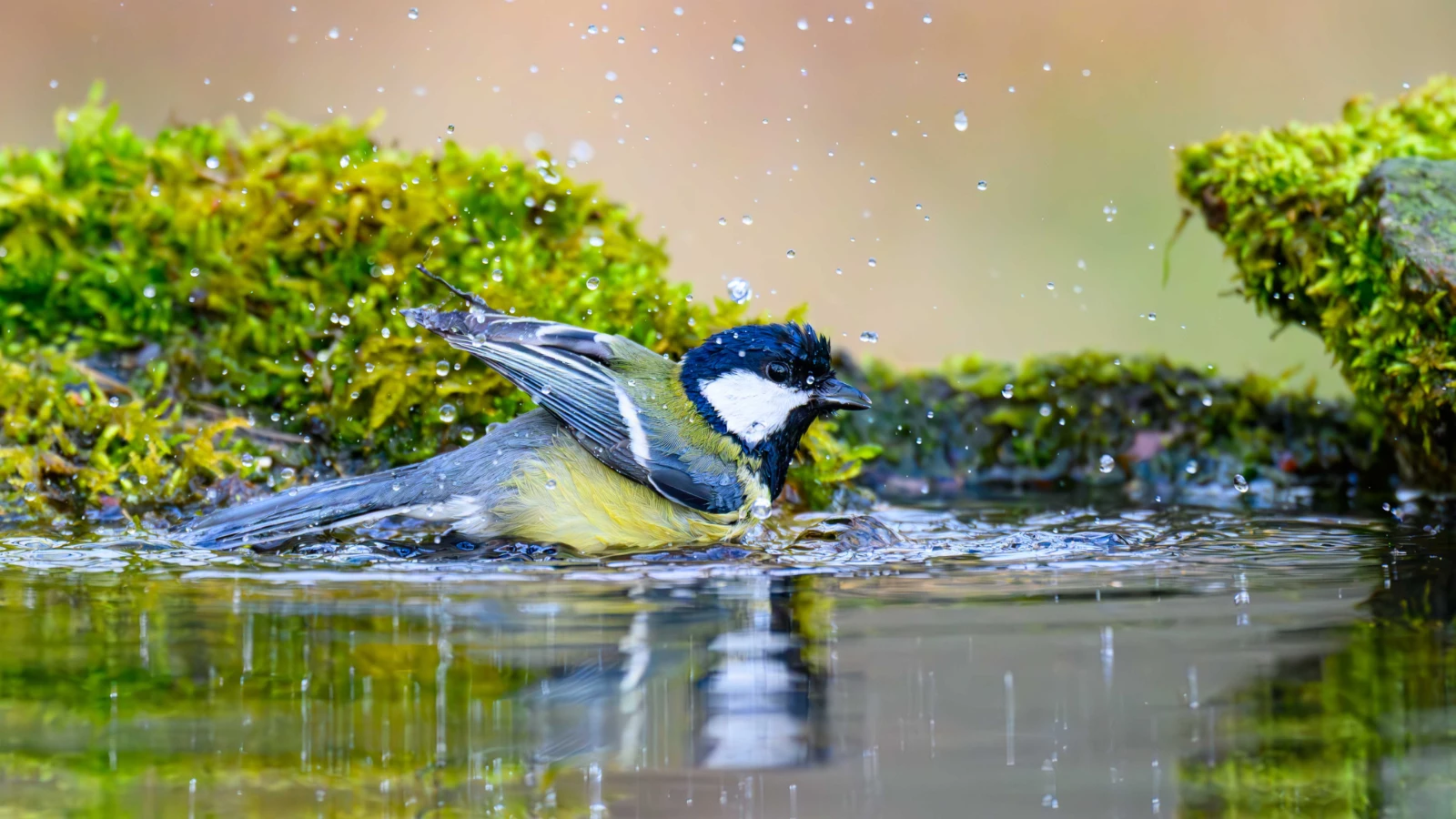
Cigarette butts not only pollute the environment, they can also pose a danger to the animals we share cities with. However, some species turn this situation into an advantage.
In a study published in the journal Animal Behaviour, a research team from the University of Lodz in Poland revealed that blue tits (Cyanistes caeruleus) place cigarette butts inside their nests and use them not as simple waste but as a means of protection against parasitic infections.
blue tit birds
Blue tit birds are yellow, black and blue; They are also small, elegant songbirds with green and white hues. They have a social nature and adapt very well to city life. As mentioned earlier, these birds can play an important role in biological control, as they feed on invasive and harmful insects (e.g. mosquitoes). It is also known that they collect aromatic plants such as lavender when building their nests in nature; because the smell and volatile compounds emitted by these plants especially repel blood-sucking parasites.
Cigarette butts: coincidence or strategy?
Researchers observed 33 families of blue tits in cities to understand whether these birds were picking up cigarette butts by chance or were using it as a deliberate adaptation strategy. Nests were divided into three groups:
The first group (control group) was left as is. Cigarette butts were added to the second group in an attempt to mimic urban behavior. In the third group, the nests were completely replaced and new nests made of moss and cotton and sterilized in the laboratory were used.
13 days after the start of the experiment, the baby birds were subjected to health checks and blood samples were examined. According to the results, hemoglobin and hematocrit levels of pups in both cigarette butt-containing nests and sterile nests were higher. This showed better health status and less parasite-related blood loss compared to the control group.
Nicotine acts like a pesticide
Additional analysis revealed that there were more parasites (mites, ticks, fleas) in the natural nests in the control group, while there were almost no parasites in the sterile nests. Nests with cigarette butts also had lower numbers of flesh fly larvae, which often feed on the blood of the young.
These findings suggest that nicotine in cigarette butts may repel parasites by acting as a repellent and insecticide.
“Our study shows that urban blue tits may use cigarette butts as an opportunistic adaptation strategy that mimics the function of aromatic plants, and this may positively contribute to the health of the offspring,” the researchers concluded.
However, experts also emphasized that cigarette butts also contain toxic substances such as arsenic and heavy metals, and their effects on the health of adult birds are not yet fully known.
