
Fear of electoral defeat
Russia probably wanted to stage an assassination attempt on Orbán
Updated March 21, 2026 – 1:47 p.mReading time: 2 minutes

Viktor Orbán is behind in the polls shortly before the election. Russian allies apparently had a plan to change that.
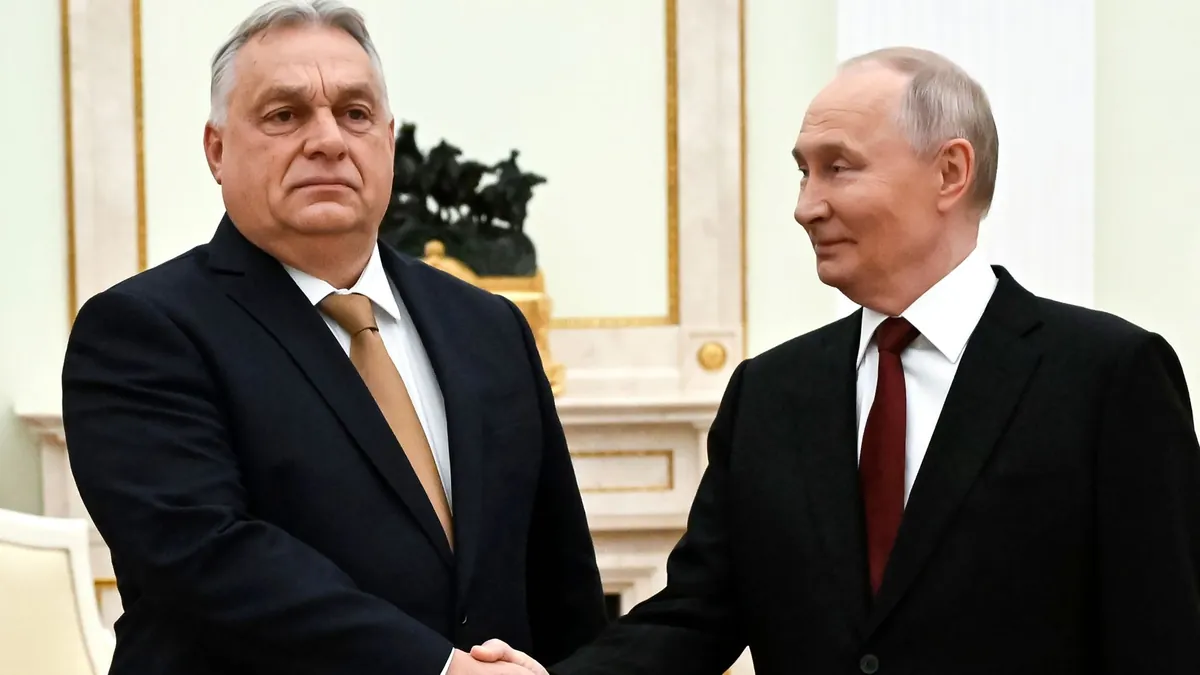
Russian intelligence officials have apparently devised a plan to help Viktor Orbán in the Hungarian election campaign. According to the Washington Post, agents from the Russian foreign secret service SVR suggested staging an assassination attempt on the prime minister in order to shift the mood in the country from economic problems to security, stability and fear.
The report is based on an internal SVR paper that, according to the newspaper, was obtained by a European secret service and classified as genuine. It describes the declining support for Orbán as a serious problem. The main reason for this is the poor economic situation in Hungary. The paper also states that such a staging could shift the election campaign from the “rational area of socio-economic issues” into an emotional area. There was no actual attack on Orbán.
Polls see Orbán behind his challenger Péter Magyar, a former Fidesz politician who is now running with an anti-corruption course. According to the newspaper, the paper was prepared for the SVR’s main department for political influence operations. The authors described very specifically how the election campaign could be changed. The aim was to push questions about living standards, the economy and dissatisfaction into the background. Instead, state security, stability and the defense of the political system should become the dominant issues. Orbán recently claimed that Ukrainians were planning attacks on his family.
Western security circles describe concerns that Moscow could do much more than mere propaganda. Accordingly, pro-Russian campaigns were already running in social networks that were intended to portray Orbán as the only guarantor of Hungarian sovereignty. According to the report, there were also indications of other influence operations, including alleged smear campaigns against candidates from the Tisza party using manipulated documents and AI videos. Russian authorities reject the allegations. Kremlin spokesman Dmitry Peskov spoke of “disinformation,” and the Russian embassy in Budapest also denied any interference.
