
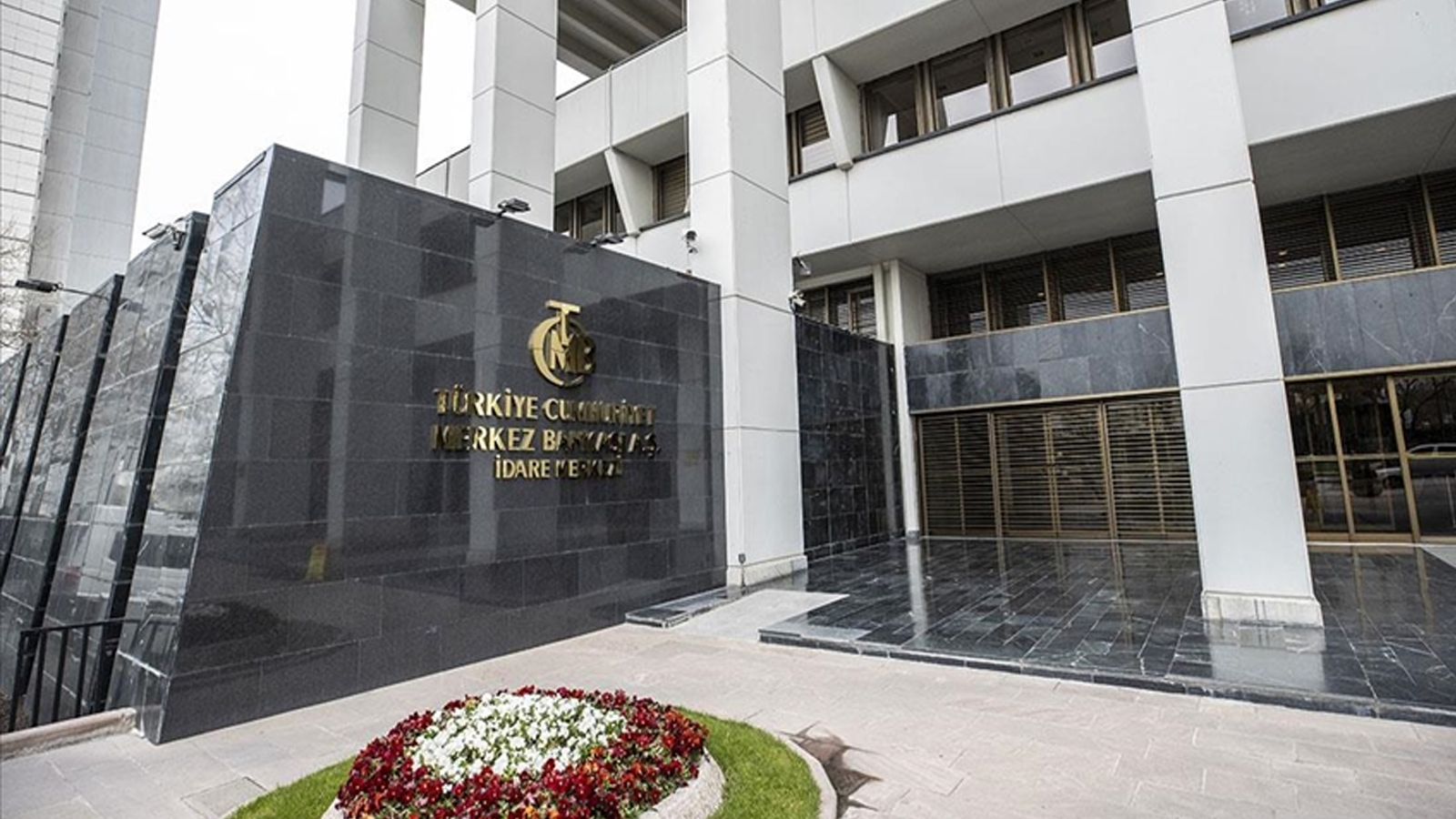
The Central Bank of the Republic of Türkiye (CBRT) sent an open letter to the government after the inflation target was not met in 2025.
In accordance with Article 42 of the Central Bank Law No. 1211, the bank presented the open letter to the Minister of Treasury and Finance, Mehmet Şimşek, mentioning the reasons for the deviation from the inflation targets for 2025 and the policies followed.
In the letter, it was stated that the deterioration in the inflation outlook was led by food prices.
CBRT’s letter is as follows:
“In accordance with Article 42 of the Central Bank Law No. 1211, if the inflation target is not achieved, the Central Bank of the Republic of Turkey (CBRT) is required to notify the Government in writing and announce to the public the reasons for the deviation from the target and the measures to be taken.
Inflation in 2025 was above the uncertainty range set around the target.
This letter summarizes the reasons for this deviation and the policies implemented and to be implemented in order to bring inflation closer to the target path again.
Factors Determining Inflation in 2025 The disinflation process, which started in June 2024, continued in 2025; The tight monetary stance, tightness in financial conditions and balancing in demand conditions supported this process. However, supply-side developments, rigidity in pricing behavior and the fact that expectations are not fully compatible with the targets have limited the pace of disinflation.
Global commodity prices supported the inflation outlook in the first half of the year; The decline in energy and agricultural commodity prices made a positive contribution. Energy price volatility due to geopolitical developments and increases in some metal prices have created periodic cost pressures. The normalization in global supply chains and the decrease in transportation costs have partially offset these effects.
Domestic supply conditions, especially drought and frost events, created upward pressure on inflation through food prices. Declines in crop production caused price fluctuations in the third quarter; These developments temporarily slowed down the disinflation process over expectations.
While this volatility in food prices caused temporary deteriorations in the main trend of inflation, it was observed that these effects partially weakened with the mild weather conditions in the last months of the year. The impact of exchange rate developments on inflation in 2025 remains more limited compared to previous periods. The relatively stable course of the Turkish lira and the disinflationary demand conditions have limited exchange rate pass-through. Price increases remained high in service items such as rent and education, where the tendency to index to past inflation was strong. Compensatory price adjustments observed in these items following the ceiling price regulations implemented in the past also contributed to the high annual increase rates. However, the decline in rent inflation became more evident towards the end of the year.
The widespread appearance of price increases in the services group slowed down the decline in core inflation indicators. Adjustments made in administered and directed prices during the year also had an impact on inflation. Especially price developments in tobacco products, natural gas and tap water items came to the fore.
Demand conditions remained at disinflationary levels throughout the year. The balancing of demand occurred gradually due to post-earthquake activities related to housing construction and trends in some durable consumption items. Although inflation expectations showed a downward trend throughout the year for most segments, they continued to remain above the targets. This situation limited the speed of disinflation. The improvement in inflation expectations supported the medium-term effectiveness of monetary policy. However, the limited pace of improvement in expectations remained important for the continuity of the disinflation process. Maintaining fiscal discipline and strong coordination with monetary policy in 2025 made a significant contribution to the disinflation process. The ratio of budget deficit to national income was 2.9 percent.
When evaluated in general, the rigidity in pricing behavior, the limited alignment of expectations with targets and periodic supply shocks were effective in the inflation being above the target in 2025. On the other hand, the tight monetary stance, tightness in financial conditions and balancing of demand conditions supported the disinflation process; There was a significant improvement in the underlying trend of inflation in the last quarter of the year.
The Monetary Policy Strategy Being Followed to Ensure Price Stability The CBRT has determined its monetary policy stance throughout 2025 to ensure the tightness required by disinflation, taking into account inflation realizations, main trends and expectations. In this context, monetary policy decisions were made with an inflation outlook-focused, meeting-based and cautious approach. In January and March, the CBRT reduced the one-week repo auction interest rate, which is the policy rate, by 500 basis points in total, bringing it to 42.5 percent. In mid-March, the overnight lending interest rate was increased to 46 percent in order to limit the risks that developments in financial markets may pose to the inflation outlook. In addition, one-week repo auctions were suspended for a while and funding was made at the overnight lending interest rate.
In April, the CBRT drew attention to the effects of developments in financial markets on the main trend of inflation and increased the policy rate to 46 percent; It increased the overnight lending interest rate to 49 percent and the overnight borrowing interest rate to 44.5 percent. However, it announced that one-week repo auctions would be restarted. The CBRT kept the policy rate constant in June and reduced it to 38 percent as of December 2025, with a total reduction of 800 basis points in the following period. The CBRT brought the policy rate to 37 percent with a limited reduction in January 2026. In order to increase the functionality of the market mechanism, strengthen macro financial stability and support the monetary transmission mechanism, the CBRT continued its macroprudential policy practices in 2025.
Within the framework of macroprudential policy, practices aimed at terminating exchange-protected deposit accounts and increasing the share of Turkish lira deposits supported monetary transmission. Credit developments were closely monitored; Necessary measures have been taken to prevent the risk of deviation from the prescribed path.
The main purpose of the CBRT is to ensure and maintain price stability. If there is a significant deterioration in the inflation outlook, the monetary policy stance will be tightened. In case of unforeseen developments in the credit and deposit markets, additional macroprudential steps will be taken. “2026 Inflation Report-I”, which comprehensively discusses the developments regarding inflation and monetary policy and our medium-term forecasts and was published on our website on February 12, and the “2026 Monetary Policy” text, which explains in more detail the monetary policy to be implemented to achieve the inflation target in the short and medium term, are presented for your information.
