
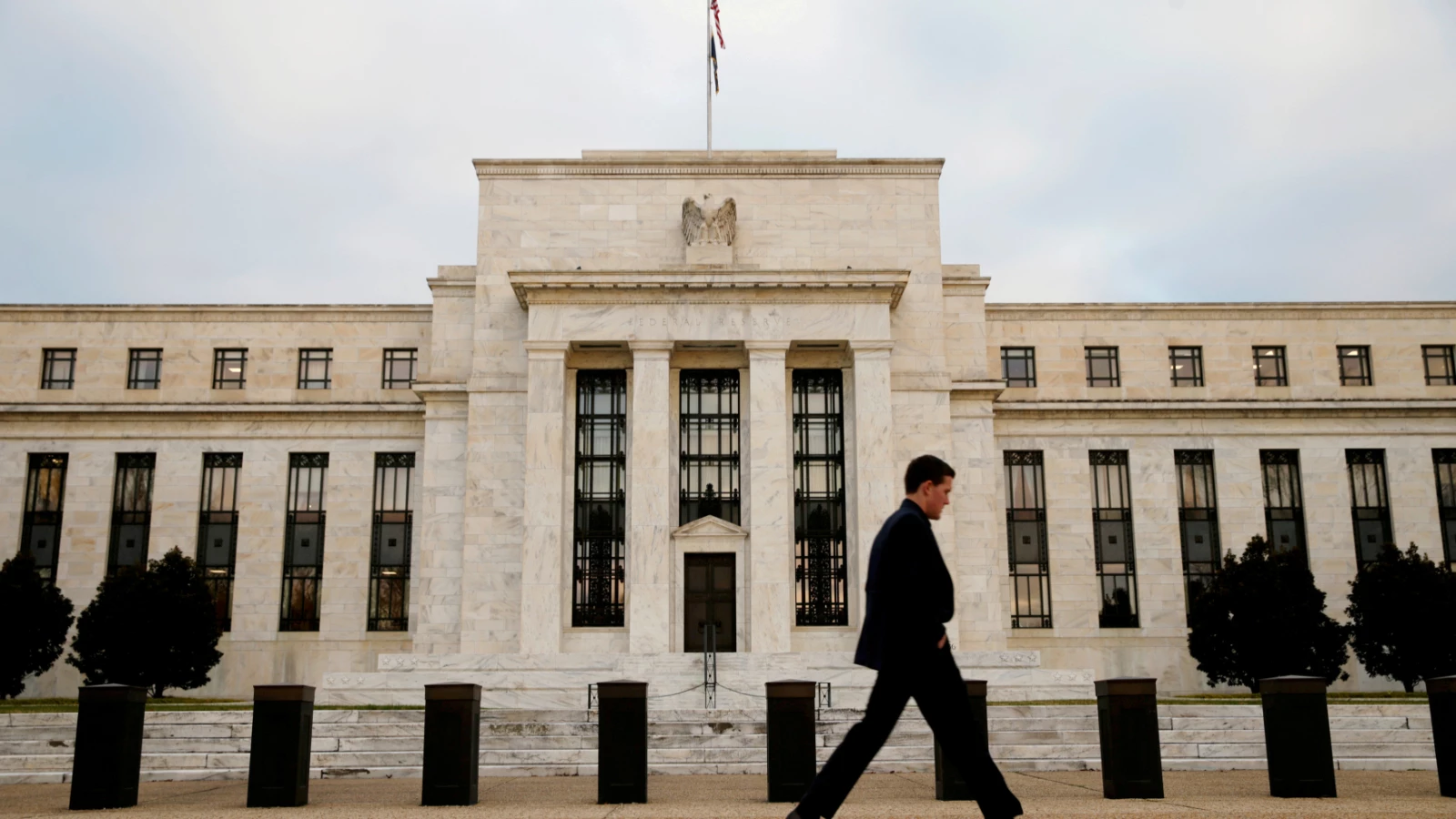
While global markets followed a mixed course last week with high valuation concerns for the technology sector and uncertainties regarding the interest rate cut process of the US Federal Reserve (Fed), all eyes are on the intense data agenda next week.
Macroeconomic data announced in the USA continued to have an impact on the direction of the markets. While the employment data announced last week signaled that the Fed’s interest rate cut process may be postponed, expectations for the Fed’s interest rate cut process have recovered following the January inflation data that came in below expectations.
The prediction that the stronger-than-expected employment report may delay the Fed’s interest rate cuts increased the risk perception in the equity markets.
While the inflation data for January, announced on the last trading day of the week, came below expectations, the Consumer Price Index (CPI) in the country increased by 0.2 percent monthly and 2.4 percent annually in January.
Core CPI, which does not include variable energy and food prices, increased by 0.3 percent monthly and 2.5 percent annually in January. Core inflation recorded its lowest level since March 2021 on an annual basis.
Analysts stated that inflation data coming in below expectations provided some relief to investors, but concerns about artificial intelligence technologies continued to put pressure on the markets.
US TECHNOLOGY SHARES COMPLETED THE WEEK WITH SALES WEIGHTNESS
In addition to these developments, the possibility of a delay in Apple’s Siri update and the news about incorrect accounting regarding Meta were among the main factors that increased fragility in technology stocks and triggered selling pressure.
Apple’s shares finished the week with an 8 percent loss after the news that the update that will add new artificial intelligence features to its virtual assistant Siri may be delayed by several months due to problems experienced during tests.
The news flow regarding technology and artificial intelligence companies, combined with the already discussed “high valuation” concerns, was effective in causing selling pressure in the US markets.
NEW YORK STOCK EXCHANGE WAS NEGATIVE
A negative trend stood out in the New York stock market last week. On a weekly basis, the S&P 500 in the New York Stock Exchange decreased by 1.4 percent, the Nasdaq index decreased by 2.1 percent and the Dow Jones index decreased by 1.2 percent.
Last week, a buying trend was observed in the US bond markets due to investors’ search for more balanced returns. The US 10-year bond interest rate decreased by 16 basis points and ended the week at 4.05 percent.
While the dollar index completed the week at 96.9 with a decrease of 0.7 percent, the barrel of Brent oil closed the week at 67.1 dollars with a loss of 0.8 percent.
While gold prices diverged from silver due to geopolitical risks, the decline in the dollar index and central bank purchases, the ounce price of gold closed the week at 5 thousand 26 dollars with a 1.4 percent gain in value. The ounce price of silver was traded horizontally at $77.5.
Next week, New York Fed industrial index, retail sales, durable goods orders, industrial production, capacity utilization rate and Fed meeting minutes on Wednesday, wholesale goods stocks, weekly unemployment benefit applications on Thursday, growth, core personal consumption expenditures price index and manufacturing industry and service sector Purchasing Managers Index (PMI) data will be followed on Tuesday.
Markets in the USA will be closed on Monday for the Presidents Day holiday.
EYES ON INFLATION DATA IN EUROPE
While a positive trend was observed in European stock markets last week, except for Italy, due to the intense diplomatic and political agenda, inflation data in Germany and England became the focus of investors next week.
Last week’s informal meeting of European Union (EU) leaders on the economy was followed closely. EU country leaders gathered to evaluate steps to increase competitiveness, strengthen the internal market and reduce economic dependencies.
Speaking before the summit, EU Council President Antonio Costa said, “The main topic of our meeting is competitiveness. Our priorities are to strengthen economic growth in Europe, create quality jobs that are vital for our prosperity and maintain our socioeconomic model.” he said.
Noting that they need to deepen the single market and eliminate bureaucratic obstacles, Costa emphasized that they need to grow European companies.
Macroeconomic data agenda throughout the region was also closely followed. The Eurozone economy grew by 0.3 percent in the last quarter of last year compared to the previous quarter and by 1.3 percent compared to the same period of the previous year.
The foreign trade surplus of the Eurozone was 12.6 billion euros in December last year.
With these developments, last week the FTSE 100 index in England increased by 0.7 percent, the DAX index in Germany increased by 0.8 percent and the CAC 40 index in France increased by 0.3 percent, while the MIB 30 index in Italy decreased by 1 percent.
Next week, industrial production in the Eurozone will be followed on Monday, inflation and Zew Economic Confidence Index in Germany on Tuesday, inflation in the UK on Wednesday, consumer confidence index in the Eurozone on Thursday, and manufacturing industry and service sector PMI data across the region on Friday.
ASIAN STOCK EXCHANGES ENTER THE HOLIDAY WEEK
While Asian stock markets saw sharp increases last week following the early general election results in Japan, transaction volume is expected to be low next week due to holidays in China, Hong Kong and South Korea.
According to the results of the early general elections held in Japan, the Liberal Democratic Party (LDP) led by Prime Minister Takaiçi Sanae won the election with a historic margin.
According to state broadcaster NHK, Takaichi’s party, LDP, won 316 out of 465 seats in the lower house of parliament, the House of Representatives.
The LDP increased its number of seats from 198 to 316, thus passing the ruling party’s threshold of 310 seats, which is considered to be 2/3 of the seats in the parliament. With this result, LDP became the first party to achieve this success in Japan after the Second World War.
Takaichi, who advocates stimulating growth through fiscal expansion, showed a tendency in favor of more fiscal stimulus, which increased the risk appetite in Japanese equity markets.
Takaiçi’s advocacy of fiscal expansion and concerns that this would increase inflationary pressures were among the reasons that could support the Bank of Japan (BoJ) in increasing interest rates from now on.
On the South Korean side, a buying-oriented outlook came to the fore as the demand for the artificial intelligence sector positively affected the supplier companies in the region.
With these developments, on a weekly basis, the Shanghai composite index in China increased by 0.4 percent, the Kospi index in South Korea increased by 8.2 percent and the Nikkei 225 index in Japan increased by 5 percent, while the Hang Seng index in Hong Kong remained flat.
Due to the Lunar New Year holiday in China, there will be no transactions in the markets next week. Markets in Hong Kong will also be closed except Friday. In South Korea, markets will be closed on Mondays, Tuesdays and Wednesdays due to “Korean New Year”.
Next week, growth, capacity utilization rate and industrial production data will be followed in Japan on Monday, foreign trade balance data in Japan on Wednesday and inflation data in Japan on Friday.
DOMESTIC INFLATION REPORT WAS FOLLOWED
Borsa Istanbul’s BIST 100 index, which followed a buying-oriented trend last week domestically, closed at 14,180.69 points, with a 4.87 percent increase on a weekly basis. Last week, the first Inflation Report of the year by the Central Bank of the Republic of Turkey (CBRT) was closely followed by investors.
Speaking at the Inflation Report Information Meeting, CBRT President Fatih Karahan stated that they estimate that inflation will be between 15 percent and 21 percent in 2026, and said, “Our forecasts for the end of 2027 indicate that inflation will fall between 6 percent and 12 percent. We maintained our interim inflation target as 16 percent and 9 percent for 2026 and 2027, respectively. The interim target for 2028 is “We set our target as 8 percent.” he said.
On the macroeconomic side, the Central Bank’s total reserves decreased by 10 billion 676 million dollars in the week of February 6 compared to the previous week, falling to 207 billion 482 million dollars.
According to the balance of payments data announced by the CBRT, in December 2025, there was a deficit of 7 billion 253 million dollars in the current account and a deficit of 691 million dollars in the current account excluding gold and energy.
Dollar/TL finished the week at 43.6660, 0.1 percent above the previous weekly close.
Next week, domestic budget balance data on Monday, housing price index on Tuesday, unemployment rate on Wednesday, consumer confidence index on Thursday, real sector confidence index and capacity utilization rate data on Friday will be followed.
