
However, a new study led by Pennsylvania State University (Penn State) in the USA and published this week in the journal Proceedings of the National Academy of Sciences (PNAS) revealed that the origin of these building blocks in the early Solar System could withstand much more diverse and challenging conditions than thought.
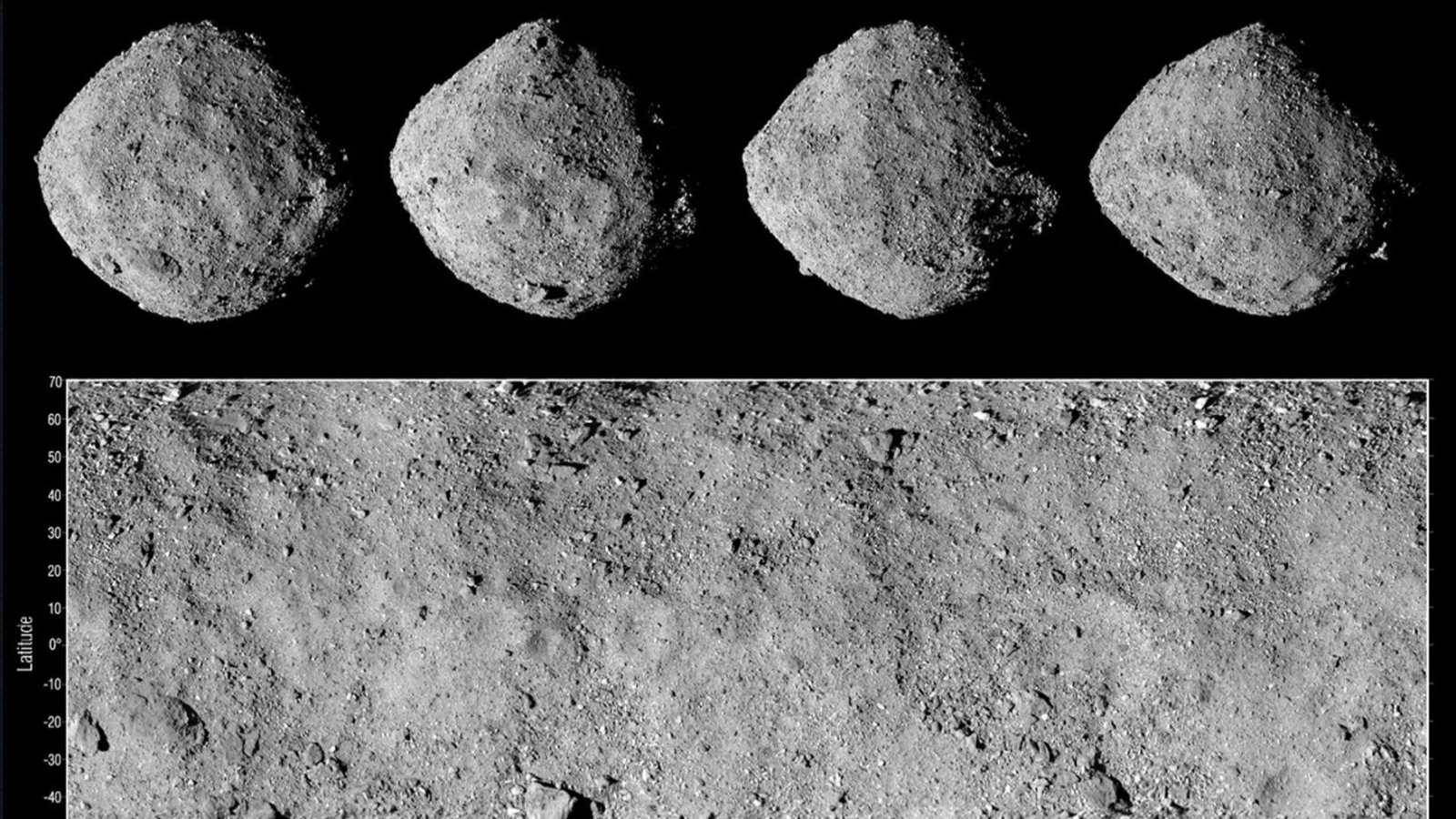
The research team examined only a teaspoon-sized sample of space dust from the Bennu asteroid, which was brought to Earth as part of NASA’s OSIRIS-REx mission in 2023. By measuring differences in the atomic mass of glycine, the simplest amino acid, scientists reached results that contradict existing theories.
“Our results challenge the traditional understanding of how amino acids form in asteroids,” says Allison Baczynski, professor of earth sciences at Penn State and co-author of the study. “It appears that these building blocks of life can arise not only in environments with liquid water, but also in very different conditions. Our analysis shows a much wider variety in terms of formation pathways and environments.”
From hot water to radioactive cold
Until now, glycine was thought to be formed by a chemical reaction called the Strecker synthesis, which required liquid water, ammonia, and aldehyde. But data from Bennu suggest that glycine may have originated in the farthest and coldest regions of the young Solar System, in frozen ice environments exposed to radiation.
To reach this conclusion, the researchers compared Bennu samples to the remains of the Murchison meteorite, which crashed in Australia in 1969. While the molecules in Murchison bear isotopic signatures that indicate that it formed in an environment containing temperate temperatures and water, the glycine in Bennu displays a completely different isotopic pattern.
“The real surprise is that the amino acids in Bennu show a completely different isotopic signature from Murchison,” says study co-author and postdoctoral researcher Ophélie McIntosh. “This suggests that the main bodies of the two celestial bodies come from chemically different regions in the Solar System.”
New mysteries at the molecular level
The research not only challenges old assumptions but also raises new questions. Particularly noteworthy is the fact that some molecules can exist in two different forms, such as right- and left-handed — that is, their chirality feature.
In Bennu samples, it was determined that there were serious differences in the nitrogen values of two different forms of glutamic acid. This challenges the assumption that “both forms must be the same” predicted by current chemical theories.
“We have many more questions than answers right now,” Baczynski concludes. The research team plans to continue examining different meteorite samples to understand whether this diversity in the ways the building blocks of life form is the exception or the rule in the universe.
