
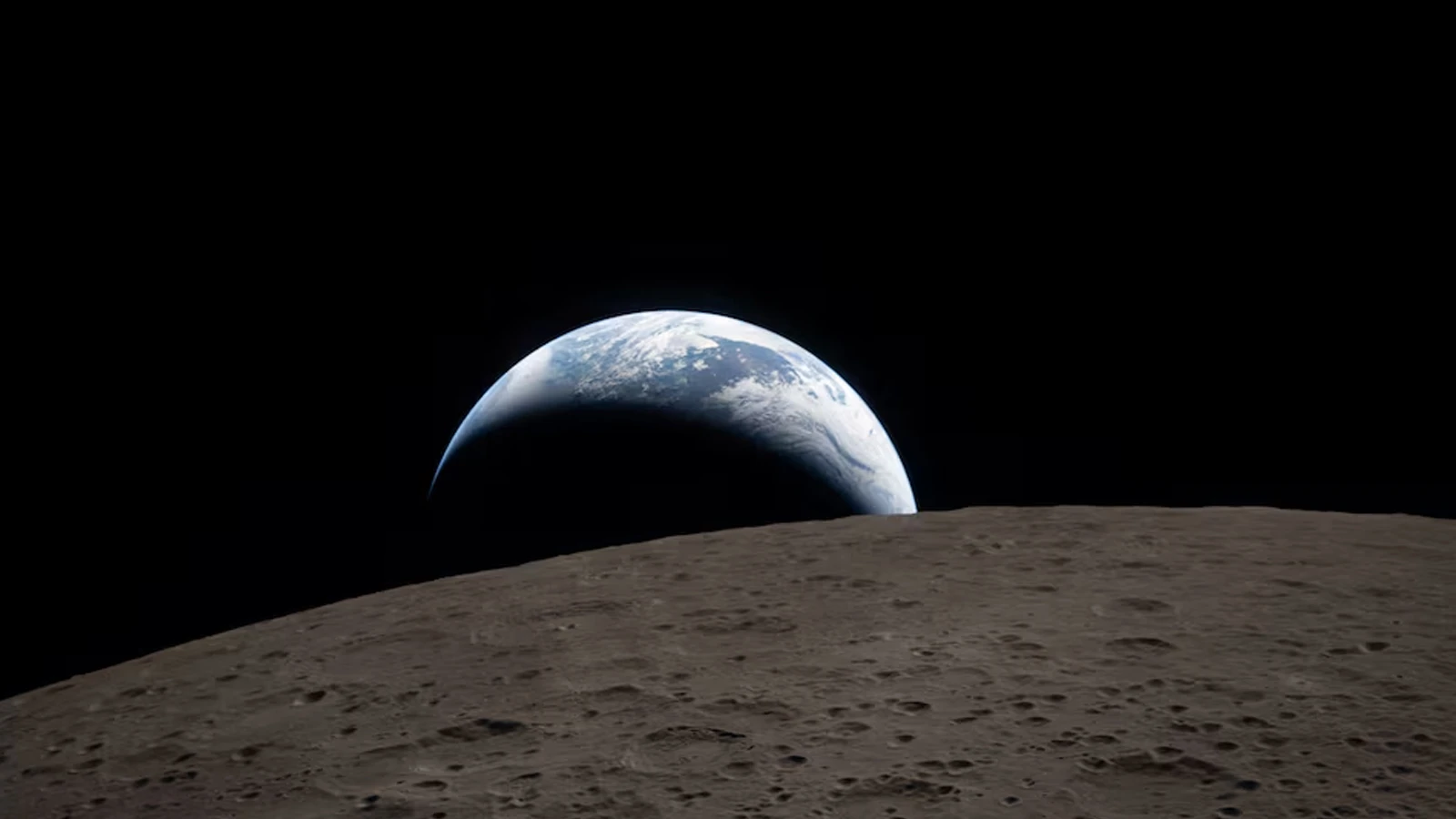
Four astronauts, who visited the other side of the Moon as part of the Artemis 2 mission, stated in their statements after returning to Earth that, contrary to popular belief, the Moon is not a uniform gray mass, but has unexpected colors and textures.
The crew, trained with a special 90-page “Lunar Passport” prepared by geologists and volcanologists within NASA, reported brown and green tones on the surface using the dynamic perception of the human eye, unlike orbiting robotic vehicles.
It is emphasized that the green minerals seen especially on the Aristarchus Plateau may be substances such as olivine or pyroxene, which provide vital clues about the chemistry of the magma deep within the Moon.
IS THE MOON COLORED BUT GRAY?
According to Space, the audio diaries they recorded at that moment are of much greater importance for scientists than the photographs taken by astronauts.
While “noise” and calibration errors in the data of robotic explorers and orbiters can sometimes be misleading, the human eye can instantly compare color and brightness changes in different parts of the Moon.
Astronauts’ observations tell a story about the history of volcanic eruptions on the Moon and the geological structure of the surface in depth that satellites cannot tell.
This hidden color palette of the Moon is not only a matter of scientific curiosity, but also a key to understanding the early formation processes of the Earth and the solar system.
The huge craters and lava flows on the lunar surface serve as an archive that has preserved the history of gigantic meteorites hitting our planet and geological transformations to this day.
NASA experts state that these “colorful” observations of astronauts will be among the most discussed topics at lunar science conferences in the coming years and may rewrite what we know about the history of the Moon.
