
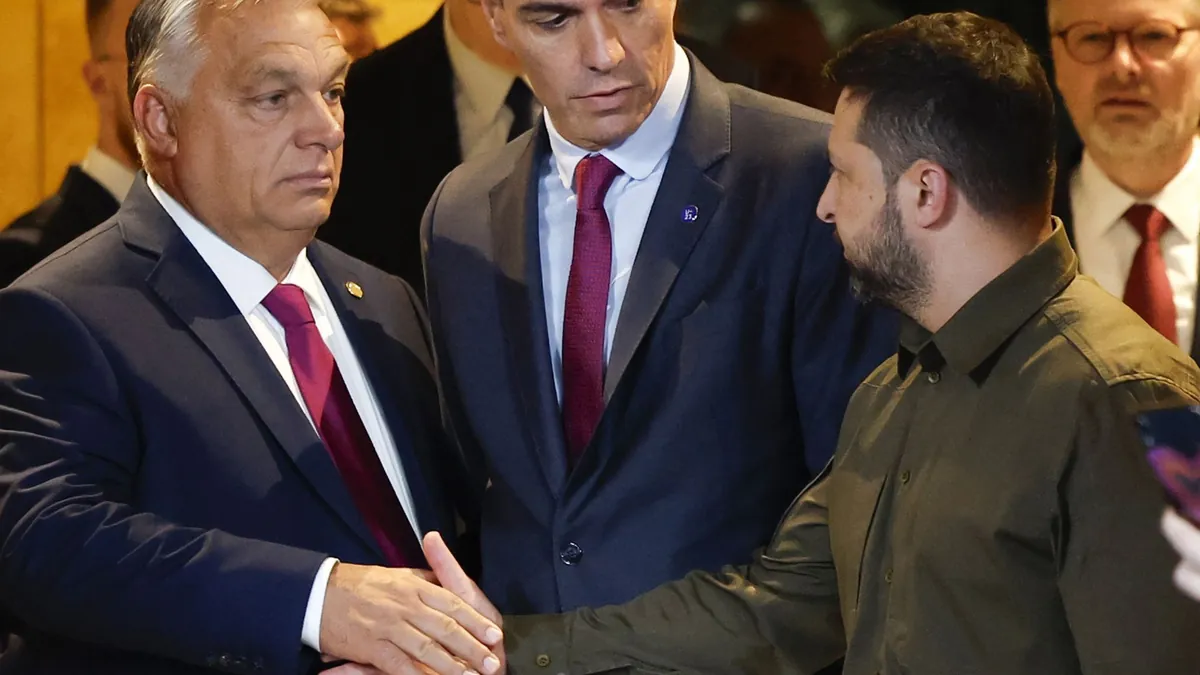
His right-wing populist ruling party Fidesz is not doing well in the polls. He has an attractive challenger in the younger and quick-witted Fidesz dropout Peter Magyar. Its bourgeois Party for Respect and Freedom (Tisza) is eight to twelve percentage points ahead of Fidesz in surveys conducted by reputable institutes. Orban is trying to turn the tide with unprecedented smear and disinformation campaigns. He is inflaming the conflict with Ukraine to create a war atmosphere in which he can portray himself as the “savior of the Hungarians.”
The Hungarian was originally a courageous critic of Kremlin leader Vladimir Putin and Russian imperialism. This changed continuously when the government took over in 2010. In 2014, he agreed with Putin on the construction of two new reactor blocks in the Hungarian Paks nuclear power plant by the Moscow state-owned company Rosatom. Hungary traditionally sources a lot of oil and natural gas from Russia. Orban even increased this dependence during the Russian war of aggression.
At the same time, Moscow’s political influence is becoming increasingly noticeable. Hungary is the only NATO member country that has not expelled Russian diplomats since the start of the war. The Russian embassy in Budapest is considered the Russian intelligence headquarters in the region. The media controlled by Orban’s people is spreading Russian narratives about the Ukraine war, but also about the alleged “decline of the West” with great enthusiasm.
The Hungarian leadership is courted in Moscow, and the Kremlin approves of disturbing the peace in the EU. Most recently, Putin gave Hungarian Foreign Minister Peter Szijjarto two Hungarian prisoners of war as a gift.
The dispute doesn’t come out of the blue. Relations between the neighboring states and Orban and Zelenskyj personally have been tense for a long time. This goes so far that the Kiev head of state is demonstratively uncooperative towards the EU. Brussels also wanted experts to be sent to assess the pipeline damage, but Zelensky did not agree. “I think our word is enough,” he said.
The minimum time of “about one and a half months” mentioned by Kiev for the repairs is probably due to political considerations. Kiev is obviously banking on Orban’s election defeat and is not planning to put the oil pipeline into operation until after the election date in Hungary at the earliest.
