
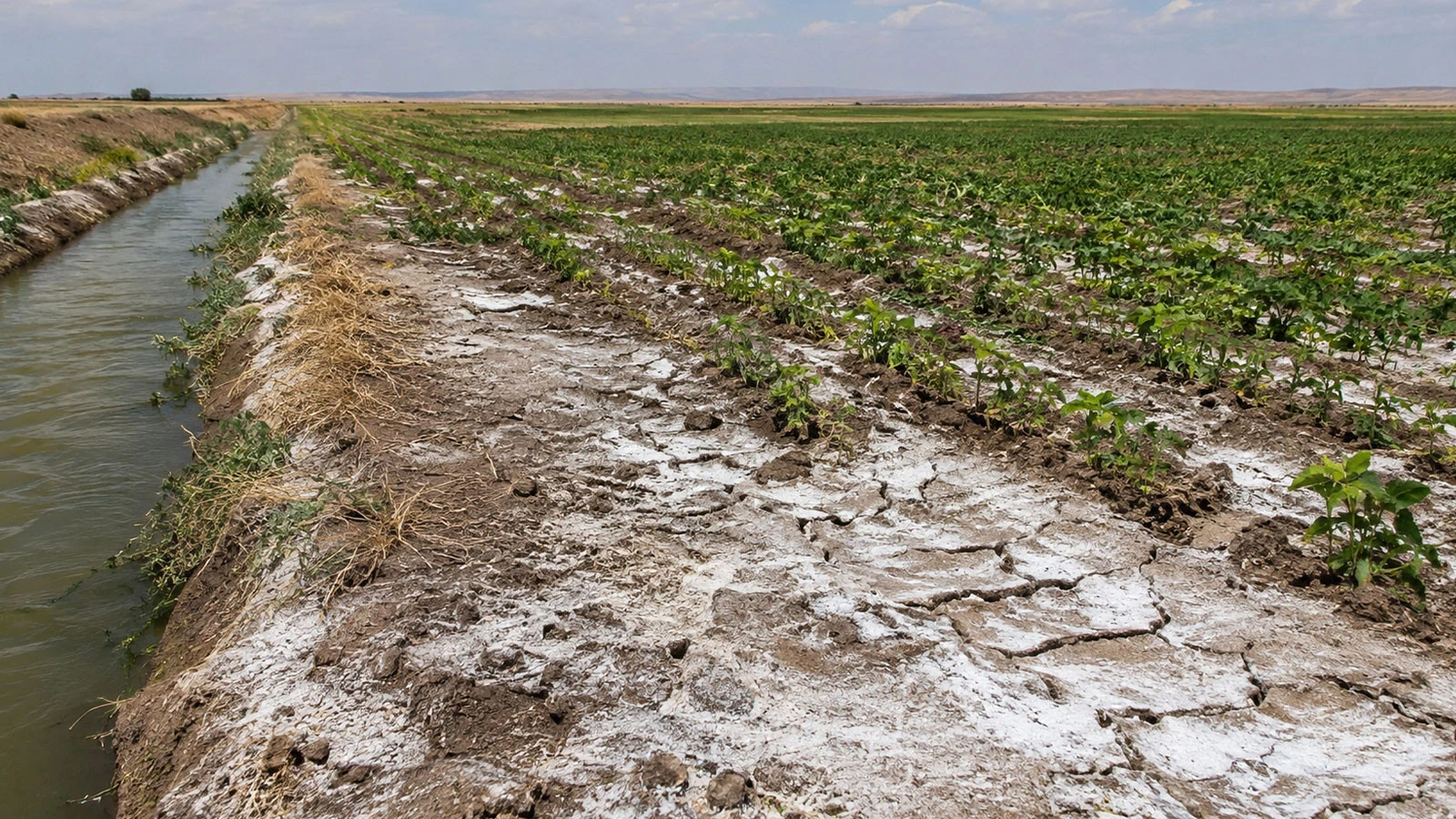
The analyzes and evaluations published so far by the Ministry of Environment, Urbanization and Climate Change and the Ministry of Agriculture and Forestry reveal the prevalence of problems affecting productivity in Türkiye’s agricultural lands. According to the announced data, 642 million tons of soil are displaced every year by water erosion across Türkiye. This amount corresponds to an annual average of 8.24 tons per hectare. 38.71 percent of soil movement occurs in agricultural lands, 53.66 percent in pastures and 4.17 percent in forest areas. Moderate, severe or very severe water erosion is observed in approximately 21 percent of Türkiye’s surface area.
ORGANIC MATTER DEFICIENCY
Soil analyzes carried out to date point to another important problem in terms of agricultural productivity. It is stated that 99 percent of the soils examined throughout the country have very low, low or medium levels of organic matter. The rate of soils with good and high organic matter content remains at 1 percent. The lack of organic matter, which directly affects the water retention capacity of the soil, its physical structure and the ability of plants to benefit from nutrients, draws attention especially in regions where intensive agricultural production is carried out.
SOIL FATIGUE IN KONYA
Lack of organic matter and wind erosion come to the fore in Konya, one of Türkiye’s most important grain production centers. In the analyzes carried out in the region, it was determined that the organic matter level in 88.3 percent of the provincial soil was between very low and medium levels. Particularly in Karatay and Karapınar districts, intensive tillage, removal of plant residues from the field and soil compaction are among the problems affecting production capacity. Konya Basin is also among the areas experiencing very severe wind erosion in Türkiye.
SALINITY PROBLEM IN ŞANLIURFA
In Şanlıurfa, one of the important agricultural production centers of Southeastern Anatolia, the salinity problem arising from irrigation draws attention. In the research carried out in the Harran Plain, it was determined that the amount of saline land increased from 11 thousand 430 hectares to 17 thousand 767 hectares in the examined period. Following these findings, which indicate an increase of approximately 55 percent, studies on drainage and soil reclamation were carried out in the region. While the irrigated agricultural area in Şanlıurfa has reached 618 thousand hectares according to the announced data, it is aimed to increase the irrigable area to 1 million 61 thousand hectares with investments within the scope of GAP.
386 THOUSAND HECTARS IN THRACE
5,031 soil analyzes conducted in Tekirdağ, one of Türkiye’s wheat and sunflower production centers, also reveal the extent of organic matter deficiency. According to the analysis representing a total agricultural area of 494 thousand 351 hectares, the organic matter rate is below 2 percent in 386 thousand 160 hectares. This amount corresponds to approximately 78 percent of the evaluated agricultural areas. In the same analysis, it was determined that the organic matter rate was below 1 percent in an area of 134 thousand 225 hectares.
WIND RISK IN 13 MILLION HECTARS
Another important factor causing soil loss in Türkiye is wind erosion. According to the announced environmental indicators, approximately 13 million hectares of land across the country is vulnerable to wind erosion. According to the evaluations, 7.54 percent of the areas with wind erosion potential are in the very severe class and 5.11 percent are in the severe class. Dicle-Euphrates, Kızılırmak and Konya basins are among the regions where very severe wind erosion is observed.
