
Europe is accelerating efforts to develop joint air and missile defense to reduce its dependence on US-made Patriot systems. German Defense Minister Boris Pistorius announced that PAC-2 and PAC-3 Patriot missiles will be purchased for Ukraine together with Norway, and Berlin will provide 300 million dollars. Germany is also preparing to integrate its own IRIS-T missiles into the NASAMS systems that Norway has given to Ukraine. However, the real strategic step was the joint program launched by 10 countries to develop alternatives to American Patriot systems. European Union defense ministers also identified the joint development of long-range air defense missiles as one of the priority areas of cooperation on November 17. While Europe already has strong systems in this field, Türkiye is also developing domestic integrated air defense technologies under the umbrella of Steel Dome.
10 COUNTRIES ARE CHASING THE NEW PATRIOT
France, Germany, England, Italy, Spain, Norway, Sweden, Denmark, the Netherlands and Ukraine established a joint ballistic missile defense coalition. The initiative, called FREYJA, aims to combine Europe’s own radars, command systems and interceptor missiles. Companies such as Thales, MBDA, Safran, Leonardo, Diehl, Saab and Kongsberg are participating in the project. It is also planned to use the interceptor missile technology developed by Ukraine. In a separate project, Airbus, Thales, MBDA Deutschland, Safran and Destinus have partnered to develop the Bliksem EXO interceptor that can shoot down ballistic missiles outside the atmosphere. The first technology test is aimed to be carried out in 2027.
SAMP/T SYSTEM OF FRANCE AND ITALY
Europe’s strongest current alternative to Patriot is the SAMP/T system jointly developed by France and Italy. The system, which uses Aster 30 missiles, operates against warplanes, cruise missiles and certain ballistic missile threats. The new SAMP/T NG model is equipped with radars with a detection range of over 350 kilometers and improved Aster 30 B1NT missiles. Each launch vehicle has eight missiles. In June, France signed a contract to add short-range VL MICA missiles to the system. Germany’s Diehl company produces the IRIS-T SLM system with a range of approximately 40 kilometers; The target range in the IRIS-T SLX model under development is 80 kilometers. NASAMS, developed by Norway with US Raytheon, is one of the important medium-range systems used in Ukraine.
Türkiye’S STEEL DOME
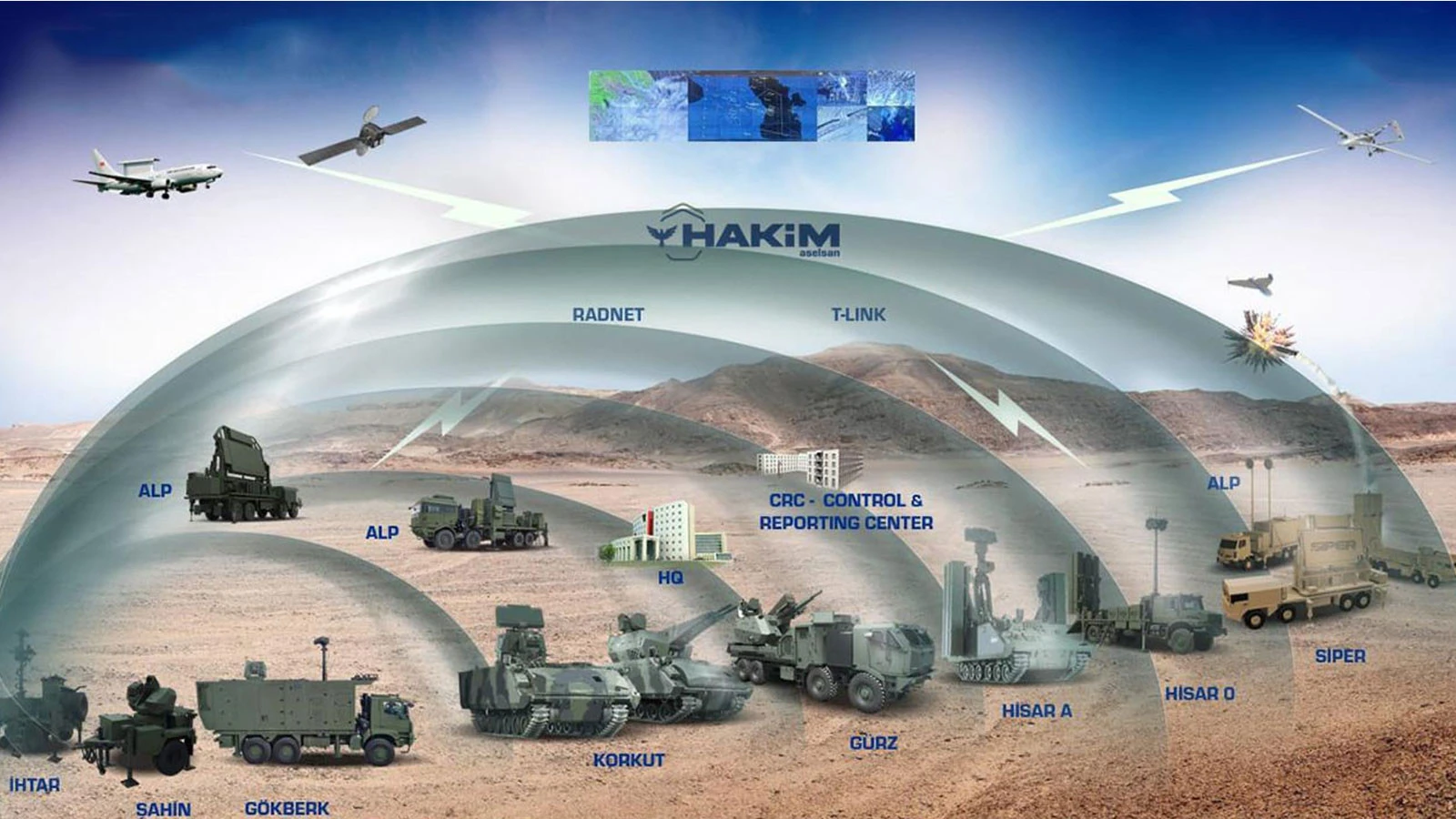
Türkiye’s Steel Dome project does not consist of a single missile system, but rather the connection of domestic weapons and radars operating at different altitudes to a common command network. In the architecture developed by ASELSAN, ROKETSAN, TÜBİTAK SAGE and other organizations, KORKUT and SUNGUR operate in close defense, HİSAR-A and HİSAR-O operate in low and medium altitudes, and SİPER operates in long range. According to the data announced by ROKETSAN, the range of SİPER Block-1 is over 100 kilometers, and Block-2 is 150 kilometers. While SİPER Block-1 enters the inventory, work on more advanced systems continues. Laser, microwave and electronic warfare systems are also being added to the Steel Dome. Steel Dome arouses curiosity in defense media on a global scale. According to the analysis of the Europe-based defense publication European Security and Defense (ESD), European countries are closely following the Steel Dome’s integrated air defense system.
CRITICAL THRESHOLD IN USA DEPENDENCE
According to military experts, Europe’s main problem in the field of air defense is not only its inability to produce advanced missiles, but also the fact that the number and production speed of existing systems cannot meet the needs in war conditions. While Germany has established capacity for the production of Patriot PAC-2 missiles in Europe, there is not yet an independent European line to produce the entire PAC-3. Pistorius announced on November 7 that Germany could not give Ukraine any more Patriot batteries without weakening its own defenses. The defense assessment, adopted by the European Union on November 17, included long-range interceptor missiles, as well as space early warning and layered UAV defense, among the common development areas.
