
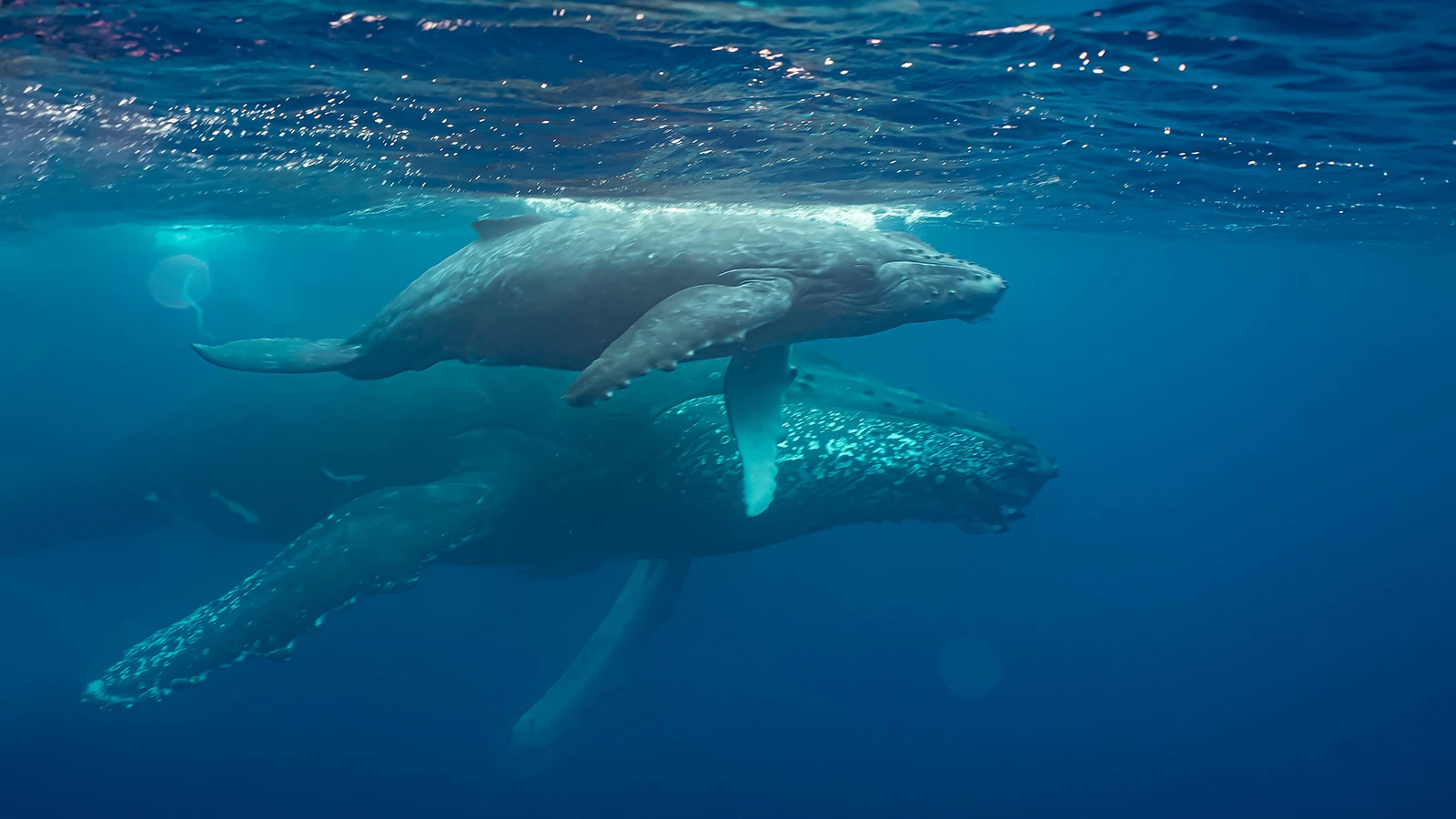
The gradual decrease in sea ice in Eastern Greenland has caused giant whales to turn to coastal waters that they were previously unable to enter.
According to research over the years, humpback, fin and minke whales began to feed intensively in regions where the ice receded during the summer months.
THE NUMBER OF WHALES HAS INCREASED
The size of the change was also reflected in the figures. While no humpback whales were recorded in observations made from ships in the region until 2006, the number of observations increased from 7 in 2007 to 150 in 2024.
Scientists estimate that approximately 4 thousand humpback, 6 thousand fin and 6 thousand minke whales will arrive in the Greenland Sea in the summer of 2024.
THE HEIGHT OF THE SEA TEMPERATURE WAS EFFECTIVE
According to researchers, the rise in sea temperatures and the movement of fish towards warmer waters were effective in the whales’ migration to the region. It has been calculated that three whale species can consume approximately 800 thousand tons of fish and krill during a summer.
However, it is stated that the change is not positive for all species. It is stated that the living spaces of creatures adapted to cold waters, such as narwhal and beluga, may shrink and they may have to compete with newly arrived whales.
Prof. at the head of the research. Mads Peter Heide-Jørgensen stated that while climate change creates new feeding areas for some species, it causes some species to lose their habitats.
