
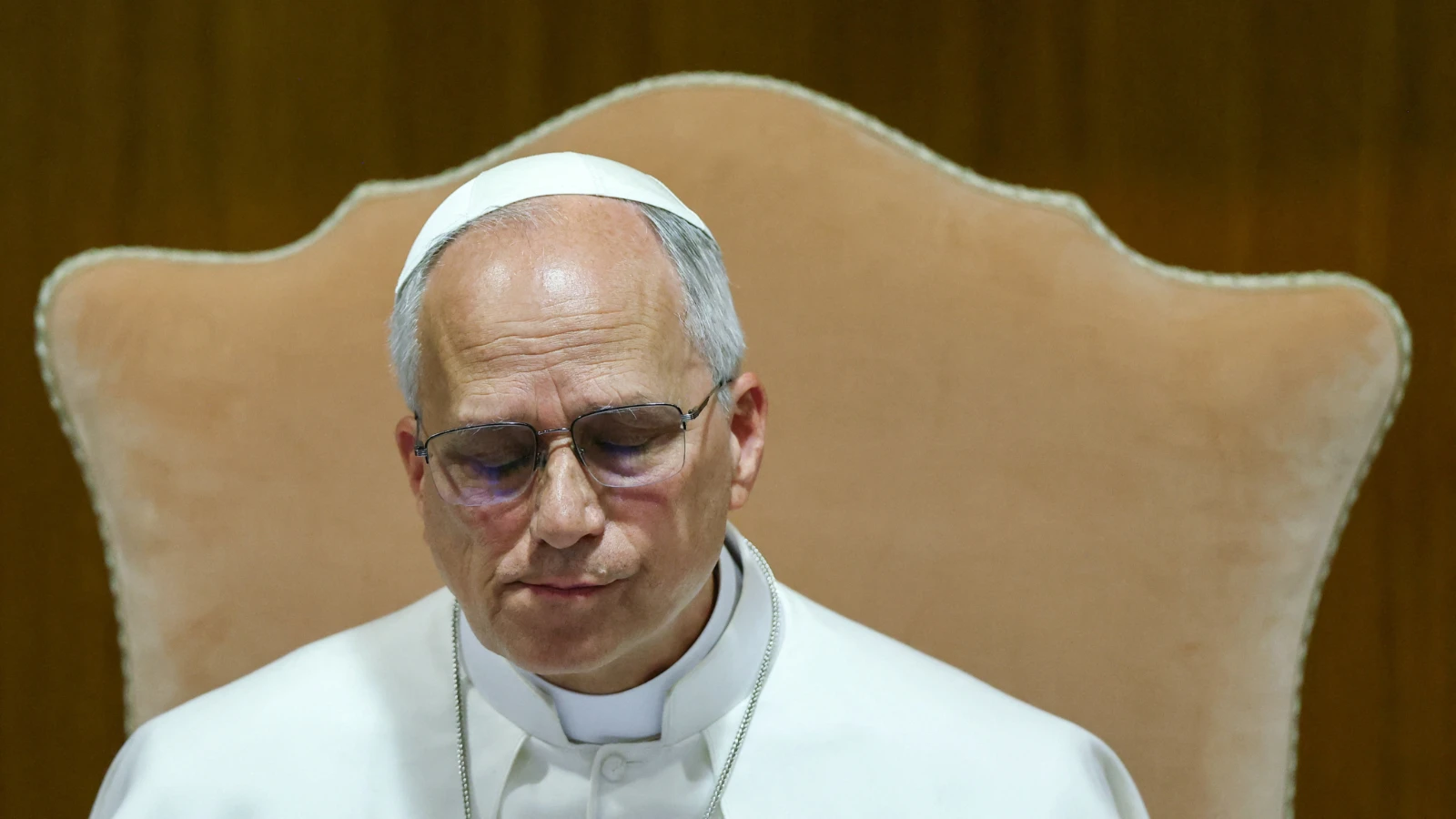
In the document called Magnifica humanitas, Pope Leo XIV states, “The magnificent humanity created by God faces a decisive choice today: to build a new Tower of Babel or to establish the city where God and humanity will live together.”
Leo 14 also calls on the Church to do some soul-searching over sexual abuse within the institution and emphasizes that this is still a pending test, focusing on the reception of immigrants.
In this encyclical, published on Monday and the first major document of his papacy, the mathematician and canon law expert Louis XIV. Leo XIII. Following in the footsteps of Leo’s Rerum Novarum document, it updates the Social Teaching of the Catholic Church in the face of one of the most important issues of our age: artificial intelligence.
In the face of this new revolution, the Pope demands “a fair social order in the digital age”, “appropriate legal frameworks”, “fair rules” and “effective protection mechanisms”.
In one of the first assessments in the document’s 110-page text, he argues that “technological innovations, including artificial intelligence, are not neutral; they can increase participation and justice but also magnify inequalities, control and exclusion.”
Regarding artificial intelligence, he warns of “clearly inhumane uses such as manipulation of information or invasion of privacy.” He also points out the more insidious deception that systems “are presented as neutral and objective while reflecting and reinforcing the stereotypes or ideological positions of the people who design and program them.”
The text is not a technical treatise on artificial intelligence, nor is it a condemnation of new technologies. The Pope recognizes the value of these technologies; but against the risk of the spread of transhumanism, it reinterprets the Social Teaching of the Church in the context of this new digital revolution.
The US Pope emphasizes that new technologies—patents, algorithms, digital platforms, infrastructures, and data—are “concentrated in the hands of a few without adequate forms of sharing and access.”
Companies and platforms that incorporate these competencies, data and decision-making capacity; He states that it determines “access conditions, visibility rules, relationship types and even economic opportunities.”
“When power of this magnitude is concentrated in a few hands, it tends to lose transparency and escape public scrutiny, increasing the risk of a distorted development leading to new dependencies, exclusions, manipulations and inequalities,” the Pope warns.
According to the Pope, states and supranational institutions; It is obliged to guarantee fair rules and effective protection mechanisms so that local communities, intermediate institutions, schools and universities, as well as church and civil formations, can have a say. In this way, he states that they can contribute to the decisions taken on issues such as work, access to services, data management and digital environments that affect people’s lives.
XIV. Leo calls for “a just social order in the digital age.” This order, he says, must guarantee equal access to opportunities, protect minors and the most vulnerable, counter hate and disinformation, and subject the use of data and technology to public scrutiny. According to the Pope, the criterion should not only be profit, but the dignity of every person and the common good of peoples.
The pope also notes that “artificial imitation of positive human communication—such as advice, empathy, friendship, words of endearment—can be satisfying and even useful, but can be deceptive to less conscious users and create the false impression of being in a relationship with a real personal subject.”
For artificial intelligence to respect human dignity, the Pope says those developing these technologies must have clear “responsibilities.” It also demands “appropriate legal frameworks, independent oversight, education of users and a policy that does not abandon its mission.” Otherwise, he warns, change will be governed only by technocratic logics.
The Pope also points out that cases such as deception, blackmail and sexual abuse of children have become more insidious due to “fake profiles, algorithms that increase dangerous contacts, and artificial intelligence tools that can manipulate images and videos.”
He notes that children having a personal mobile phone at a very early age and using it without adult supervision can increase vulnerability and encourage addictions in young people. He states that this leaves children vulnerable to isolation, harassment, cyberbullying and pressure to share intimate images or sensitive data. It therefore demands age limits and greater responsibility for service providers.
Working life is also discussed in the text. According to the Pope, “contrary to the promised benefits of artificial intelligence, current technology approaches may paradoxically undermine the skills of workers, placing them under automated surveillance and relegating them to rigid, repetitive tasks.”
Therefore, the Pope emphasizes that “every application of automation and artificial intelligence must be accompanied by verifiable measures for employment protection, reskilling and employee engagement.” According to him, technology should be used to liberate human time and capacity, not to produce exclusion.
