
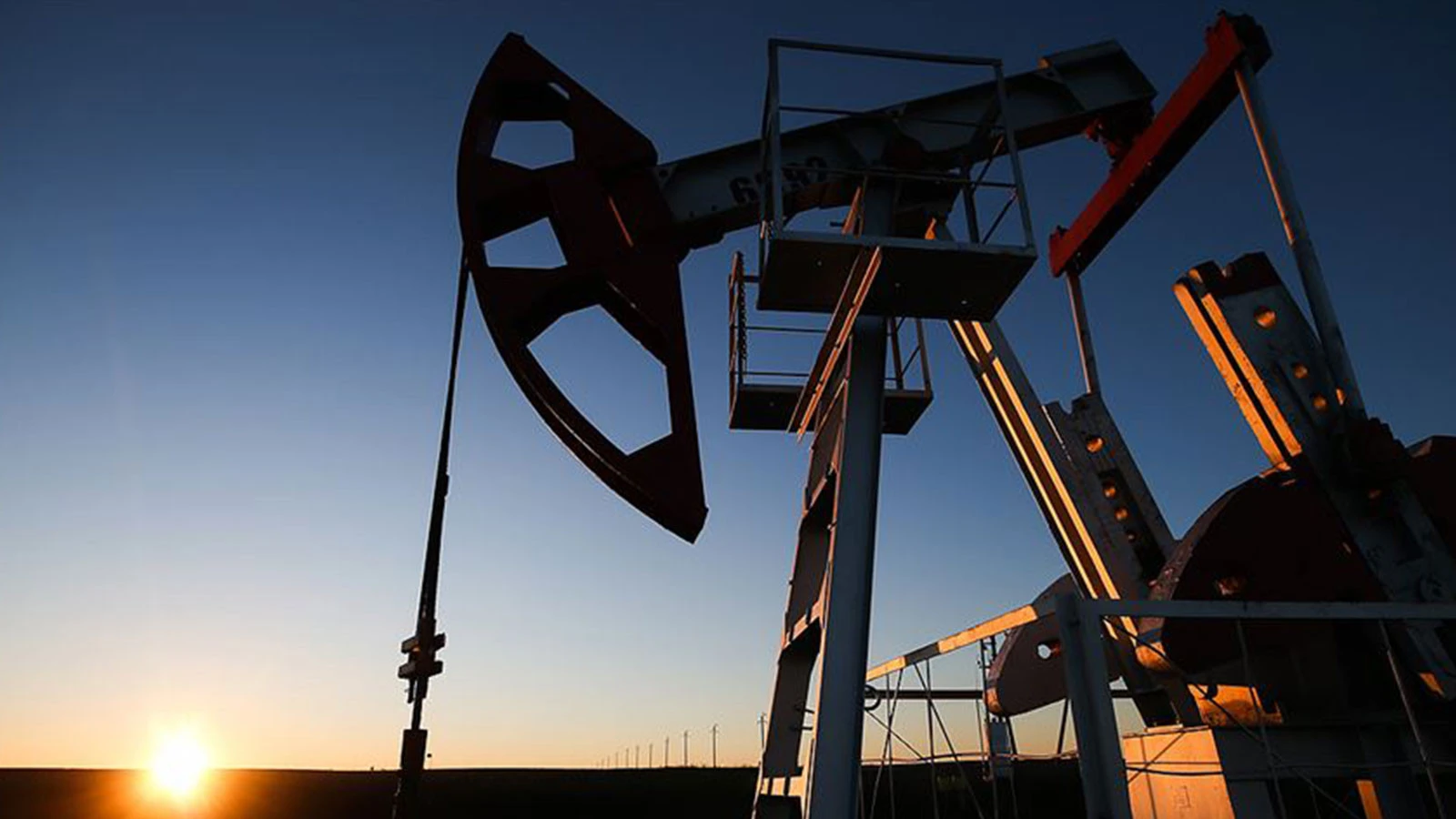
The forward barrel price of Brent oil, which rose to $105 on Friday, finished the day at $103.87. The November term barrel price of Brent oil decreased by 2 percent compared to the closing date at 09.40 today, reaching 101.78 dollars.
At the same time, the barrel price of West Texas Intermediate (WTI) crude oil for November delivery was determined as 94.04 dollars.
Diplomatic efforts to restart talks between the USA and Iran are effective in the decline in oil prices.
In his statement to the local media, Qatar Ministry of Foreign Affairs Spokesperson Majid al-Ansari stated that different ideas have been studied for the resumption of talks between Washington and Tehran for about two weeks.
Stating that Qatar’s mediation team continues its contacts with Tehran and Washington to evaluate the possibility of resuming the talks, Ansari stated that the team made diplomatic contacts between different capitals in order to make progress.
“We have received confirmation from some officials in the US administration that Washington wants to reach an agreement,” Ansari said.
Emphasizing that there is a need for a solution that will ensure stability in the region and an international approach that will protect strategic waterways such as the Strait of Hormuz, Ansari noted that subjecting waterways to the sovereignty of a particular country and using them as weapons poses a danger to everyone.
Statements regarding Washington’s willingness to reach an agreement supported the downward movement of oil prices by strengthening the expectations that US-Iran tensions could ease and supply risks in the region could decrease.
In addition, following the attacks of the Houthis in Yemen on Saudi Aramco’s East-West Oil Pipeline, the company’s increase in exports through the Strait of Hormuz also eased supply concerns in the markets.
According to provisional data from international news outlet Kpler, Saudi Arabia’s crude oil exports have risen above 4 million barrels per day so far in September, after falling to 2.4 million barrels per day in August, the lowest level since 2013.
JPMorgan analysts also pointed out in their evaluations dated September 18 that oil flows from the Middle East remained strong despite the interruption in Saudi Arabia’s East-West Oil Pipeline.
Analysts stated that the total oil flow in the region has averaged 17.1 million barrels per day in the last 10 days, which is only 6.1 million barrels per day below the 2025 average.
After the US Federal Reserve (Fed) increased interest rates for the first time since July 2023 last week, expectations that it may make an additional interest rate increase by the end of the year continue to put pressure on oil prices.
Rising energy costs in the US strengthen “hawkish” expectations for the Fed, supporting predictions that economic activity and oil demand may slow down. Additionally, expectations of tight monetary policy strengthen the dollar, making oil more expensive for buyers using other currencies, putting downward pressure on prices.
The verbal guidance from Fed officials this week is also in the focus of the markets.
It is stated that technically $ 105.80 can be watched as resistance and $ 101.48 as support zone for Brent oil.
