
From October
Patients will donate their data in the future
09/21/2026 – 1:24 p.mReading time: 3 minutes

In the future, the information stored in the electronic patient file will also be made available to research. However, insured persons can object.
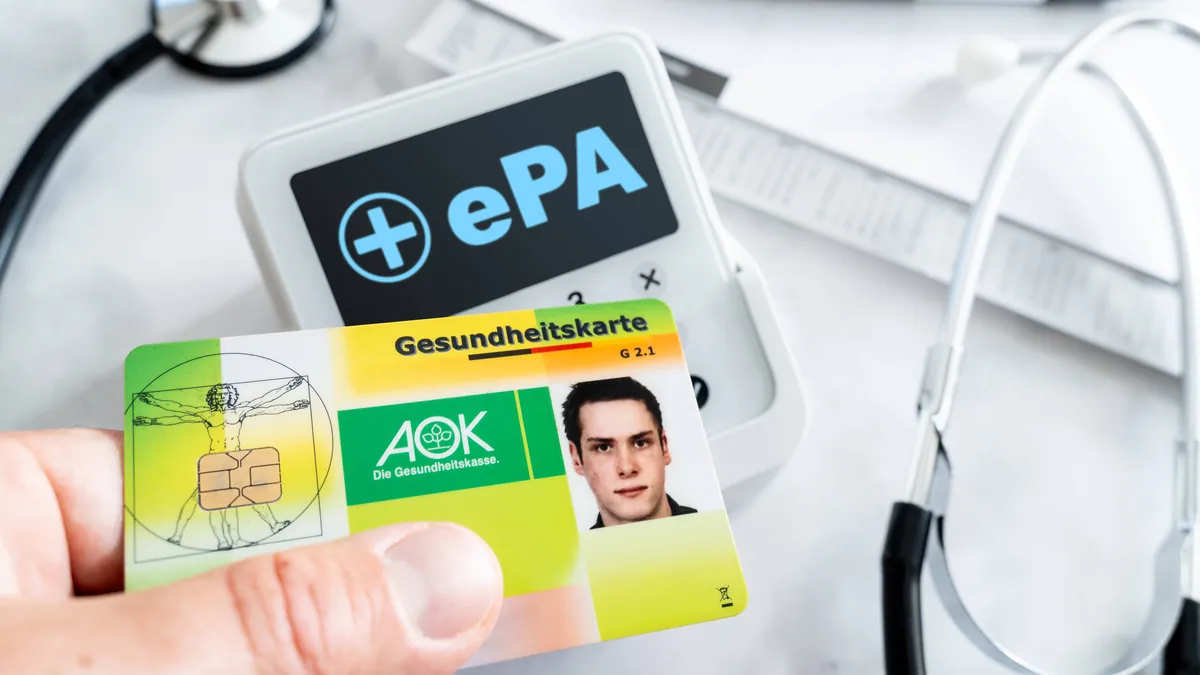
It is the next development step in the electronic patient record (ePA): From the end of October, patient data will be able to be used pseudonymously for research purposes for the first time. It starts with data from the patients’ medication lists, i.e. the overview of the medications that were prescribed to the patients. With the so-called “research data donation,” insured persons can help researchers better understand diseases and develop better treatment methods.
This is how data donation works
The patient data is sent pseudonymized to the Health Research Data Center (FDZ). Since names and insurance numbers are replaced by codes, they cannot be assigned to individual patients. Researchers can access this data if their project aims to improve health care. In addition to universities, this also includes pharmaceutical companies, health insurance companies, patient and consumer protection associations. So far, billing data from health insurance companies has already ended up at the FDZ – but this only provides researchers with limited information. Any insured person can object to the use of their data either via the ePA app or via the ombudsman’s office of their health insurance company.
The transfer of data is voluntary. Insured persons can object to it. In order to strengthen trust in the ePA, the Federal Commissioner for Data Protection and Freedom of Information (BfDI) has now advocated better control options over one’s own health data.
More differentiation options
“If you give insured people real control over their health data, you will win their trust – and thus their willingness to share this data, for example for research,” explained Federal Commissioner Louisa Specht-Riemenschneider. Insured people should be able to differentiate more clearly as to who can view and use their data. Insured people can hide certain documents – but this then applies to all doctors. Approval for certain doctors is currently not possible.
According to the body responsible for the ePA, the National Agency for Digital Medicine (Gematik GmbH), 5.85 million people with statutory health insurance currently use their electronic medical records – that corresponds to just eight percent of all insured people. Other surveys give different numbers, but come to the same conclusion: the ePA has hardly played a role in the everyday life of most insured people. From the perspective of Federal Commissioner Specht-Riemenschneider, however, the low number of users is not necessarily an indication of failure.
Almost everyone wants to keep an ePA
Nine out of ten respondents said they wanted to keep the ePA in the medium term. There are several reasons why they have not yet actively used the patient file. 42 percent stated that they were currently healthy and simply had no need to use it yet. 26 percent justified their passivity by not having had time to deal with the topic and go through the activation process. For another eleven percent, this was simply too complicated. This is what comes with it Opinion poll came to a different result than a recent study by the Ernst Abbe University Jena. This described registration for the ePA as a major bottleneck that many insured people fail. The same applies to the digital pension overview.
At the same time, the survey revealed numerous gaps in knowledge among those insured. More than 40 percent believe that the ePA is only set up after they have registered and installed the app. In fact, the ePA was set up for all patients who did not actively object. A third also do not know that they can remove certain documents from their files themselves.
