
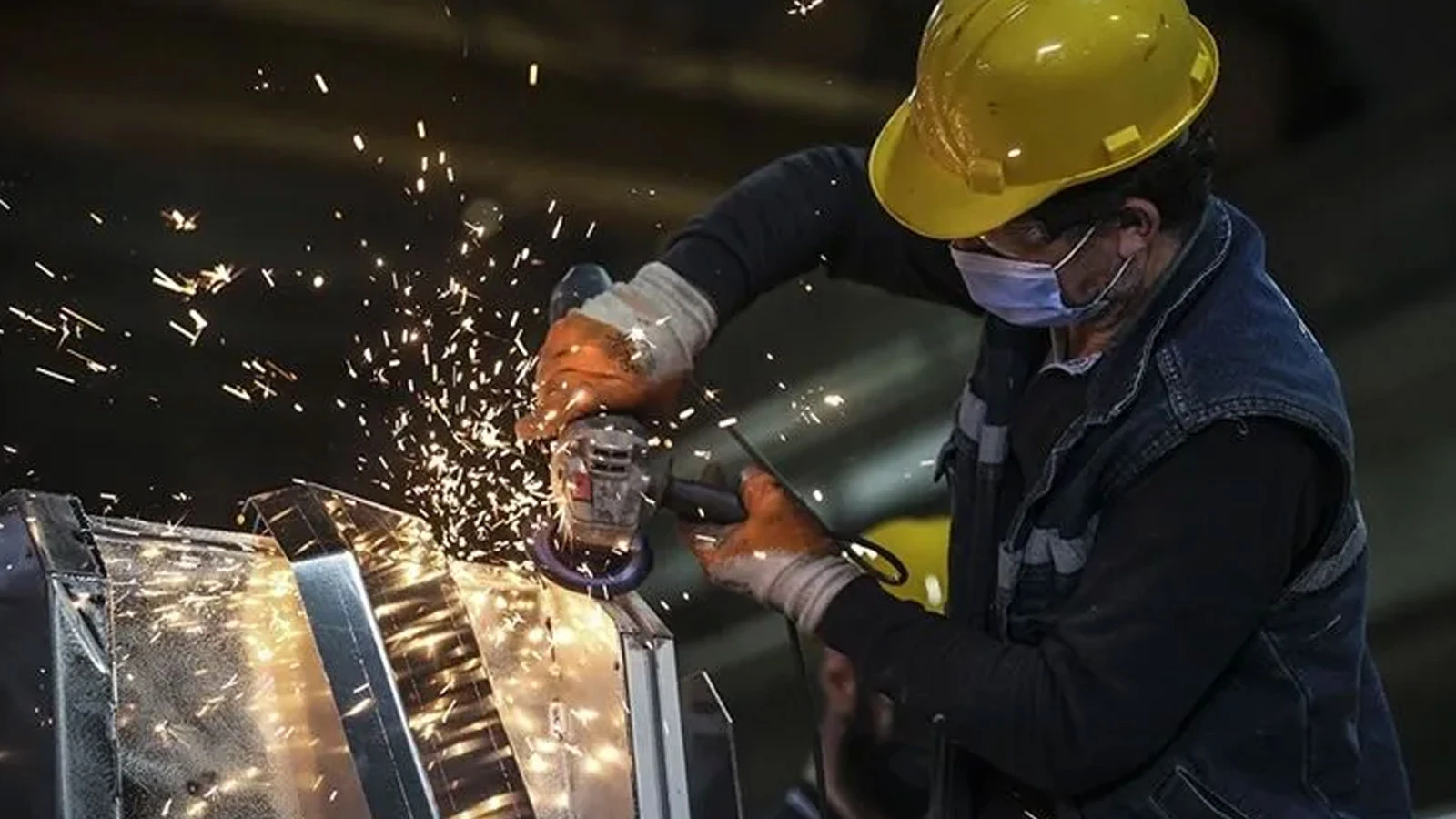
While China’s production power and Europe’s technology and productivity advantage are changing the conditions of global competition, what path the Turkish industry should follow in the future is being discussed.
MAKFED High Advisory Board Chairman and Istanbul Chamber of Industry (ISO) Presidential Candidate Adnan Dalgakıran also made evaluations about the problems facing the Turkish industry and the solutions.
“WE SHOULD STRENGTHEN THE FUTURE OF COMPANIES”
According to Dalgakıran, Türkiye’s industrial policy should not only focus on protecting existing businesses. A new system needs to be created that will transform companies, increase their efficiency and increase their competitiveness in global markets.
“We need an understanding that will strengthen the future of companies rather than saving their today,” said Dalgakıran, drawing attention to the rapid change in production technologies.
COMMON INDUSTRIAL STRATEGY PROPOSAL FOR Türkiye
One of the topics that Dalgakıran highlights is the creation of a comprehensive industrial strategy.
Arguing that this strategy should be prepared not only by the public, but also with the participation of institutions representing the industry, chambers and non-governmental organizations, Dalgakıran suggested that the differences between Türkiye and rival countries should be revealed in detail.
Dalgakıran evaluated, “We must reveal the differences between Turkey and rival countries in many topics such as raw materials, energy, workforce, automation, digitalization, access to finance and production capacity.”
NEW MODEL FOR INCENTIVE SYSTEM
Stating that the incentive system in Türkiye should also be reconsidered, Dalgakıran suggested that the results of the supports given to companies should be measured.
Accordingly, it is necessary to monitor how much progress a company receiving R&D support has made in terms of production, exports, productivity and added value after the support.
According to Dalgakıran, the main purpose of incentives should not be to maintain the current situation of companies, but to move them to a more competitive point.
“HOW WE PRODUCE IS AS IMPORTANT AS WHAT WE PRODUCE”
Dalgakıran points out that the way factories work in the world is changing rapidly; He emphasized that robotic systems, automation, artificial intelligence, digital production and data analytics are at the center of the new industrial order.
Stating that it will not be enough for Türkiye to just discuss which products it will produce, Dalgakıran said that it will also be decisive at what technology and efficiency level the production will be carried out.
“Production styles are changing. While the share of automation and robotic production is increasing in the world, it is not right that we are still trying to compete with the cost structures of the past. We must develop technology, efficiency and human resources together.”
“ACT TOGETHER” SUGGESTION TO COMPANIES
One of Dalgakıran’s remarkable suggestions is that rival companies cooperate in certain areas.
Stating that companies can act together in areas such as joint purchasing, technology investments and entry into international markets while continuing to compete in the market, Dalgakıran stated that this can create a cost advantage.
He argued that at the point where global competition has reached, the traditional model in which each company fights alone should be re-evaluated.
“ISO’S ROLE MUST ALSO CHANGE”
Dalgakıran, who is a candidate for the ISO Presidency, also gave messages about the role that the Istanbul Chamber of Industry should undertake in the future.
Stating that ISO should not be a structure that only prepares reports or conveys industrialists’ problems to public institutions, Dalgakıran asked the chamber to take a more active role in creating problem-solving mechanisms.
Noting especially the acceleration of bureaucratic processes, Dalgakıran said, “It is no longer acceptable for a problem encountered by the industrialist to reach the relevant institutions and wait for a long time for a solution. It is necessary to establish a structure that works faster by using the opportunities of the digital age.”
10-20 YEAR ROAD MAP FOR TURKISH INDUSTRY
At the center of Dalgakıran’s suggestions is the transformation of Türkiye’s industrial policy from short-term problems into a long-term transformation program.
Accordingly, Türkiye will not only reduce production costs in the coming period; It needs to focus on improving efficiency, increasing the use of automation and technology, expanding the scale of companies, and building enduring brands in global markets.
While Dalgakıran argues that this transformation can be achieved with the joint work of the public, industrial organizations, chambers and civil society, he points out that a new model should be created to cover Türkiye’s industrial future for the next 10-20 years.
