
Reconnaissance in the Black Sea
NATO responds to ship attacks
Updated 10/21/2026 – 8:31 amReading time: 2 minutes

NATO member states are placing the Black Sea under greater surveillance. A special naval aircraft is already in use.
After drone attacks on merchant ships off the coasts of Romania and Bulgaria, the NATO announced the deployment of “additional resources” to the Black Sea region. This includes “support for surveillance, reconnaissance and forensic analysis,” said NATO spokeswoman Allison Hart after a meeting of NATO ambassadors from member states in Brussels on Tuesday on the online service
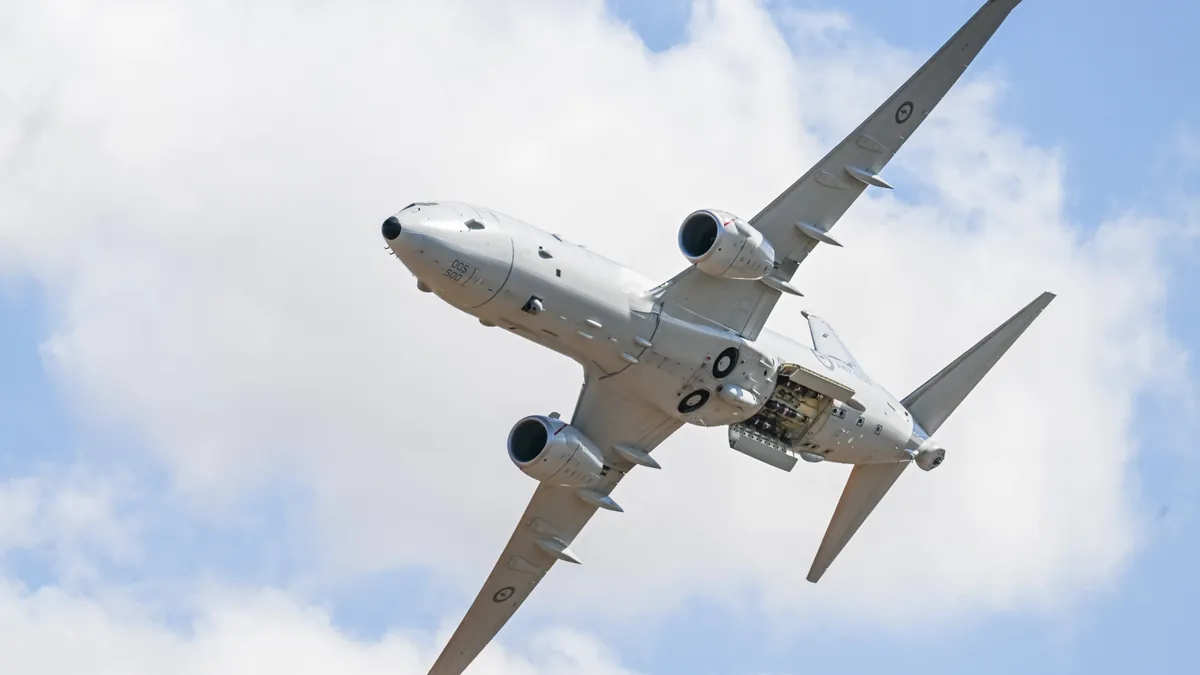
Bulgarian Prime Minister Rumen Radev confirmed Tuesday that a U.S. Navy plane was over Black Sea is in use.
Maritime patrol aircraft as part of the NATO mission
Radev told journalists that the Boeing P-8A Poseidon is a maritime patrol aircraft. They fly reconnaissance missions to detect possible threats. The NATO partners responded quickly to the Bulgarian request for support.
Bulgaria has fully mobilized its surveillance, reconnaissance, detection and response capabilities, Radev said. He expects further help from NATO allies.
Defense Minister Dimitar Stoyanov said the aircraft was under NATO command and had no attack capability in this mission. His missions continued as long as necessary.
Since the beginning of October, there have been several drone attacks on ships off the Bulgarian and Romanian coasts in the Black Sea as a result of Russia’s war of aggression against Ukraine. The drones will Russia assigned.
Fire on oil tanker and fire on another ship
A fire was initially reported on the oil tanker “Yara J” off the coast of Romania on Tuesday evening. A short time later, according to authorities, a fire broke out on another ship early Wednesday. According to the Romanian shipping authority, there were a total of twelve people on board the chemical tanker “Wine Trader”. “Five sailors were rescued, another seven are still missing,” the authority said.
The Black Sea is central to the global export of grain, energy resources and raw materials. By intensifying its attacks in the region, Russia could trigger a global food crisis, EU foreign policy chief Kaja Kallas criticized on Tuesday. She demanded Moscow to stop hindering the export of Ukrainian grain.
