
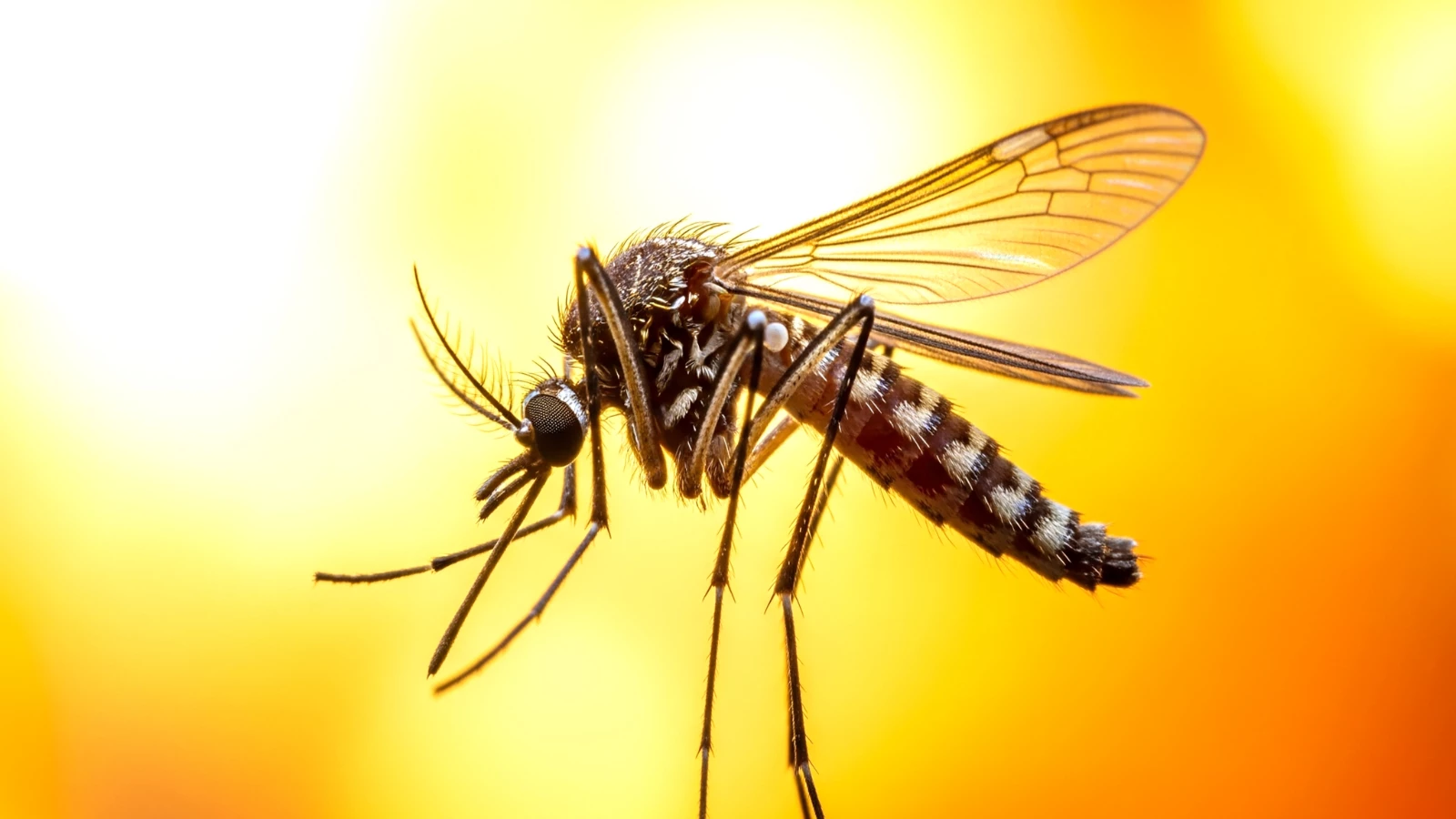
The research shows that this is no coincidence; It reveals that it arises from a specific combination of environmental signals. Flight analyzes of female Aedes aegypti mosquitoes show how these insects find their victims through visual and chemical stimuli.
To reach these results, the researchers tracked the movements of hundreds of mosquitoes in a controlled environment using three-dimensional infrared cameras. Then, a human was introduced into the environment and the mosquitoes’ reactions were analyzed.
Scientific keys to behavior
One of the most important findings was that the mosquitoes did not follow each other, but responded independently to the same signals. Professor David Hu explained: “It’s like a crowded bar. Customers don’t come in one after the other; they’re attracted by the same stimuli.”
Chief among these stimuli are carbon dioxide (CO₂) and visual contrasts. Experiments show that a dark colored object attracts mosquitoes; However, this effect was shown to become stronger when combined with CO₂, and the insects tried to feed for longer.
Why do some people get bitten more?
In tests conducted on humans, researcher Christopher Zuo observed that mosquitoes were especially concentrated in the head and shoulder area. This shows that mosquitoes perceive humans as a signal source rather than a specific target.
Individuals that emit more carbon dioxide and have higher visual contrast become more attractive to mosquitoes. Additionally, while mosquitoes tend to disperse when there is only a single stimulus, the combination of these two factors creates a much stronger attraction.
These findings could improve strategies to combat diseases such as malaria and Zika. According to Zuo, operating suction traps intermittently may be more effective; because mosquitoes do not stay in the same place for a long time when the signals are not continuous.
