
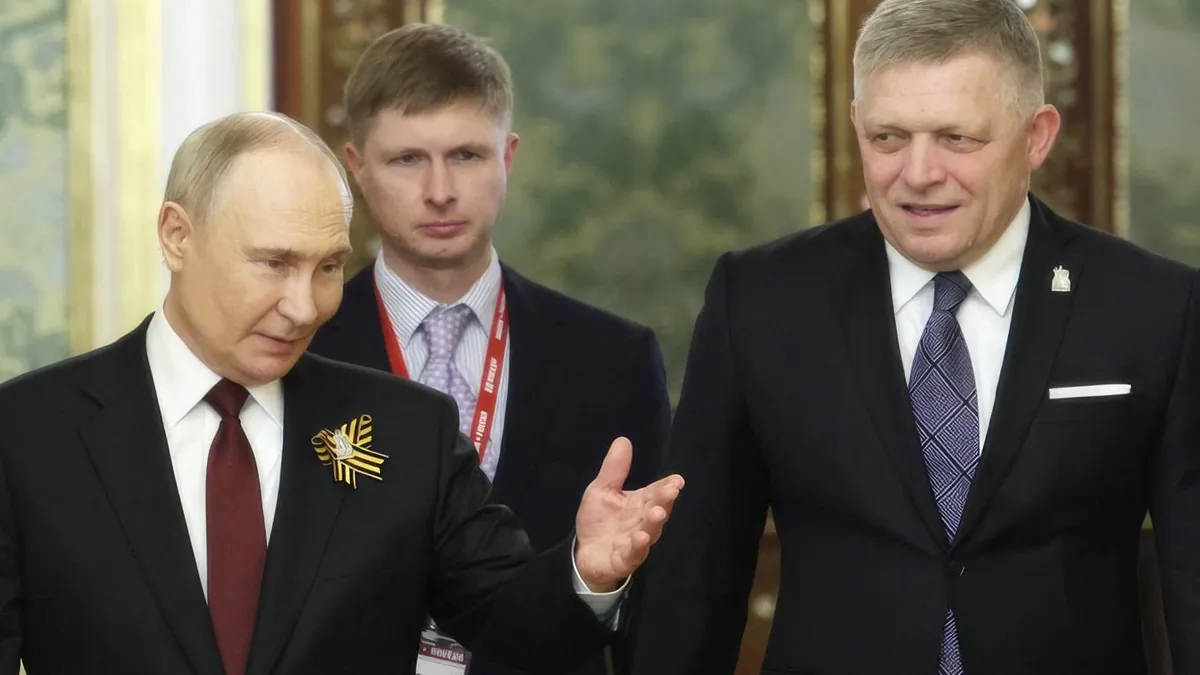
Slovakia and Hungary are consolidating their blockade in the EU. Ukraine is suffering from this, but it is also difficult to take clear measures against the Russian threat to the EU.
Slovakia is more isolated in Europe than it has been for a long time. At the EU summit last week, Prime Minister Robert Fico and his Hungarian counterpart Viktor Orbán blocked aid for Ukraine. At the same time, the dispute with Kiev over Russian oil deliveries via the Druzhba pipeline is escalating.
Fico is driving his country ever deeper into a course that is being followed with growing suspicion in Brussels and other EU capitals. And if Orbán loses the elections in Hungary in two weeks, Fico could be left alone in the EU with this course.
Ivan Korčok, former Slovak foreign minister and leading opposition politician, believes this is dangerous – for Slovakia and for Europe. In the interview he explains why he considers Fico to be a security risk, why pro-Russian messages are entangled in parts of Slovak society and what a change of power in Hungary would mean for Bratislava. A conversation about Putin’s influence, Europe’s weakness and the question of whether Slovakia can once again clearly return to a pro-European course.
t-online: Mr. Korčok, Slovakia is particularly noticeable in the EU with regard to aid to Ukraine and sanctions against Russia because of its blockades. How do your conversation partners in Europe currently perceive your country?
Ivan Korčok: Unfortunately, Slovakia currently has a bad reputation in Europe. Our partners in the EU see my country under the Fico government as anti-European and an unreliable ally. Many of my interlocutors ask me how it can be that Fico maintains close relations with Russia right now, when not only the existence of Ukraine is at stake, but the EU is also threatened by existential questions.
Prime Minister Fico is seriously questioning the future of the EU. He believes that the EU policy towards Russia is completely wrong, that it is not okay to oppose Russia or to punish Russia with sanctions. He believes that such a policy has no future. He also plays on the pro-Russian feelings that parts of the Slovak population still harbor.
