
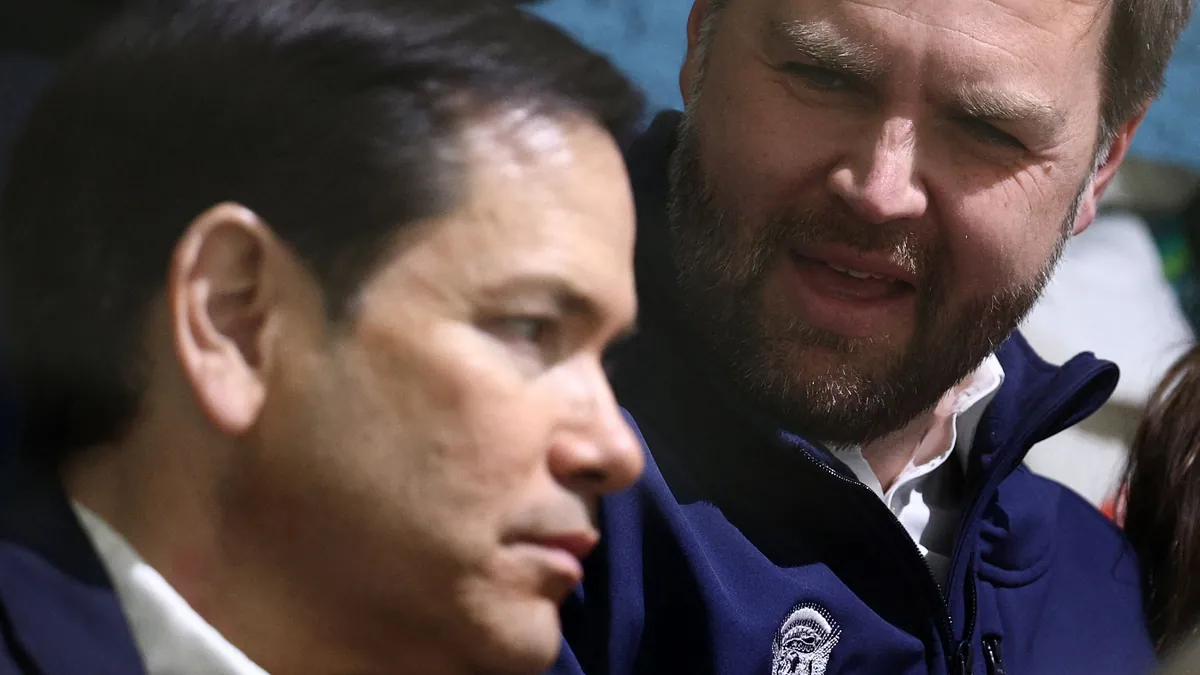
Vance sometimes seems overwhelmed. When Trump recently brought him to the microphone at the governor’s meeting in the White House, apparently without consultation, to say “a few words” to the audience, he stammered quite a bit. “I didn’t expect that, sir. That’s why I didn’t prepare anything.” He then said how good it was that as vice president “you’re not blamed” when something goes wrong. Trump put on a broad grin with pursed lips.
But in fact, this is what distinguishes Vance from the president, who is constitutionally barred from running, and from his secretary of state. And that’s exactly where Rubio’s risk lies. Whoever is Foreign Minister and National Security Advisor bears enormous responsibility – especially for the unpopular wars. Every diplomatic success raises his profile. But every crisis and every failure can just as quickly become his political mortgage.
The longer the Iran operation lasts and the more US soldiers die in it, the worse the future prospects for Rubio’s candidacy will be. On the other hand, the more reserved JD Vance behaves, the less vulnerable he would be on this issue in 2028, in the end of the Trump era. He can concentrate on domestic political issues that are much more important to the population.
It would be far too premature to simply write off JD Vance. What sounds exciting in the headlines and essays in the capital’s press has not been reflected in surveys, at least so far. In early surveys for the 2028 Republican primaries, he is clearly ahead – in one poll he receives 53 percent among supporters, while Rubio only gets 7 percent. Vance’s distance from him is also more than clear in other national polls. But he is also the much better known politician.
Whether Vance or Rubio is ahead in the race will be watched more and more in the coming months. Only one thing is certain: the Republican Party after Donald Trump will no longer be the same. Both JD Vance and Marco Rubio represent a final departure from the old Reagan conservatism – with more skepticism towards globalization, greater distance from Europe and a much more populist tone.
