
More than 100 people killed
Latin America remains the most dangerous region for environmentalists
Updated on 09/16/2026 – 03:42 amReading time: 2 minutes

Those who defend nature live dangerously in parts of Latin America. Although the global number of environmental defenders killed is falling, in Brazil it has more than doubled within a year.
According to the non-governmental organization Global Witness, at least 124 land and environmental defenders were killed worldwide last year. 105 of them were killed in Latin America alone – making the region once again the sad leader by a wide margin, as a published report by the organization shows.
Colombia at the top
The greatest danger was again Colombiawhere 39 environmentalists were killed. This means that the country leads the statistics for the fourth time in a row. Follow it Brazil (26 deaths), Honduras and the Philippines (12), Mexico (10) and Guatemala (8). Colombia and Brazil accounted for more than half of all cases registered worldwide.
More than three quarters of those killed worldwide were small farmers, members of indigenous peoples or people of African descent. In more than a third of the cases recorded worldwide, there was also evidence of links to organized crime or contract killers.
Overall, however, the number of documented killings has decreased. According to Global Witness, there were 142 deaths in 2024, compared to 196 the year before. However, Global Witness also emphasizes that the actual number of cases is probably higher.
Things get dangerous on contested land
The situation is particularly dangerous where there is a struggle for land and natural resources. More than half of the killings were linked to land conflicts, according to Global Witness. Areas affected include mining and raw material extraction, deforestation and agriculture. Unresolved or unrecognized land claims have left indigenous communities and small farmers suffering from land grabbing, intimidation and violence, said Gabriella Bianchini of Global Witness.
People defending their land and the environment are the “eyes and ears of the world on the ground,” said Toby Hill, lead author of the report. They made visible where ecosystems were being destroyed, forests were being cleared or rivers were being polluted. The violence against them reflects a larger struggle for land and resources.
Brazil was particularly hard hit
In Brazil, the number of killings has more than doubled from 12 to 26 within a year. Most cases were related to demands for the recognition of ancestral indigenous territories and for land reform in the states of Rondônia and Pará. Global Witness sees the concentration of land in the hands of a few large landowners and the development of ever larger areas for livestock farming, soy cultivation, raw material extraction and speculation as the central drivers of conflict.
Indigenous people protect their territories
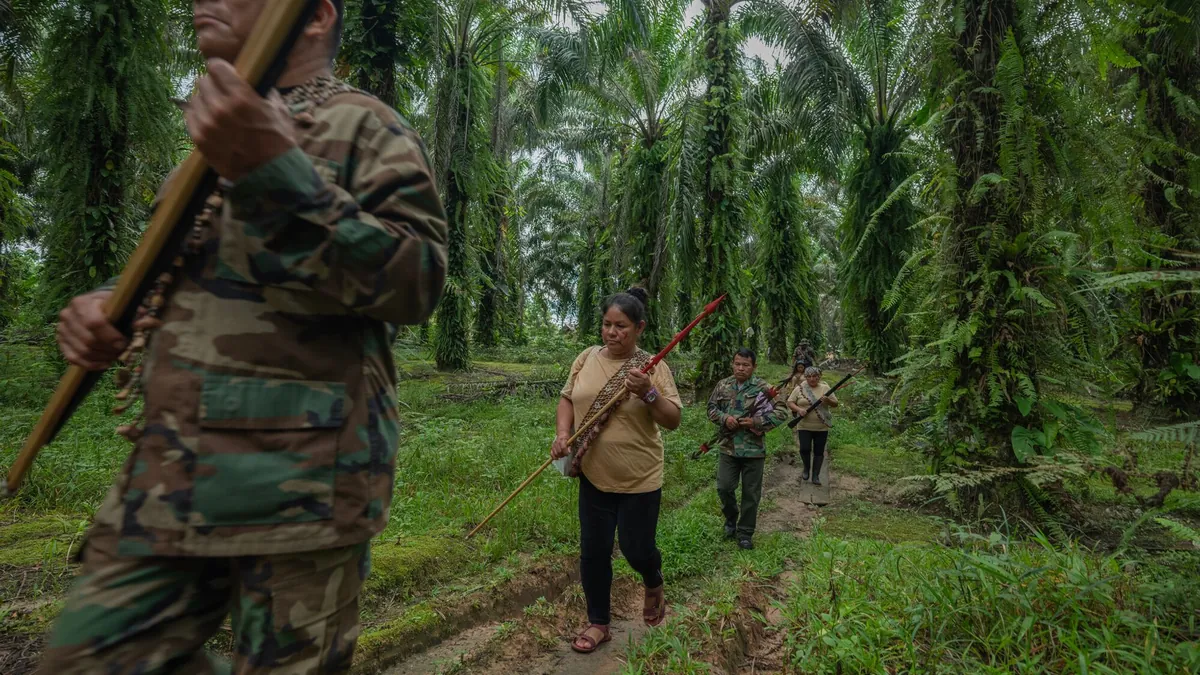
At the same time, affected communities are trying to protect themselves. In Peru For example, Kakataibo indigenous people have set up their own protection force that monitors their area and defends it against organized crime and illegal coca cultivation. “For the next generation, this work is more dangerous than ever before,” said their commander, Segundo Ispón.
