
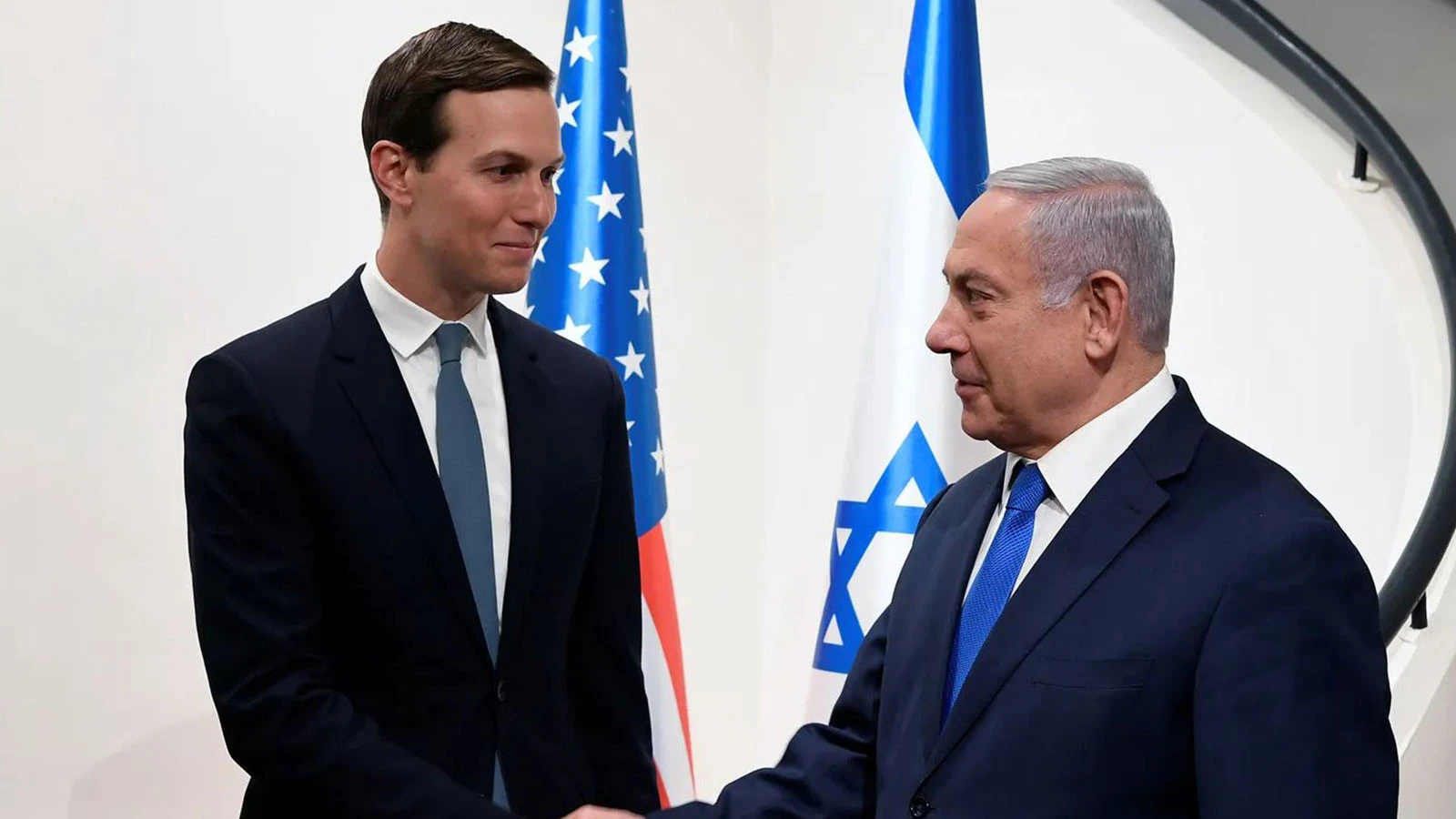
Thousands of financial records examined by CNN revealed an indirect financial connection between the business investments of Jared Kushner, who played a role in Gaza diplomacy, and the Israeli defense industry. Affinity Partners, founded by Kushner in 2021, received $2 billion from the Saudi Arabian Public Investment Fund. The company, which is also supported by capital from Qatar and the United Arab Emirates, purchased 4.95 percent of the Israeli financial institution Phoenix Financial for approximately $128.5 million in July 2024. Increasing its share to approximately 10 percent in January 2025, Affinity became the company’s largest shareholder. Although he sold some of his shares for $343 million in July 2026, reducing his share to 7.4 percent, he retained his position as the largest single shareholder.
456 MILLION DOLLARS TO COMPANIES
According to CNN’s investigation by examining financial statements in Israel, the value of Phoenix Financial’s investments in at least nine companies that directly or indirectly provide military equipment to the Israeli army exceeds $456 million. Chief among these is Elbit Systems, which produces air ammunition, artillery systems, electronic warfare technologies and unmanned aerial vehicles. Phoenix’s investment in Elbit is worth at least $265 million. Its investment in Next Vision, which develops electro-optical systems for military UAVs, exceeds 68 million dollars, and its investment in Reshef Technologies, which produces electronic detonators used in artillery ammunition, exceeds 40 million dollars. The portfolio also includes Israel Shipyards, which provides warships to the Israeli Navy, and Ashot Ashkelon, which produces tank and armored vehicle parts. According to CNN, the stock market value of all nine companies rose last year.
INVESTOR AT THE TABLE
The most striking aspect of the research is Kushner’s diplomatic role. Kushner, who is influential in the Trump administration’s Middle East contacts, takes part in the Gaza ceasefire negotiations and also manages Affinity Partners, the largest shareholder of Phoenix, which invests in companies linked to Israel’s defense industry. Kushner’s lawyers argue that he is not on Phoenix’s board of directors and does not participate in investment decisions.
99 PERCENT OF WEAPONS ARE FROM TWO COUNTRIES
While Kushner’s investments are being discussed, foreign dependency in Israel’s military procurement also draws attention. According to the March 2026 report of the Stockholm International Peace Research Institute (SIPRI), 68 percent of the major conventional weapons imported by Israel in the 2021-2025 period came from the USA and 31 percent from Germany. Thus, the two countries met 99 percent of Israel’s arms imports in this category. The systems supplied by the USA include warplanes, armored vehicles, guided bombs and missiles. Israel’s arms imports also increased by 12 percent compared to the previous five-year period.
APPROVAL OF 799 MILLION EUROS
The figures of Germany, Israel’s second largest arms supplier, for 2026 are also striking. According to the statement of the German Ministry of Economy dated July 15, 2026, the Berlin administration allowed the export of military equipment worth 799.34 million euros to Israel in the first six months of the year alone. More than 60 percent of this amount was allocated to a major naval defense project, and approximately 20 percent was allocated to the cooperation of German and Israeli companies in line with the needs of the German army. The Ministry stated that the remaining section relates to military products other than combat weapons.
ARMS TRADE INCREASED BY 9 PERCENT
The economic dimension of wars is not limited to the Middle East. According to SIPRI’s 2026 report, the volume of major arms transfers in the world increased by 9.2 percent in the 2021-2025 period compared to the previous five years. The increase in arms imports of European countries reached 210 percent. While the USA accounted for 42 percent of global major arms exports, France received a share of 9.8 percent and Germany 5.7 percent. Israel, on the other hand, increased its arms exports by 56 percent and rose to seventh place in the global rankings.
