
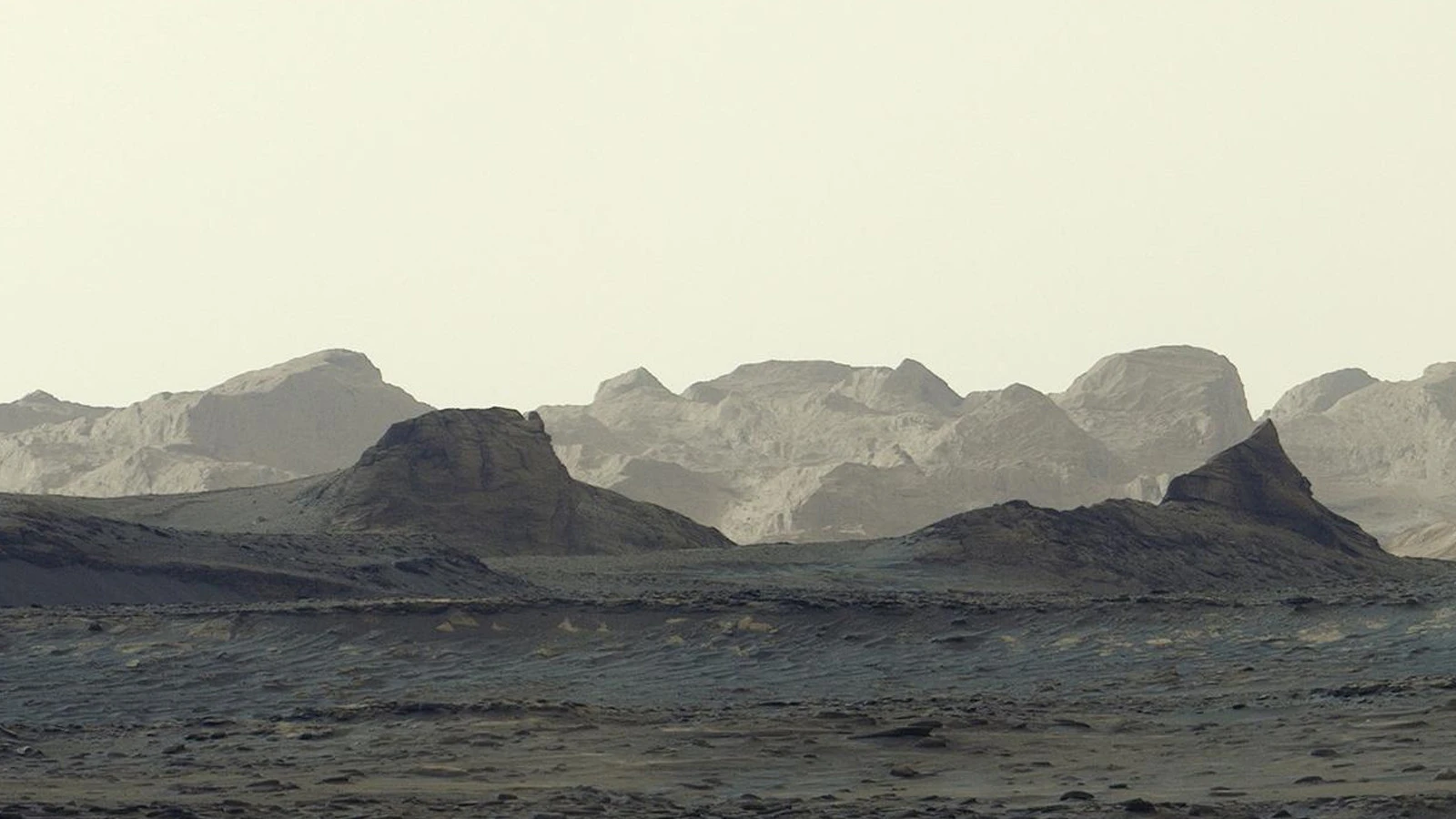
Continuing its climb to the 5-kilometer-high Mount Sharp, rising from the floor of Gale Crater, Curiosity this time captured quite extraordinary rock formations in its frame. Ashwin Vasavada, a planetary scientist from NASA’s Jet Propulsion Laboratory, emphasized that the bright, steep peaks looming in the distance are distinctly different from all the rock layers the rover has traversed to date.
According to scientists, ancient volcanic activities underlie these structures. It is considered that the sediments erupted from nearby volcanoes were carried into the crater by the wind and hardened over time and turned into rock. These rocks, eroded by strong winds over thousands of years, turned into sharp and long ridges called “yardang”. These layers, which are estimated to have formed approximately 3 billion years ago and extend for 16 kilometers, point to time gaps known as “unconformity” in geology, which occur with the accumulation of new sediments after the erosion of old layers.
RECORD HEIGHT AND FUTURE GOALS
Starting from the base of Gale Crater and gradually moving up the slopes of the mountain, Curiosity broke the record for the highest level ever reached on Mars, reaching a height of approximately one kilometer. Each layer of Mount Sharp acts as a diary of the planet’s past. The data provided by the vehicle proves that Mars was once a much warmer and wetter planet, covered with lakes and streams, unlike its current cold and arid nature.
Curiosity’s main mission is to reveal whether Mars had conditions that could have hosted microbial life in the past. Together with Perseverance, which operates in Jezero Crater, the vehicle, which is NASA’s eyes and ears on Mars, continues its climb without interruption. According to plans, Curiosity will fully reach this mysterious yardang layer in 2027 or 2028 and will closely examine the geological structure of the region with its advanced devices.
BOTH VERY CLOSE AND VERY FAR TO THE WORLD
Evaluating the atmosphere felt by the photo, Vasavada stated that the view resembles Monument Valley in Arizona. Stating that it is possible to feel the deep silence and endless open space under the sky, the scientist reminded that although the image looks familiar, it definitely belongs to Mars. Stating that unlike on Earth, the sky on Mars is orange and the sunrise is in blue tones, Vasavada stated that this gives the landscape a feeling that is both Earth-like and fascinatingly alien.
