
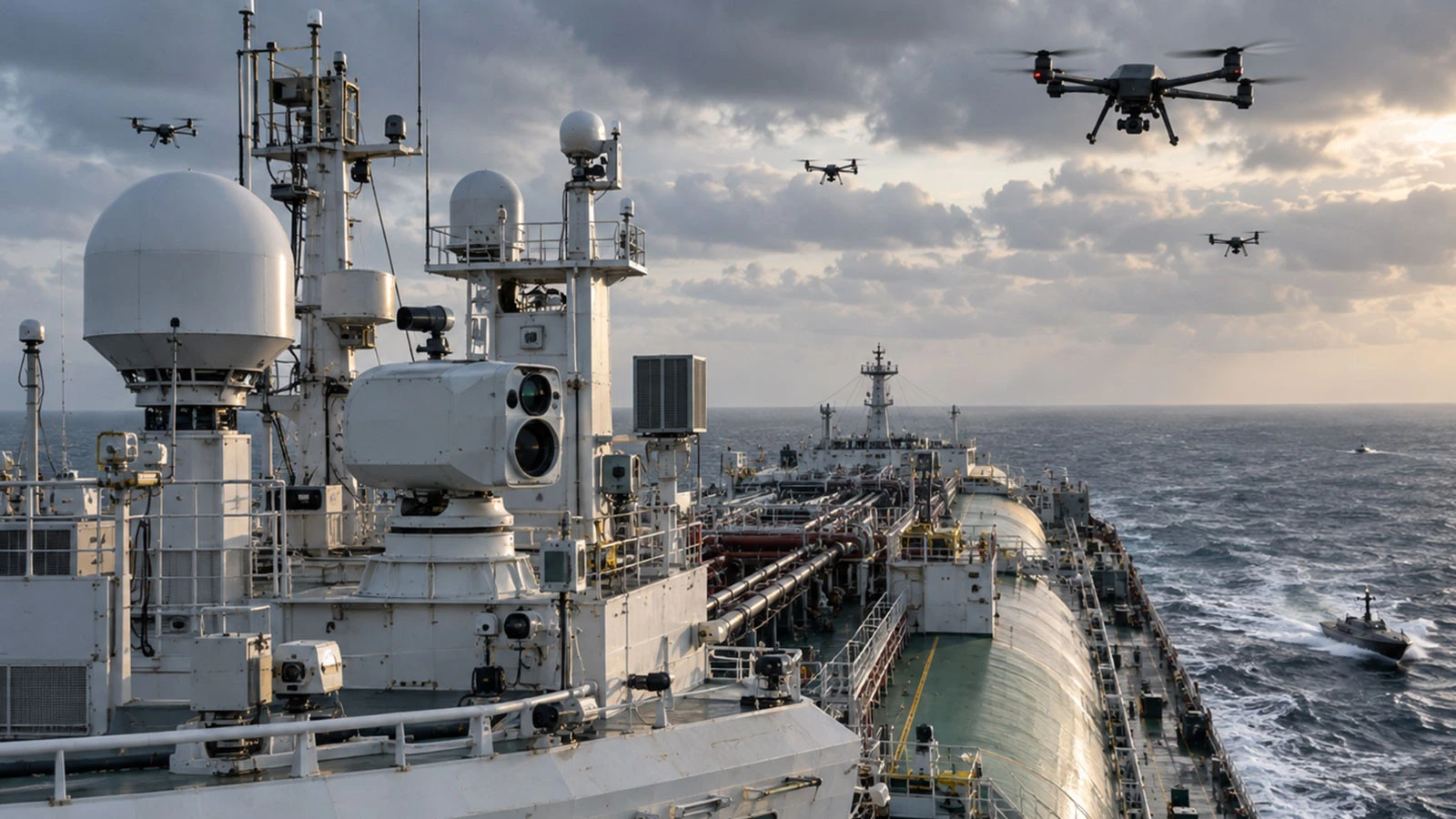
World maritime trade is facing one of the biggest security crises of recent years. Drone detection and electronic defense systems, which were previously used only on warships, are now on the agenda for oil tankers, LNG carriers and large cargo ships. According to the research published by the Financial Times, international shipowners have accelerated their negotiations with technology companies to install special defense systems on their ships in the face of increasing attacks.
The new defense packages developed for merchant ships work in several stages. Special radars identify small drones, thermal cameras enable target identification at night and in low visibility conditions. Radio frequency sensors detect remote control connections, while electronic jammers can interfere with the drone’s control and positioning systems under appropriate conditions.
500 THOUSAND DOLLARS PER SHIP
Applications to companies such as MARSS, Drone Defense and D-Fend Solutions, which develop defense technology, have increased significantly recently. Especially companies engaged in oil, natural gas and offshore energy transportation want their ships to be able to detect attacks in advance. The cost of a comprehensive defense package consisting of radars, electro-optical cameras, infrared sensors and electronic jammers can reach approximately 500 thousand dollars per ship. Based on this figure, equipping a fleet of 10 ships means an investment of 5 million dollars, protecting a fleet of 50 ships means an investment of 25 million dollars, and equipping a fleet of 100 ships means an investment of 50 million dollars.
THREE SHIPS WERE HIT IN THE BLACK SEA
Recent developments that accelerated shipowners’ search for defense took place in the Black Sea. On October 5-6, three merchant ships were targeted by air and sea drones in the exclusive economic zones of Romania and Bulgaria. Two of the ships sank, according to a report by maritime security company Ambrey. While the Togolese-flagged Alfa Watan, which was hit off the coast of Bulgaria, sank into the waters, the Palau-flagged Able caught fire. 18 sailors aboard Able were evacuated. The extension of the attacks to the coasts of Romania and Bulgaria carried the effect of the war on maritime trade to the economic regions of NATO countries.
TURKISH SHIPS ARE ALSO AT RISK
The danger for Türkiye is not limited to international transportation. According to the information published in the report prepared by the Turkish Shipowners Association in August, as of February 2022 146 merchant ships were damaged in attacks or conflict-related incidents in the Black Sea and the Sea of Azov. 34 of these were Turkish-owned or Turkish-controlled ships. It is stated that Turkish shipowners are also investigating options for installing drone detection and defense systems on commercial ships.
12 ATTACK ATTEMPTS IN THE GULF
Another center of danger is the Strait of Hormuz. According to Reuters’ news dated October 7, at least 12 incidents of attacks, attempted attacks, and harassment against oil tankers were recorded between September 28 and October 5. This number reached the highest level seen in a week since the war in the region began on February 28. The International Maritime Organization confirmed nine of the incidents in question. While the daily oil flow through Hormuz decreased to 10.1 million barrels, only seven merchant ships passed through the strait on October 6. Before the war, approximately 125 large merchant ships used the same route daily.
OVER 100 ATTACKS
In the current security warning of the US Maritime Administration, it is stated that the Houthis carried out more than 100 separate attacks on merchant ships between November 2023 and October 2025, and the incidents affected more than 60 countries. In July 2025, two cargo ships named Magic Seas and Eternity C were sunk in the Red Sea, while in August 2026, two tankers were targeted by missile attacks off the coast of Saudi Arabia’s Yanbu port. Experts emphasize that the developed systems are adapted to the open sea.
