
War against Ukraine
Russia relies on forced recruitment
Updated 10/26/2026 – 5:14 p.mReading time: 2 minutes

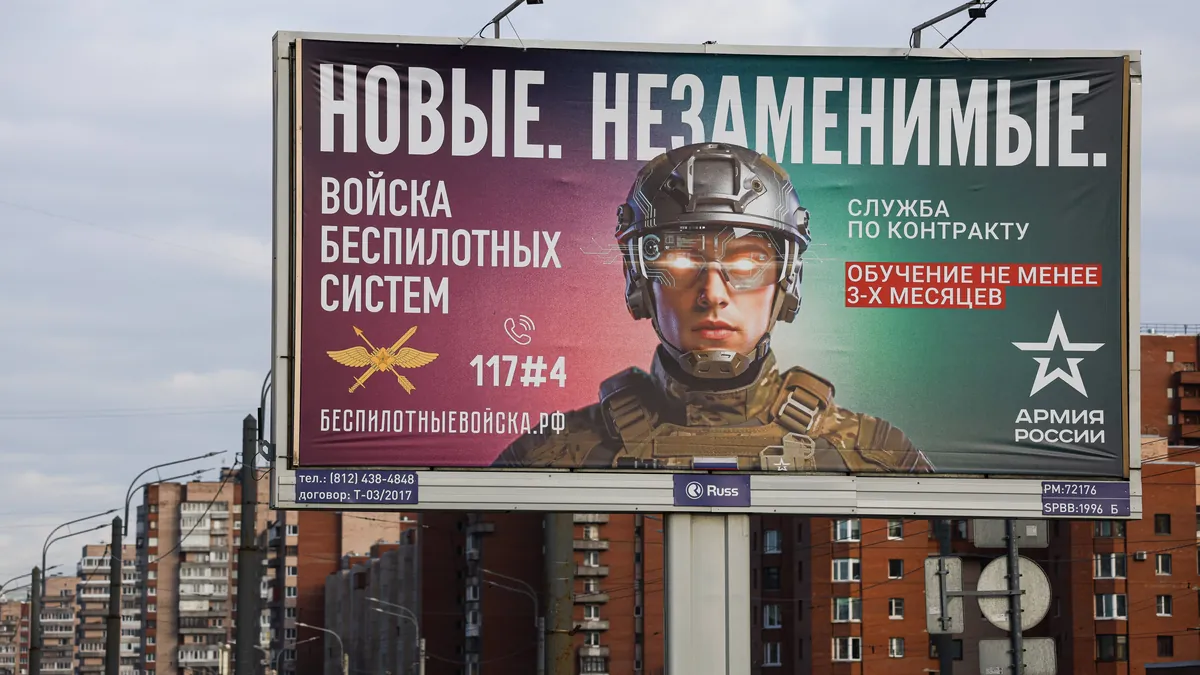
The war of aggression against Ukraine is extremely costly for Russia’s army. Moscow is now taking tougher measures when recruiting new soldiers.
It’s a problem with that Russia has been struggling for years. Since the attack on the Ukraine the Russian army suffers heavy losses. It is therefore dependent on constantly recruiting new soldiers to serve at the front. The fact that this is proving to be increasingly difficult is demonstrated by developments in recent years.
That of the Kremlin chief Vladimir Putin The partial mobilization ordered in 2022 triggered a wave of refugees: hundreds of thousands of Russians left the country at that time, many moving to Georgia and Armenia. Since then, Russia has refrained from large-scale recruitment campaigns. When recruiting personnel, the government instead relies on financial incentives and advertises to prisoners the prospect of freedom.
- Ally loses choice: Putin has a serious problem
- Islands in the Arctic: “The Russians are our neighbors, not enemies”
However, this approach may now have come to an end. There has recently been increasing evidence of an imminent mobilization. The Kremlin denied such reports. When it comes to recruiting new soldiers, Russian authorities seem to have long since relied on tougher measures and carried out forced recruitment. This is what research by the US television station suggests CNN vicinity.
Bonuses for placing new soldiers
The CNN report covers several cases that follow a similar pattern. Accordingly, men, including those with previous illnesses and physical limitations, are approached on the street and sometimes taken to local recruiting offices. They would be presented with contracts agreeing to serve in Russia’s army. Relatives tell CNN that their relatives were forced to sign.
A detail appears in several descriptions. The people who pick up men on the street cannot be clearly identified and often appear in civilian clothing. Relatives and human rights activists therefore suspect that these are ordinary citizens who collect bonuses for finding new soldiers. A relative speaks to CNN of “bounty hunters.”
The report on forced conscription contradicts the state narrative that Russian soldiers voluntarily serve at the front. So Russia is trying to distance itself from Ukraine, where one Conscription applies to men between 18 and 60 years of age. Ukrainian men from the age of 25 can be conscripted to serve at the front.
Janis Kluge, head of the Eastern Europe and Eurasia research group at the Science and Politics Foundation, believes it is unlikely that the coercive measures are controlled centrally by the Kremlin. The recruitment of new soldiers is therefore the responsibility of the Russian regions and is carried out based on set quotas. Forced conscription could nevertheless prove to be a welcome solution to Russia’s personnel problems.
