
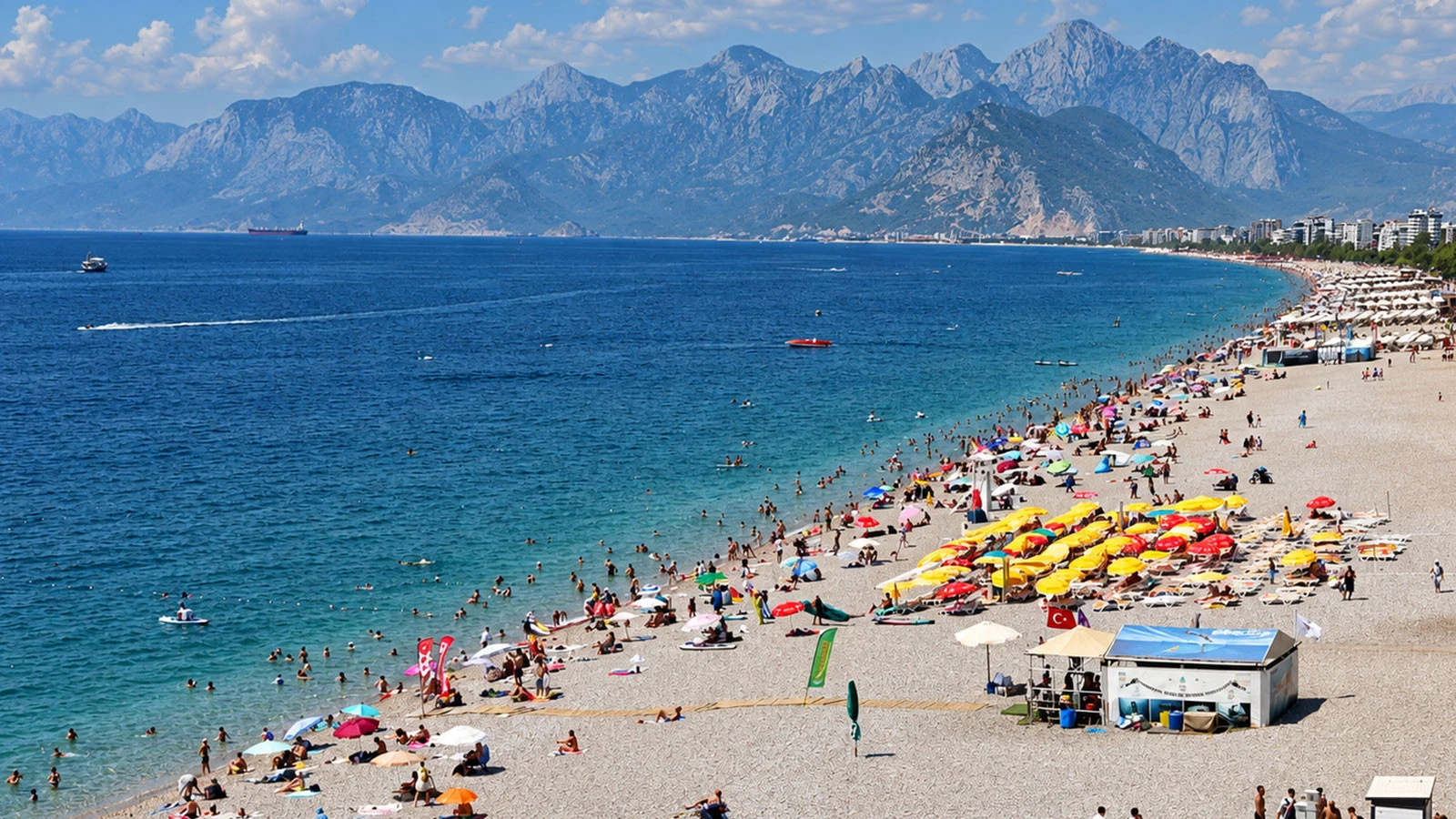
Antalya, which will host the United Nations Climate Change Conference (COP31) between 9-20 November, was the subject of a remarkable research showing how global warming changes daily life. The study of scientists from Sakarya and Bahçeşehir universities, published in the international journal Climate Services, revealed that increasing temperatures are driving city residents from coastal areas to the plateaus in the Taurus Mountains. The plateaus, which used to be important centers of animal husbandry and agricultural activities, are now turning into seasonal living spaces for those who want to get away from the scorching summer heat.
41 DEGREES ON THE COAST, 23 DEGREES ON THE PLATEAU
In the research, not only air temperature but also the effects of humidity, wind and sunlight on the human body were examined. According to the measurement called Physiological Equivalent Temperature (PET), thermal conditions in the coastal areas of Antalya during the summer months vary between 35-41 degrees, while in some regions this value exceeds 41 degrees, reaching the level of extreme heat stress. In the same period, PET values in the plateaus of the Taurus Mountains remain in the range of 20-23 degrees. The significant difference between the two regions also explains the reasons for the seasonal mobility towards the higher elevations.
THE FACE OF THE PLATEAUS IS CHANGING
Scientists also investigated the reflections of temperature data on daily life through field interviews in Geyikbayırı, Üçoluk and Feslikan plateaus. The study showed that the plateaus, which were used mainly for animal husbandry in the past, are gradually turning into summer settlements. The significant increase in construction in satellite images of the last 10 years indicates that interest in higher altitudes is not limited to temporary visits. Population data also supports the change in the plateaus.
COOL PLATEAUS WILL ALSO GET WARMED
The future results of the research show that the danger will not be limited to coastal areas only. In the scenario where effective policies are not implemented in the fight against climate change, the PET values of the plateaus, which are currently between 20-23 degrees, are expected to increase to 23-29 degrees in the medium term and to 29-35 degrees in the long term. In this case, although the Taurus Mountains will continue to remain cooler than the coasts, they will gradually lose the comfortable climate conditions they offer today.
NOT EVERYONE HAS THE CHANCE TO GO TO THE PLATEAU
Another problem that the study draws attention to is that being able to escape the heat depends on economic conditions. While families who have a second home or have the opportunity to shelter in the plateau can spend the summer months in higher altitudes, those who do not have this opportunity continue to live with the temperatures in the city center. Researchers point out that with the increase in construction in the plateaus, infrastructure and settlement planning also gain importance.
