
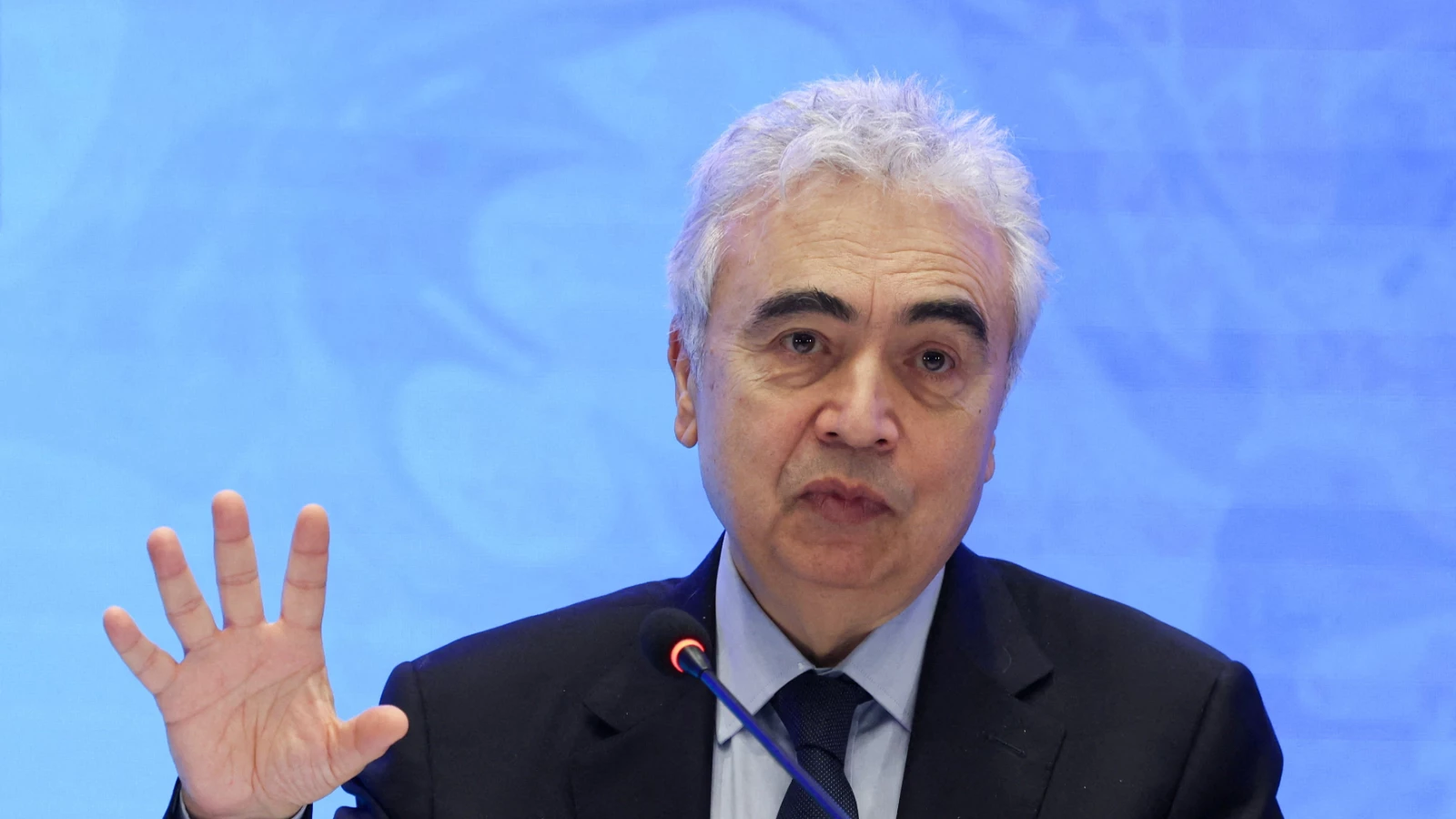
In recent weeks, with the closure of the Strait of Hormuz and the withdrawal of millions of barrels of oil from the market, the tone of his warnings has become louder: According to Fatih Birol, the world is facing one of the biggest supply crises in history, and this threatens the global economy.
Birol, who follows the developments closely from the IEA headquarters in Paris, stated in his statement to El Pais published in Spain that the major economies have initiated the release of the largest strategic oil reserves ever made. However, its evaluation is not limited to emergency measures. He emphasizes that the impact of the crisis will not be limited to oil and natural gas, but will also spread to critical sectors such as fertilizer and petrochemicals. He points out that this will have direct effects on inflation, growth and global supply chains. He states that if the Strait of Hormuz remains closed for a long time again, energy restrictions may come to the fore even in developed countries.
“The biggest energy security risk in history”
According to Birol, the current crisis poses the biggest risk in history in terms of energy security. He says that the amount of oil and natural gas lost surpasses even the two major oil crises of the 1970s and the gas crisis after Russia’s invasion of Ukraine. Moreover, the crisis is not limited to energy alone; Impacting products such as fertilizer, petrochemicals and helium could lead to serious disruptions in global supply chains.
“Underestimated at first”
Birol states that governments did not adequately grasp the seriousness of the situation at the beginning of the crisis. For this reason, he says that he chose not to speak publicly for a while, but when they saw that the risk was not understood correctly, they had to explain the situation with data. Reminding that the oil shocks of the 1970s dragged many countries into recession, he points out that a similar risk may come to the fore again.
Most fragile countries
Birol stated that the heaviest impact of the crisis was felt in developing Asian countries dependent on energy imports; He particularly highlights India, Pakistan, Bangladesh and Vietnam. He states that energy importing countries in Africa and Latin America may also be affected in a short time. He says that Europe will not be able to escape this process, and that more economically fragile countries in the Middle East, such as Iraq, will suffer serious damage.
Possibility of energy limitation
Birol states that restrictions may already be seen in some developing countries, especially in energy-intensive sectors. Although he does not expect a large-scale restriction in the short term in developed countries, he does not rule out this possibility if the Strait of Hormuz remains closed for a long time.
Normalization will take a long time
Emphasizing that reopening the strait is the most critical solution, Birol says that even this will not provide a rapid recovery. Because he states that more than 70 energy facilities were damaged in the Middle East, one-third of which were severely damaged. For this reason, he states that it will take time for the system to return to its previous level and that the energy market will not be the same after the crisis.
Winners of the new era
According to Birol, the crisis will lead to radical changes in energy policies. Countries will diversify their energy sources, and renewable energy—especially solar and wind—will come to the fore. Electric vehicles will gain momentum and renewed interest in nuclear energy will increase.
Reserves are not exhausted yet
Stating that the IEA has released 400 million barrels of reserves so far, Birol says that this is the largest intervention in history, but it corresponds to only 20 percent of the total reserves. He adds that they are ready to intervene again if necessary.
