
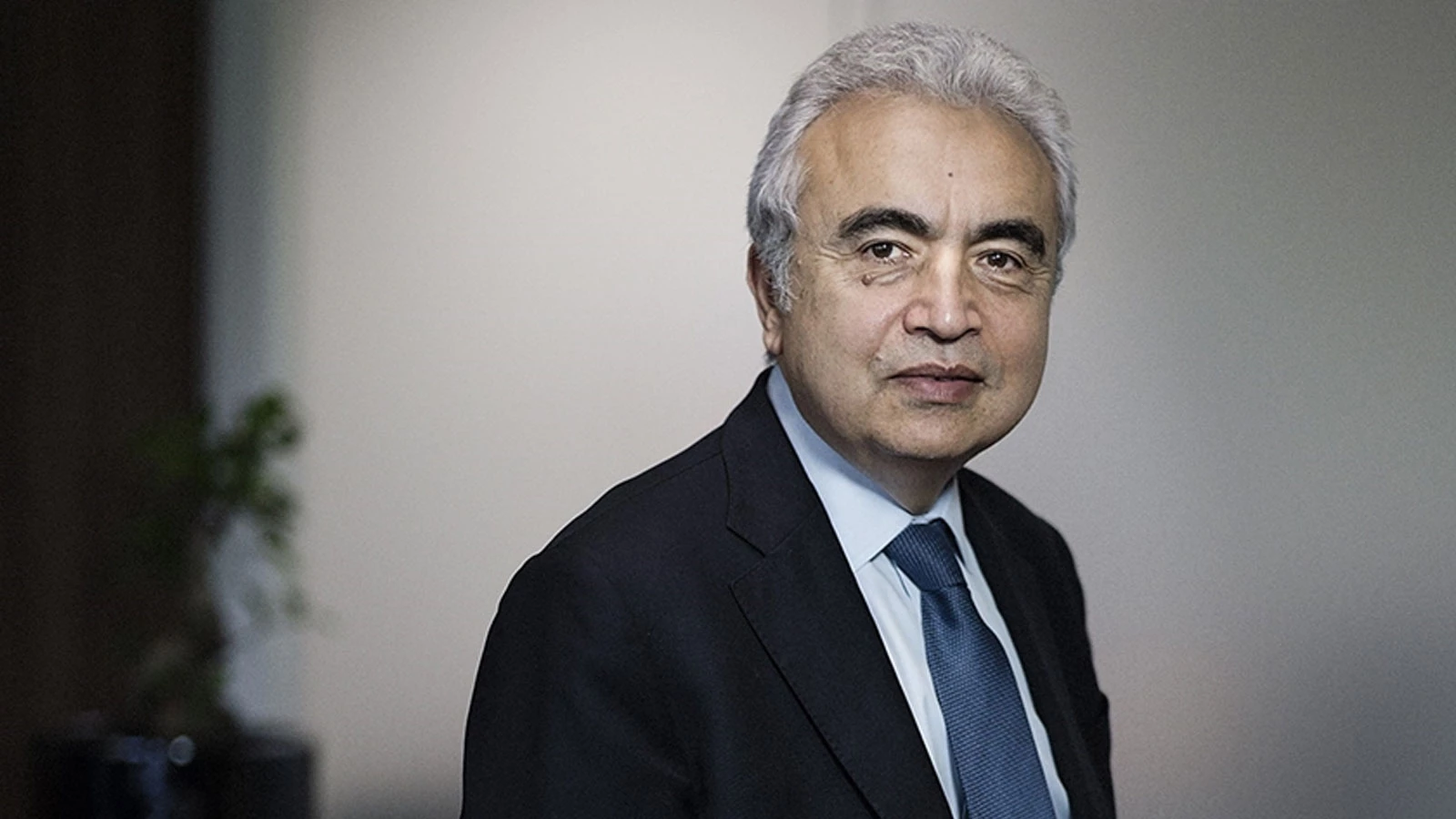
Fatih Birol, President of the International Energy Agency (IEA), stated that the rising oil prices following the conflicts in the Middle East “do not reflect the seriousness of the problem” and said that he agreed with the view that there was a “disconnect” between the market perception and the reality in the field, but he thought that these two would soon converge.
Birol made evaluations about the developments in the global energy market at the event organized by the Atlantic Council.
Referring to the disruption in energy flow with the closure of the Strait of Hormuz following the start of conflicts in the Middle East, Birol noted that this was the “biggest energy security threat in history”.
Comparing the recent events with the energy crises in history, Birol explained that the oil crises in 1973 and 1979 resulted in a daily supply loss of approximately 5 million barrels each, and that these crises caused recession in many countries, high inflation and debt problems in some developing countries.
Stating that in the current situation, the daily supply loss has reached 13 million barrels, Birol pointed out that this loss is higher than previous crises.
Birol also pointed out the damage to energy infrastructures and emphasized that even if everything returns to normal tomorrow and the problems are resolved, recovery will take time.
Stating that oil prices have risen but “do not reflect the seriousness of the problem”, Birol stated that he agrees with the view that there is a “disconnect” between market perception and the realities on the ground.
“However, I think we will soon see these two converge, which is an extremely sensitive issue for the global economy,” Birol said. he said.
Referring to the decision of IEA member countries to release the highest amount of strategic oil reserves in the history of the institution with 400 million barrels in March, Birol stated that this step was a “record” in terms of both the amount of oil released to the market and the speed of implementation.
Birol pointed out the extent of the damage to the energy infrastructure and stated that as of today, more than 80 facilities, including oil fields, gas fields, refineries and terminals, have been damaged, and more than a third of them are severely or very seriously damaged.
Stating that the process of repairing the damage in question will vary from country to country, Birol stated that this process will take even longer in countries that do not have financial power.
Birol stated that their analysis showed that it could take up to 2 years to return to pre-crisis levels.
