
Iran war
IAEA chief: Inspections in Iran will come
Updated June 24, 2026 – 9:40 a.mReading time: 2 minutes

The head of the UN nuclear watchdog makes it clear: monitoring nuclear facilities is part of the US-Iranian framework agreement. But when and how IAEA experts will work in Iran remains unclear for the time being.
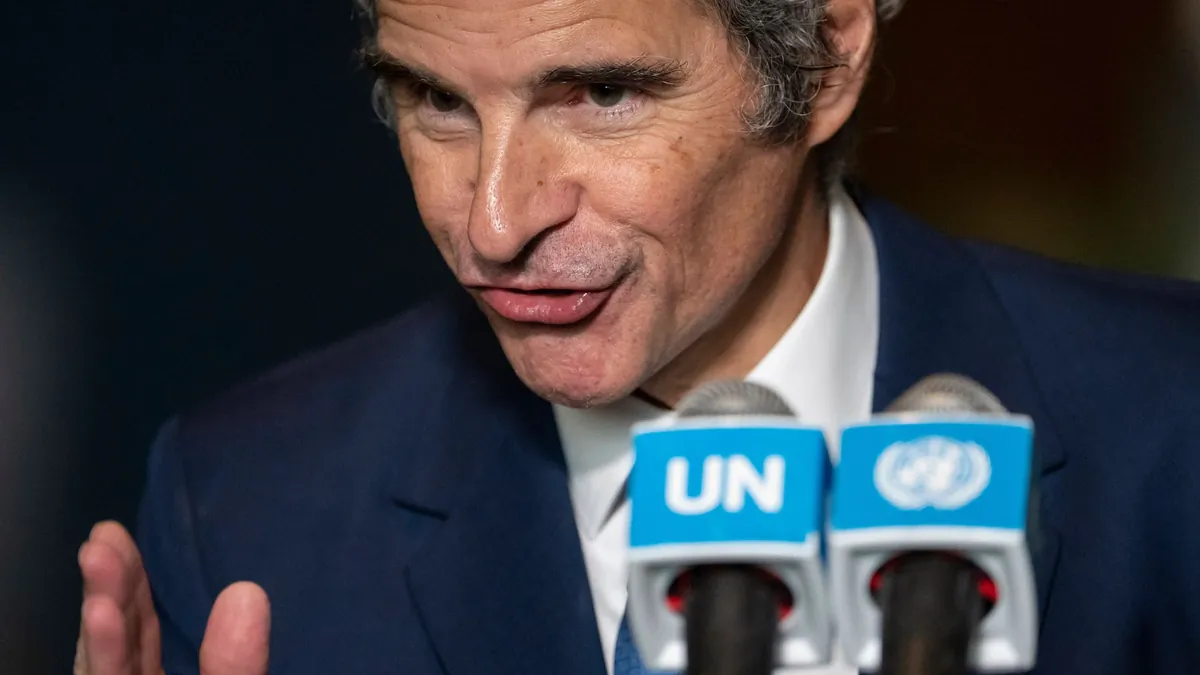
The International Atomic Energy Agency (IAEA) will inspect Iran’s nuclear facilities, according to its chief Rafael Grossi. This is part of the framework agreement between the Iran and the United States, he emphasized. “Whether that happens the day after tomorrow, next week or in ten days is an important but not essential question. It will happen,” he said on Wednesday in a press conference at the accident nuclear power plant Fukushima Daiichi in Japan.
Iran’s foreign ministry spokesman Ismail Baghai said on Tuesday in Tehran that there were currently no plans for the IAEA to inspect war-damaged nuclear facilities. These include, among other things, the facilities in which uranium that is almost suitable for nuclear weapons is stored.
Grossi: Work on inspection details will begin soon
The IAEA chief, however, referred to the US-Iranian framework agreement, according to which the uranium should at least be diluted under the supervision of the IAEA. This was from the heads of state of Iran and the USA been agreed. “To do this we clearly have to inspect,” said Grossi. The corresponding timetables and schedules will be worked on shortly, he said. The inspections would be carried out in cooperation with the Iranian government, he emphasized.
At the end of his recent talks with the Iranian side in Switzerland, US Vice President JD Vance said that Iran wanted to allow IAEA inspectors back into the country. There is no timetable for this yet. However, Iran’s ambassador to the United Nations in Geneva, Ali Bahreini, stated that Tehran had not yet agreed to sending inspectors to monitor nuclear activities. Whether inspectors will travel to Iran again is the subject of discussions in a working group that has yet to meet, Bahreini said.
According to the IAEA, Iran has around 440 kilograms of highly enriched uranium with a purity of around 60 percent. According to experts, several atomic bombs could be built if the material was previously enriched to 90 percent. Tehran denies such plans and has again committed itself in the framework agreement not to acquire or develop nuclear weapons.
