
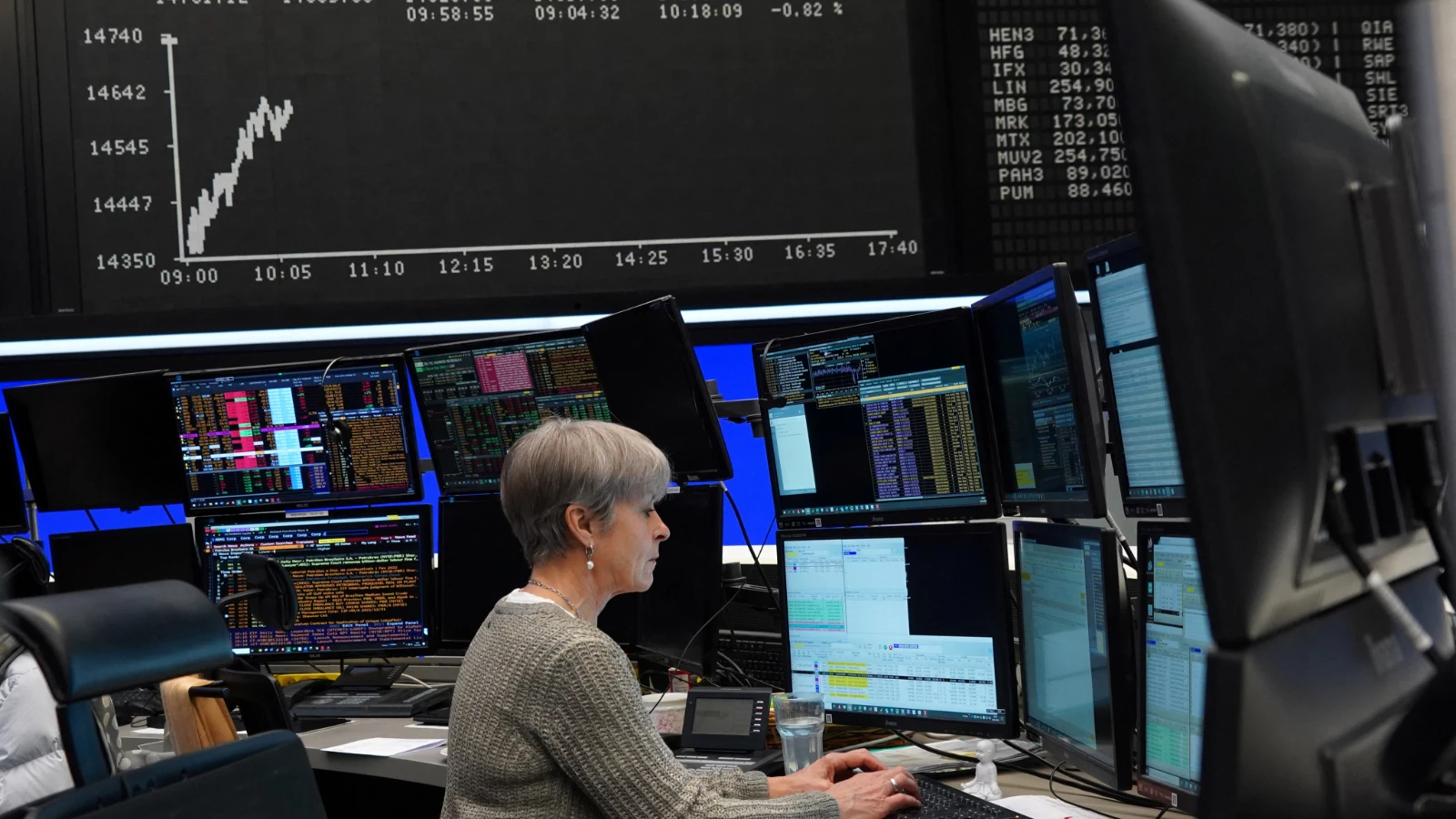
European stock markets are following a mixed course ahead of macroeconomic data to be announced, despite increasing geopolitical tension in the Middle East and ongoing concerns about energy supply.
As of 11.30 in the European markets, the Stoxx Europe 600 indicator index is trading at 606.5 points, with an increase of 0.3 percent, and the FTSE 100 index in the UK is trading at 10,481 points, with a horizontal trend.
In Germany, the DAX 40 index is trading at 23,867 points, gaining 0.5 percent, in Italy, the FTSE MIB 30 index is trading flat at 44,478 points, in France, the CAC 40 is trading at 8,117 points, with a 0.2 percent increase, and in Spain, the IBEX 35 index is trading at 16,946 points, down 0.7 percent.
In global markets, the increased risks to energy supply after the closure of the Strait of Hormuz and expectations for an increase in oil prices weakened the risk appetite.
US President Donald Trump announced yesterday that he has ordered the provision of political risk insurance and guarantee at a very reasonable price for the financial security of all maritime trade in the Gulf, especially energy, and that, if necessary, the US navy will begin to escort tankers passing through the Strait of Hormuz.
Analysts state that the rise in energy prices may again put upward pressure on global inflation, which may further complicate the monetary policy outlook.
On the other hand, Trump reacted harshly to Spain, which did not allow the USA to use its bases, and gave the message that they could cut off commercial and economic relations with this country. Stating that European countries should give more support to the USA and Israel in the Iran process, Trump criticized England as well as Spain with harsh words on this issue.
The statements of the US Federal Reserve (Fed) officials, indicating that the impact of the developments in the Middle East on inflation have not yet become clear, caused the cautious stance to continue in the markets.
In addition to geopolitical developments, company balance sheets announced in Europe were also in the focus of investors.
While German pharmaceutical manufacturer Bayer announced its earnings target range for 2026 below market expectations, it was stated that ongoing high-cost lawsuits and the company’s financial debt burden put pressure on the outlook. The company management pointed out that the ongoing legal processes, especially in the USA, continue to have an impact on financials.
German auto parts supplier Continental shared its predictions for 2026 and stated that sales and profitability in the core tire business will generally remain flat.
The company noted that the demand outlook in the global automotive industry continues to fluctuate and uncertainties regarding economic growth, especially in Europe, put pressure on the sector.
On the other hand, German sportswear manufacturer Adidas announced that it expects its operating profit to increase to approximately 2.3 billion euros this year. The company stated that the tariffs imposed by the USA could have a negative impact of approximately 400 million euros on financials, and pointed out that the volatility in exchange rates could also put pressure on operational profitability.
Analysts stated that geopolitical and political developments in the region will remain in the focus of investors for the rest of the day, and that an intense data agenda will be followed, especially producer inflation in the Eurozone, ADP private sector employment in the USA and the Fed’s Beige Book report.
