
News blog about the war in the Middle East
US Insider: Iran has already mined the Strait of Hormuz
Updated March 11, 2026 – 6:58 p.mReading time: 53 minutes
Player is loading
Has Iran already implemented its threat against the global economy? The US Army warns civilians about attacks on ports. All developments in the news blog.
The Iranian Revolutionary Guards warn of massive retaliation if the country’s ports are attacked. Armed Forces spokesman Abolfasl Shekarchi said, according to the Fars news agency, which is close to the Revolutionary Guards: If the American threat against Iran’s ports is implemented, no port, economic center or location in the Persian Gulf will be safe. They would then be legitimate targets for the armed forces.
The US Middle East Regional Command (Centcom) had previously warned civilians that Iran was using civilian ports along the Strait of Hormuz for military operations. These endangered international shipping and the lives of innocent people. According to Centcom, civilian ports used for military purposes lose their protected status and become legitimate military targets under international law.
The FBI has warned police departments in California that the US West Coast could be the target of retaliatory drone strikes by Iran, according to a report on ABC News. The broadcaster refers to a warning that it has checked. The FBI cannot immediately be reached for comment.
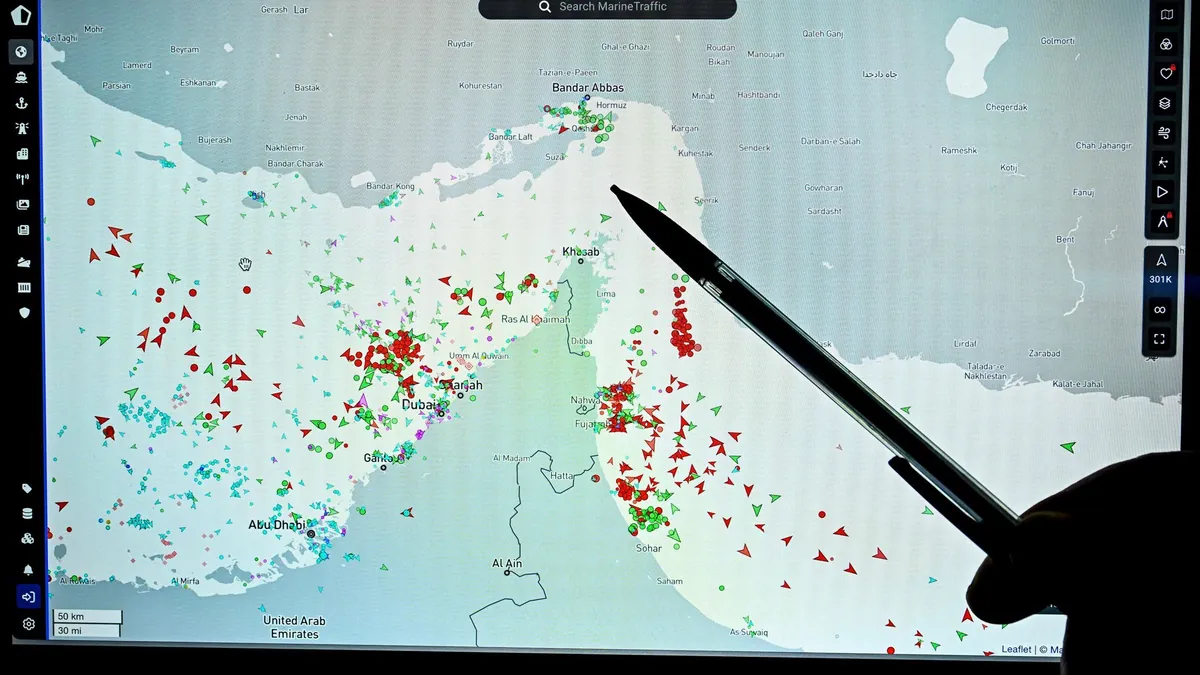
According to two US insiders, Iran has planted around a dozen mines in the Strait of Hormuz. The locations of most of the mines are known, one of them said on Wednesday. However, he left it open how the USA wanted to deal with this. The US broadcaster CNN first reported on the mining of the Strait of Hormuz on Tuesday. The move is likely to complicate the reopening of the strait between the Persian Gulf and the Gulf of Oman, which is important for the transport of oil and liquefied natural gas (LNG). Exports through the waterway off the Iranian coast have virtually come to a standstill as a result of the war that began on February 28 between the United States and Israel. This has contributed to an increase in global energy prices.
Iran has long threatened to mine the strait in retaliation for a military attack. About a fifth of global oil and LNG supplies normally travel through the Strait of Hormuz. At her closest, she is 33
Kilometers wide. The navigable passages in both directions are only three kilometers wide. The central shipping channel is considered an international shipping route. The fact that Iran is able to stop shipping traffic there allows the country to put considerable pressure on the USA and its allies.
