
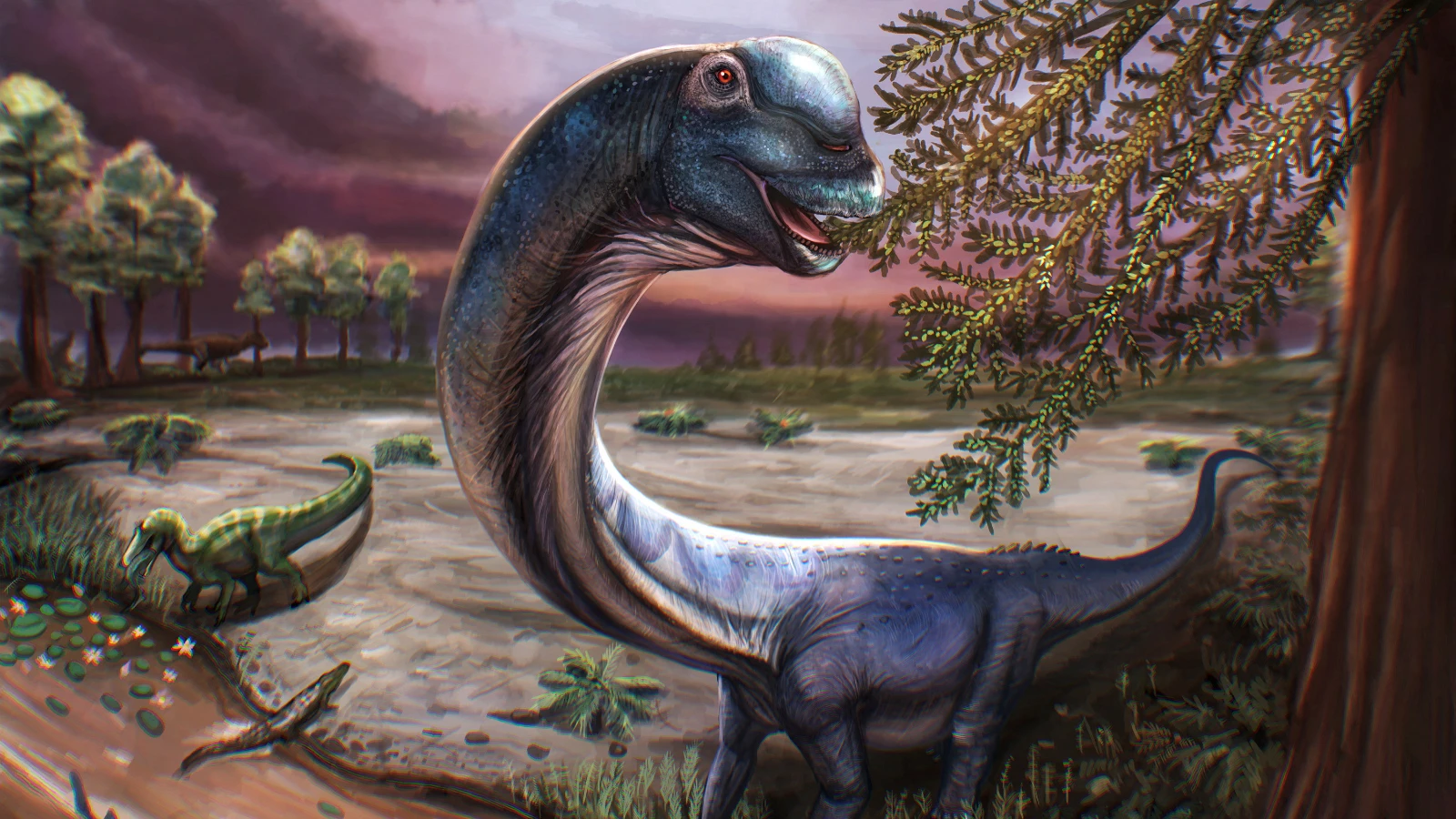
Fossils found on the shore of a pond in Thailand about 10 years ago led scientists to a new and giant dinosaur species. Researchers named this species, which was determined to be long-necked, long-tailed and herbivorous, “Nagatitan chaiyaphumensis”.
According to a study by Thai and London researchers, this dinosaur may be the largest dinosaur ever discovered in Southeast Asia. In the research published in the scientific journal Scientific Reports, it was stated that Nagatitan chaiyaphumensis was estimated to be approximately 27 meters long and weighed 27 tons.
It was much larger than T. rex
According to the comparison in the study, a large Tyrannosaurus rex could weigh approximately 4 to 6.8 tons and be more than 12 meters long. In comparison, the estimated length of Nagatitan chaiyaphumensis reached almost 27 meters.
The new species belongs to the group of dinosaurs known as sauropods. This group; They are known for their long necks, thick legs, giant bodies and herbivorous diet. Diplodocus and Brontosaurus are also among the most recognizable members of the same large group.
Fossils found on the shore of a pond
The first fossils of the dinosaur were spotted by a local resident in 2016 on the banks of a community pond in northeastern Thailand, where the water level dropped during the dry season.
Field studies were carried out in the region between 2016 and 2019. Additional excavations were carried out in 2024. Researchers; By examining the remains of leg bones, spine, ribs and pelvis, he determined that these fossils belonged to a previously unknown species.
Paleontologist Thitiwoot Sethapanichsakul, lead author of the study, stated that the humerus, the front leg bone of the dinosaur, was 1.78 meters long. Sethapanichsakul said that when he first saw the bone, it was longer than he was tall and it was a surprising moment for him.
It took its name from the mythological “naga”
The “naga” in the dinosaur’s name refers to the mythological snake figure in South and Southeast Asian folklore. Researchers state that this mythological figure, which is associated with water, is an appropriate name because the fossils were found on the shore of a pond.
The “titan” part of its name refers to the giant size of the dinosaur, and “chaiyaphumensis” refers to the Chaiyaphum province of Thailand where the fossils were found.
May be more than 100 million years old
According to the research, it is thought that Nagatitan chaiyaphumensis may have lived in the late Early Cretaceous period, approximately 120 million to 100 million years ago.
Scientists state that smaller herbivorous dinosaurs, early ceratopsian relatives, freshwater fish, crocodiles, turtles and freshwater sharks may have been present in the region during the time this dinosaur lived.
According to researchers, Thailand stands out as one of the important dinosaur fossil centers in Asia, especially because sedimentary rocks from the Mesozoic Age are preserved in large areas.
