

“We will react”
Putin warns of escalation in the Baltic Sea region
Updated 10/30/2026 – 11:55 amReading time: 2 minutes

The Baltic Sea is an important sea route on which around 2,000 ships travel at the same time. Vladimir Putin is now warning of restrictions on shipping in the Baltic Sea.
The Russian head of state Vladimir Putin has the West facing an escalation in the Baltic Sea warned. “We are ready, but we don’t want war with Europe,” he said after the Russia-Africa summit Moscow. If such a war were to occur, there would be “no winners.” “Nobody should forget that,” Putin said, according to the Reuters agency.
At the same time, he warned of a scenario in which the important shipping route would be blocked: “Does anyone in the Baltic Sea region want the same situation as in the Persian Gulf or in the Strait of Hormuz?” said Putin. “We don’t want this, but we will respond to any challenge.”
- Overview: All developments in the Ukraine news blog
- Baltic Sea: Russia arrests a German shipping company’s ship
Most recently, Federal Foreign Minister Johann Wadephul the Baltic Sea is described as a conflict zone. “We have observed acts of sabotage, espionage activities, GPS interference, the intrusion of drones and combat aircraft into NATO airspace, the passage of the Russian shadow fleet and the repeated appearance of Russian research ships near critical infrastructure,” explained the CDU politician.
Baltic Sea as a new conflict zone
The British expert Oliver Moody sees all these actions as evidence that that Russia has increasing strategic interest in the Baltic Sea region. In his book “Baltic Sea Conflict Zone,” Moody states: It is about “a cross-generational competition between the West on every conceivable level (…) from energy and economics to parliaments and social networks.” This competition has two pivotal points: “One is the Ukraine. The other is the Baltic Sea region.”
Praise for Stubb and Støre
Putin expressed unexpected confidence about the recent talks with the Finnish President Alexander Stubb and Norway’s Prime Minister Jonas Gahr Støre. He knew that both would be criticized for their efforts to establish a dialogue.
In the past there have been repeated incidents in the Baltic Sea, such as drone overflights Denmark. The Ukrainian company Fire Point is building a rocket fuel factory there near the German-Danish border. Production is scheduled to begin at the end of 2027.
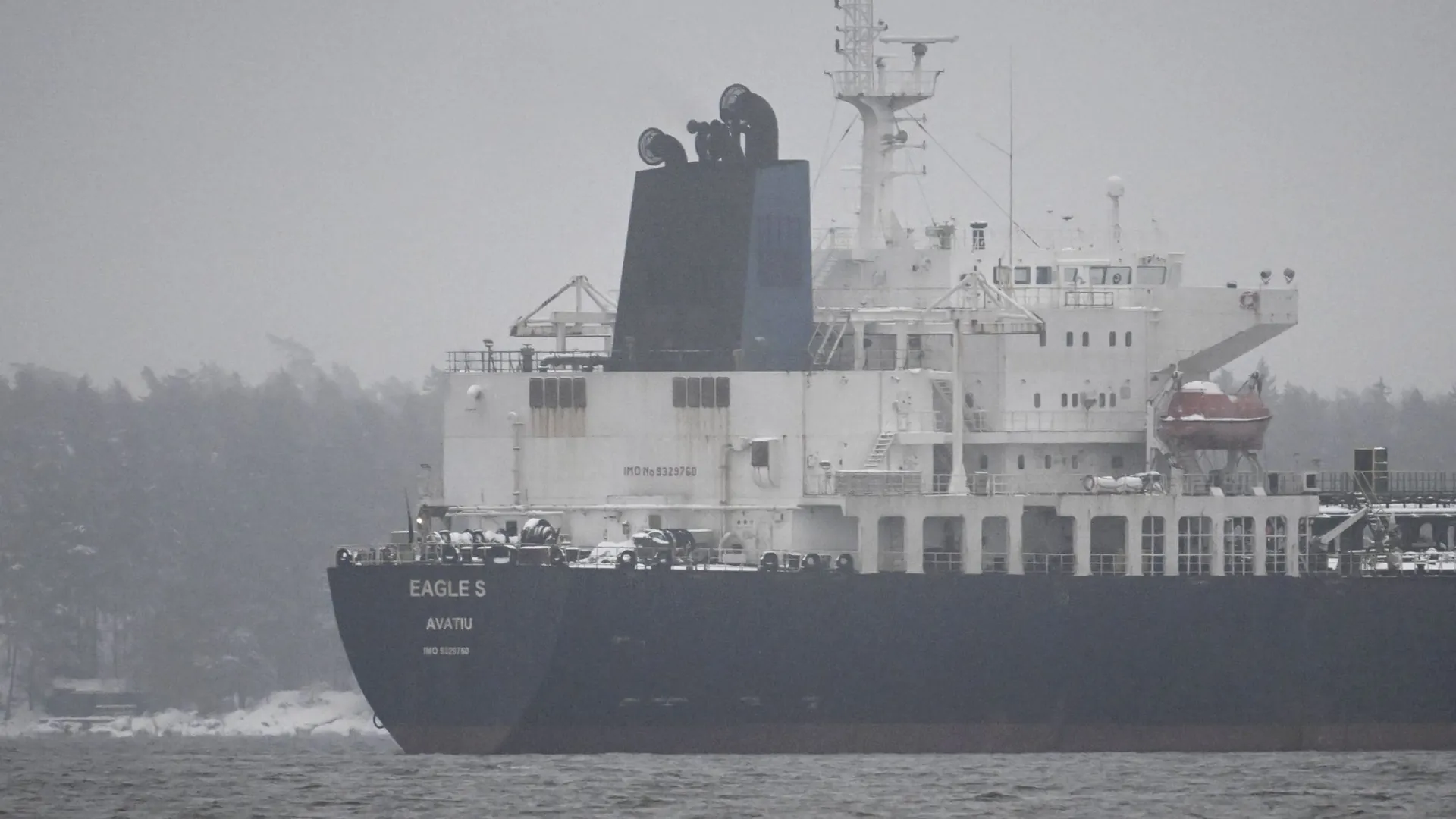
Shipping traffic on the Baltic Sea is also disrupted. Up to 2,000 ships travel on the inland sea every day. As a rule, the crew on board the ships rely on global satellite-based navigation systems such as the US GPS to determine their location. But it’s not just airplanes that are increasingly reporting GPS disruptions; ships are also affected.
Sometimes the signal traffic with satellites in space is overshadowed by a jammer, so that positioning is not possible. Experts speak of jamming. Sometimes a jammer simulates false satellite signals, which lead to an incorrect position determination. Then there is talk of spoofing. Both have consequences. In December 2024, the freighter “Meghna Princess” ran aground in the eastern Baltic Sea after a navigation attack. Nobody was injured. But the danger is real. Not just in the Baltic Sea.
