
Criticism of the EU Commission
Canada will not become an associated EU member for the time being
Updated 10/29/2026 – 12:14 amReading time: 3 minutes

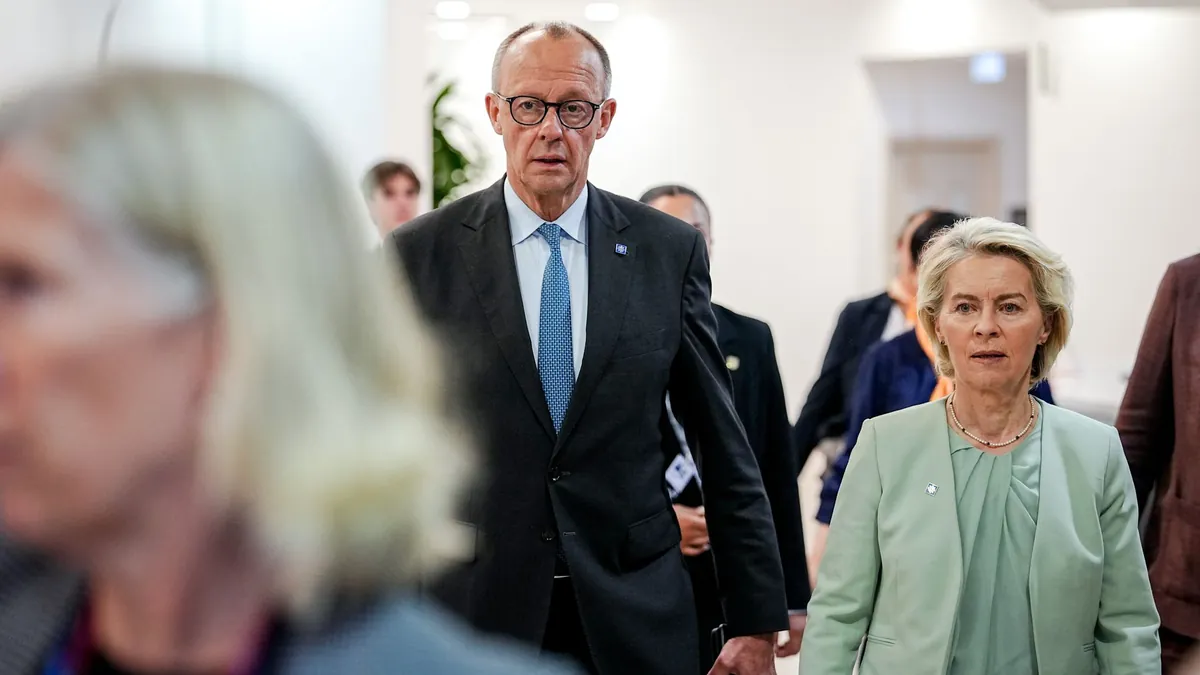
Chancellor Merz and other heads of government are putting the brakes on von der Leyen’s Canada plans. Several EU states have weakened planned commitments for closer ties to the country – shortly before a summit meeting.
President of the EU Commission Ursula von der Leyen has failed for the time being with its push for associated EU membership for Canada. As the German press agency of diplomats in Brussels learned, the Federal Chancellor worried Friedrich Merz and several other heads of state and government of EU countries for the removal of the terms “associate membership” and “associate member” from the draft of the planned final declaration of the EU-Canada summit starting this Thursday. Originally planned far-reaching commitments to financial market integration and mutual preferential treatment in economic security measures have also been weakened.
Instead, the text now says that a concept for “ever closer ties between Canada and the EU” is to be developed by the EU-Canada summit next year. It was adopted by the EU states in a written procedure on Wednesday evening and is due to be published on Friday at the end of the two-day summit in Montreal.
Advance attracted a lot of attention
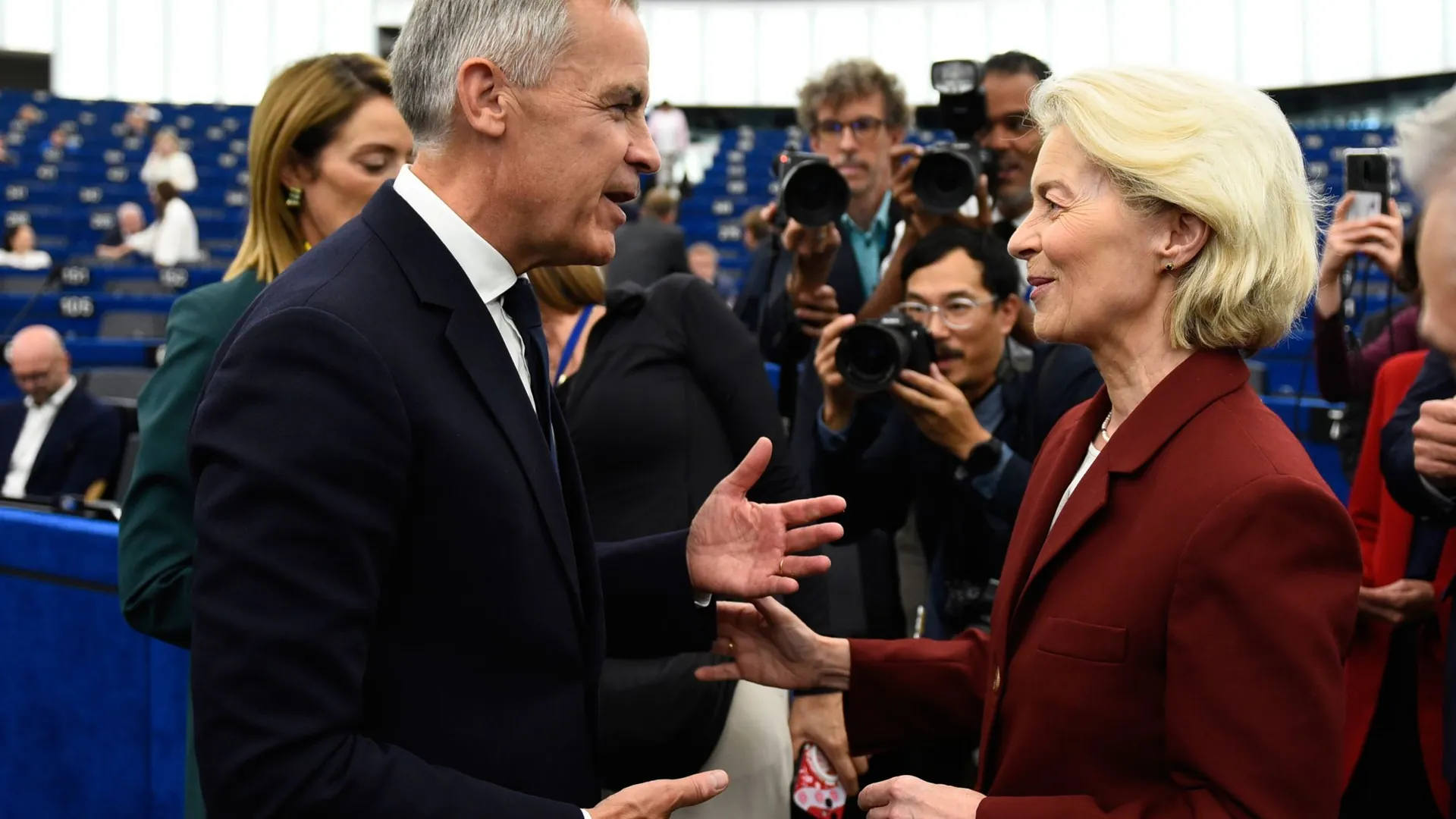
At the meeting in Montreal, EU Commission President Ursula von der Leyen actually wanted to officially launch Canada’s “associated membership”. She had previously proposed it in a speech in September in the presence of Canadian Prime Minister Mark Carney, attracting a lot of attention. In addition to Carney and von der Leyen, EU Council President António Costa and a number of EU Commissioners are also taking part in the summit in Montreal.
Member states criticized the vague concept
EU diplomats cited the unclear meaning of the planned special status and the Commission’s insufficient prior coordination with the Council of Member States as the reason for member states’ resistance to the use of the term “associated membership”. In addition, it was viewed as problematic that the term was already used in connection with the EU accession process Ukraine is used.
In June, Chancellor Merz proposed “associated membership” for Ukraine as an interim step on the way to regular EU accession. According to his ideas, Ukraine could regularly take part in summit meetings or specialist councils of ministers before accession.
Von der Leyen and Merz used terms differently
Von der Leyen then used the term completely differently in September, apparently without consulting Merz. From their point of view it should be related to Canada make it clear that a non-EU country without a legal opportunity to join will be linked as closely as possible to the EU. In principle, it is planned that both sides will coordinate their policies even more closely with one another in areas such as energy, climate protection, technology and security. In addition, Canada should be more fully involved in EU programs for research, education and defense.
The general goal is to represent common interests more effectively and to reduce dependencies on other states. The background is also the loss of trust in the USA under president Donald Trump. Customs conflicts and Trump’s territorial claims have increased doubts on both sides of the Atlantic about the reliability of the previous partner.
