
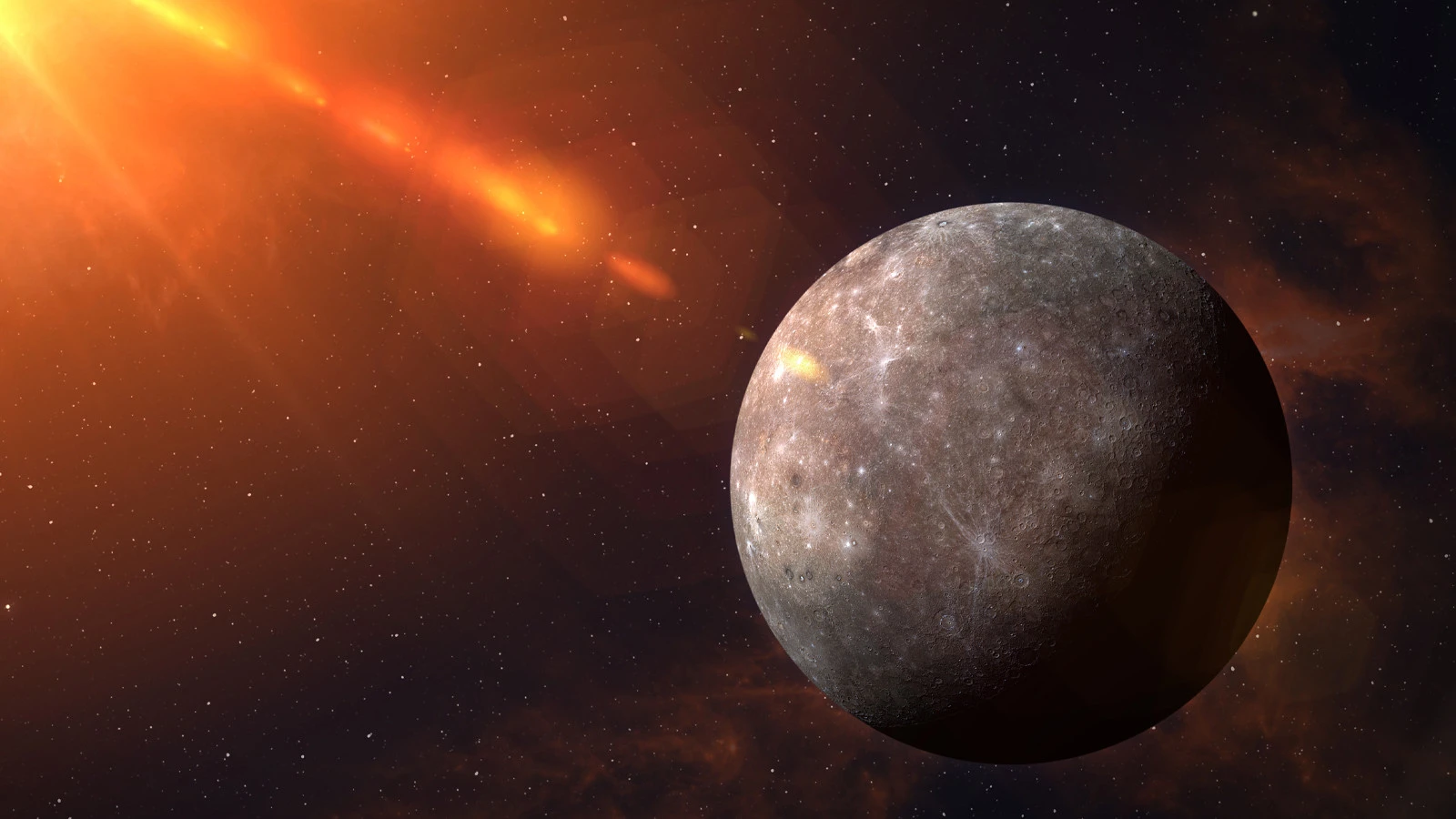
A new research is breaking the myths about Mercury, the smallest planet of the Solar System and closest to the Sun. According to the study conducted by the Space Research Institute of the German Aerospace Center (DLR) and published in the journal Geophysical Research Letters, Mercury has shrunk by 30% more than scientists expected.
It is stated that the diameter of the planet, which is extremely difficult to study due to its extreme conditions with surface temperatures ranging from 170 to 400 degrees, has decreased by up to 23 kilometers over time. For a planet with a total width of 4,900 kilometers, this figure indicates a very critical change.
IMPACT CRATERS MAY HAVE HIDDEN SHRINKAGE
Researchers attribute the reason why the size of the “wrinkled” structure on Mercury’s surface has not been fully understood to date to the mobility on the surface. It is stated that the pieces flying out of the craters as a result of meteor impacts constantly shape the surface and this hides the true extent of the shrinkage for a while.
EYES ON BEPICOLOMBO MISSION IN NOVEMBER
The historical findings were shared while the BepiColombo spacecraft, carried out in partnership with Europe (ESA) and Japan (JAXA), continued its journey to Mercury. The spacecraft, which is planned to enter the planet’s orbit next November, is expected to definitively confirm the extent of the contraction on the planet and open the curtain of mystery about Mercury.
Gaku Nishiyama, lead author of the research on the space mission, emphasizes that the data obtained from BepiColombo will play a critical role in testing this new shrinkage rate.
