
Iran war
No meeting on the Strait of Hormuz – what’s behind it?
Updated September 14, 2026 – 10:18 amReading time: 4 minutes

A planned meeting in Oman gave hope for movement in the conflict over the Strait of Hormuz. But the appointment is canceled shortly beforehand.
The deadlocked situation in the city has been a strain for months Strait of Hormuz the global economy. A planned meeting between the foreign ministers of Iran and Oman and their colleagues from the states in the Persian Gulf gave hope – but that does not happen for the time being.
Why is there still controversy over the Strait of Hormuz?
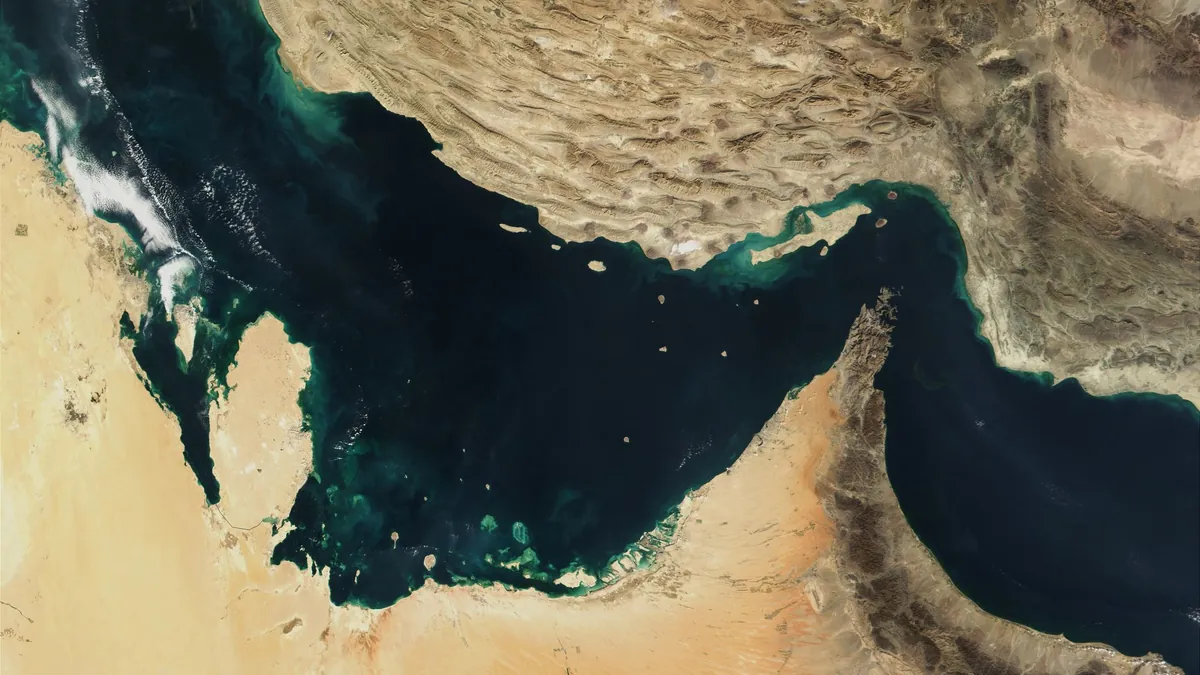
The Strait of Hormuz, a strait around 35 to 40 kilometers wide at its narrowest point, is the central point of contention in the war Iran and the USA and has turned out to be the most effective means of pressure for Tehran in the conflict. Before the war, merchant ships could pass through the strait unhindered and free of fees and charges, and around a fifth of the world’s oil supply passed through the strait. Liquefied natural gas and fertilizer from the Gulf states are also exported via the route. The restrictions are putting a strain on the global economy. Rising oil and gasoline prices are also a concern for the US President Donald Trump under pressure.
Shortly after the Israeli-American air strikes began at the end of February, Iran’s military leadership effectively brought shipping traffic in the important strait to a standstill with threats and attacks. The Iranian navy mined the shipping channels, declared only a northern route along its own coast to be safe and charged fees for passage. Other conflicts such as the nuclear dispute or Iran’s support for militant groups in the region were pushed into the background.
A framework agreement between the US and Iran signed in mid-June was intended to pave the way for a permanent end to the war. The conflicting parties also agreed to reopen the strait. But a short time later the situation escalated again. Tehran accused the US of pressuring shipping companies to use a southern route far from the Iranian coast. Iran’s leadership feared that it would lose its most important means of pressure: control over the strait.
What should the meeting be about?
Iran and Oman – the states directly bordering the Strait of Hormuz – have been discussing for weeks a mechanism for how shipping traffic through the strait should be regulated in the future. Iranian President Massoud Peseschkian had announced that the two countries now wanted to sign an agreement on new shipping routes in the strait.
A quick opening of the strait to international shipping was not expected – but Iran is demanding that the USA end its naval blockade, which is preventing Iranian freighters from passing through. However, there was hope for movement in the conflict, in which there has been no noticeable diplomatic progress between the USA and Iran for weeks.
What is behind the postponement of the meeting?
The Omani Foreign Minister Badr al-Busaidi simply announced on Sunday evening: “In the interest of consensus, the regional meeting planned for tomorrow in Salalah has been postponed.” Iran’s foreign ministry spokesman Ismail Baghai said on Monday, Saudi Arabia asked for it. When asked, he confirmed that the latest developments in… Yemen would have played a role in this. Last week, the Iran-allied Houthi rebels in the civil war country advanced surprisingly quickly to the Bab al-Mandab Strait, which is also one of the most important shipping routes in the world. Saudi Arabia has been fighting alongside the internationally recognized government in Yemen against the militia for more than ten years.
