
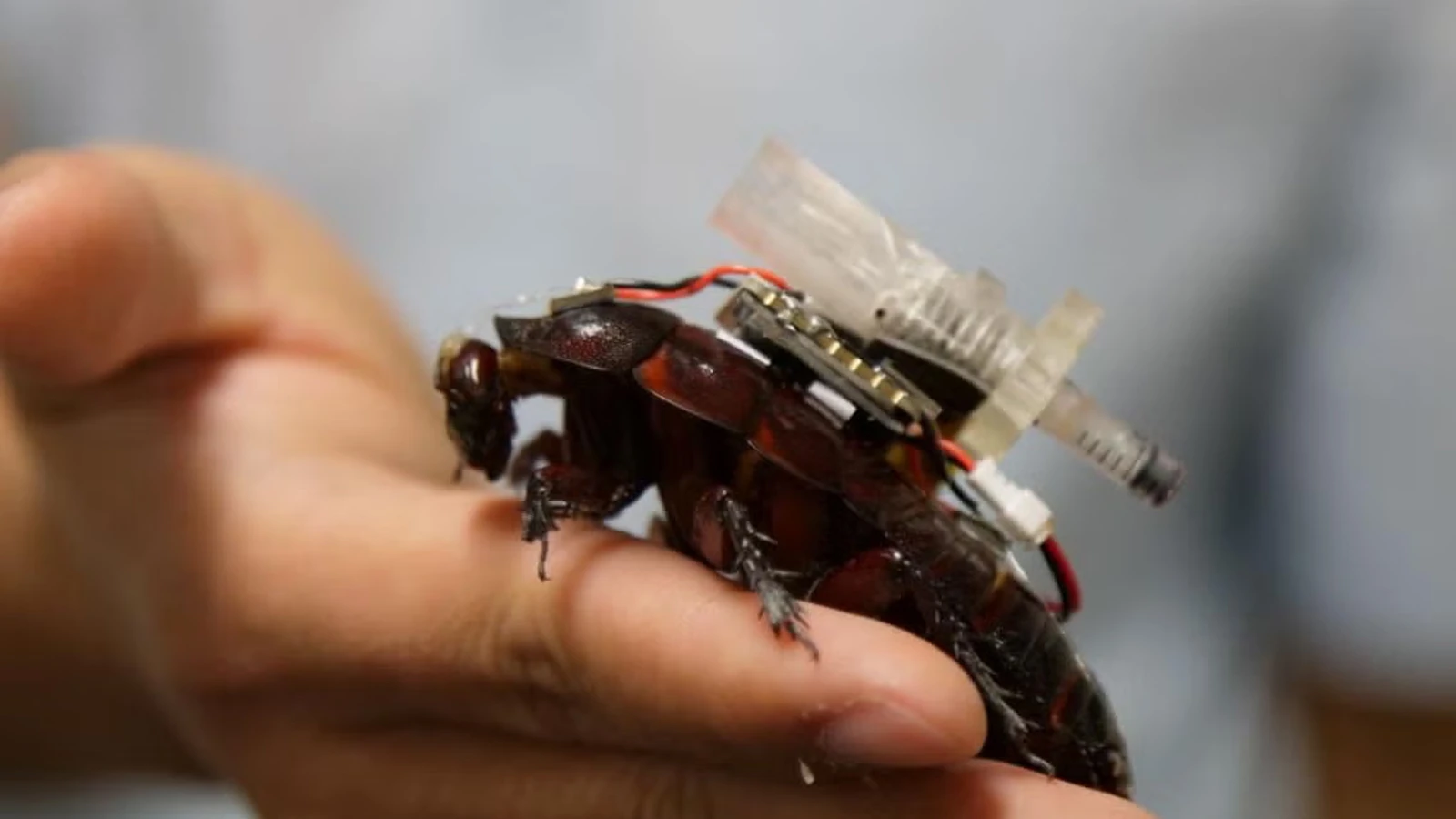
Engineers in Australia have developed cyborg cockroaches equipped with miniature cameras and medical injection systems for use in search and rescue efforts. Researchers state that this technology can save lives, especially in narrow and dangerous areas where people cannot reach.
The joint work of engineers from the University of Queensland and the University of New South Wales (UNSW) aims to reach points in disaster areas that search and rescue teams cannot reach and to provide emergency medical intervention if necessary.
The giant burrowing cockroach (Macropanesthia rhinoceros), native to Australia, was used in the study. Lightweight electronic systems, miniature cameras and remotely activated automatic injection mechanisms were placed on the insects.
University of Queensland Biorobotics Engineer Thang Vo-Doan stated that the developed system aims to turn cyborg insects into first responders rather than just sensors collecting environmental data. Vo-Doan emphasized that critical decisions regarding medical intervention will remain entirely under human control.
95 PERCENT SUCCESS IN INJECTIONS
In proof-of-concept tests, cyborg insects reportedly achieved a 95 percent success rate in close-range injections. The completion rate of the entire task, including the insects’ navigation and injection, was recorded as 72 percent.
Anesthesia was applied during the placement of electronic systems in the insects. Researchers reported that the insects could continue their normal lives after the hardware was removed.
THOSE WHO CAN WORK IN Narrow AREAS
Debris of collapsed buildings, caves and other narrow areas that search and rescue teams cannot physically reach are among the main areas of use of technology.
According to experts, as technology develops, cyborg insects can turn into small vehicles that can transmit images in disaster areas and provide remotely controlled medical intervention when necessary.
Researchers predict that cyborg insect fleets could be used in real disasters within 5 to 10 years if the engineering and field testing of the technology is completed successfully.
