
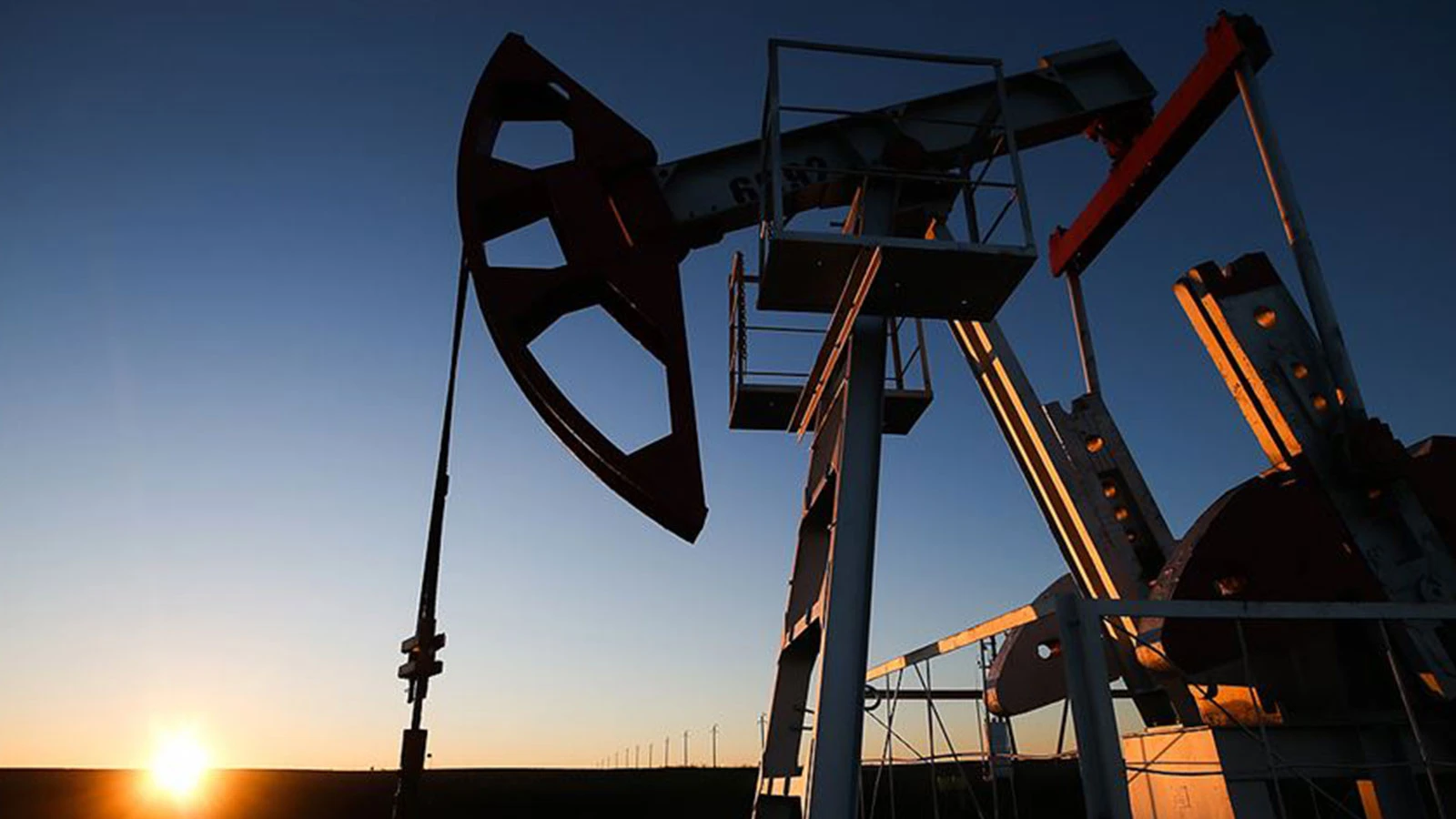
A barrel of Brent oil is traded at $79.91 in international futures markets.
The October delivery barrel price of Brent oil, which rose to $80.95 yesterday, finished the day at $79.45.
The barrel price of Brent oil increased by 0.6 percent compared to the closing time at 09.39 today, reaching 79.91 dollars. At the same time, the barrel price of West Texas Intermediate (WTI) crude oil for September delivery was determined as 75.55 dollars.
The rise in oil prices was driven by the renewed concerns about supply security in the Middle East and the expectations regarding monetary policy in the US supporting the demand outlook.
Iran-backed Houthis in Yemen announced that they targeted the Saudi Arabian oil tanker named “Daisy” with a ballistic missile in the Gulf of Aden.
Spokesperson of the Houthis, Yahya Seri, argued that the attack was carried out in line with the decision to implement the maritime navigation ban on Saudi Arabia, within the scope of the strategy of “responding to the blockade with a blockade”.
Seri stated that they are closely monitoring the movements of Saudi Arabian oil tankers and that they will not allow these ships to pass from the north or south of the Red Sea until the blockade on Yemen is lifted.
The Houthis had previously announced that they targeted the Saudi Arabian oil tanker named “Vefa” off the coast of Yenbu in the north of the Red Sea with ballistic missiles.
In addition, the news that the state-owned Industrial and Mining Bank in Iran froze the bank accounts of the National Iranian Oil Company (NIOC) due to its debts also strengthened the risk perception on the supply side, pointing out that the financial squeeze in the country’s oil sector was deepening.
The bank did not share details about the amount of debt or the extent of the frozen accounts, the semi-official Fars News Agency reported.
The news pointed out that the decision in question was taken despite the provisions stipulating that the repayment of some debts of the National Oil Company, which operates in the oil and natural gas sector, one of Iran’s most important sources of income, would be postponed until the end of the year 1405 (March 2027) according to the Iranian calendar.
The National Iranian Oil Company, which is subject to unilateral US sanctions, is the largest state enterprise in the country’s oil and natural gas sector.
– Weakening interest rate increase expectations supported prices
In addition, the weakening of expectations that the US Federal Reserve (Fed) will increase interest rates further in its monetary policy was among the factors that supported oil prices.
ADP private sector employment in the USA, announced yesterday, increased by 44 thousand people in July, remaining below market expectations.
Following these developments, the expectation in the money markets that the Fed will increase the policy rate by 25 basis points next month decreased to 55 percent, while the probability of an interest rate increase for the October meeting decreased to 80 percent.
It is considered that the upward pressure on oil prices has become stronger in the markets, with the expectation that the reduced possibility of an interest rate increase will support economic activity and oil demand.
– Positive supply signals limit the rise in oil prices
On the other hand, the news flow that the draft agreement to reopen the Strait of Hormuz has reached its final stage prevents oil prices from rising further.
According to the Associated Press (AP), while Iranian and Omani negotiators were finalizing the draft agreement for the reopening of the Strait of Hormuz, the draft was submitted to Iranian leader Mojtaba Khamenei for approval. The news stated that the agreement was a temporary solution to the Strait of Hormuz issue between the USA and Iran and could pave the way for the continuation of negotiations between the two countries.
In addition, the increase in commercial crude oil stocks in the USA, contrary to expectations, by 2 million 500 thousand barrels to 407 million barrels and the increase in daily crude oil production by 8 thousand barrels to 13 million 804 thousand barrels, strengthens the perception that demand is weak and increases the downward pressure on oil prices.
It is stated that technically $ 81.65 can be watched as resistance and $ 78.68 as support zone for Brent oil.
