
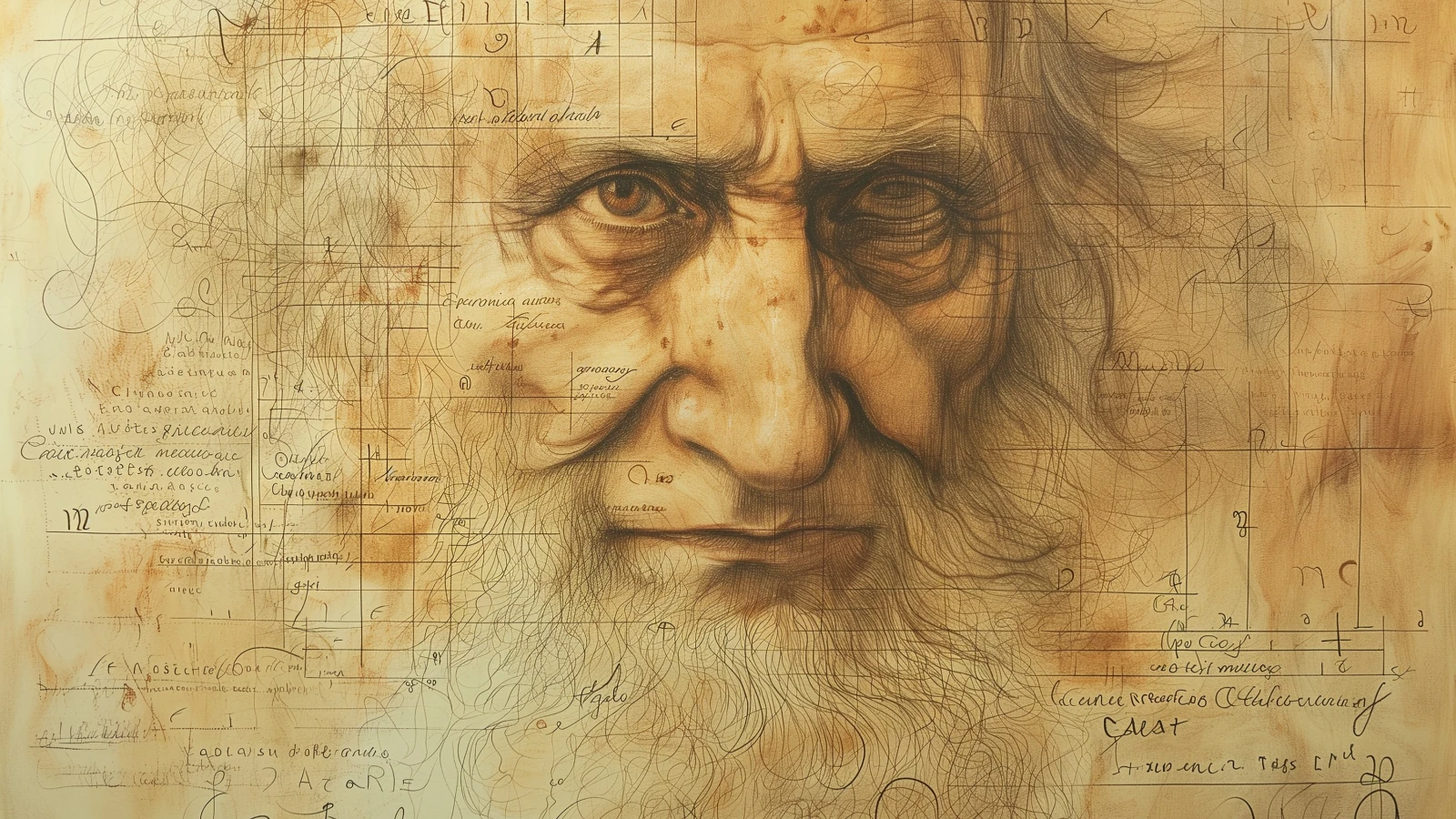
After closely examining and dissecting a heart, Leonardo da Vinci drew thin trabeculae resembling lace and snowflakes.
The observations of Leonardo da Vinci, who described the structure of the heart as a “wonderful instrument” nearly 500 years ago, are today confirmed by modern science. While the heart continues to be an organ that continues to be researched, it has been scientifically proven that emotions have negative and positive effects on heart health.
What are trabeculae?
Researchers have finally begun to unravel the function of structures called “trabeculae” in the heart, which Leonardo first described in detail. For this, fractal theory, magnetic resonance imaging (MRI) and intensive computer analysis were used.
According to the results, these branched muscle structures that resemble snowflakes play a role in the risk of heart diseases.
In the study published in the journal Nature, researchers say:
“The inner surface of the human heart is covered with a complex network of muscle fibres, which is thought to be a remnant of embryonic development. However, the function and genetic structure of these trabeculae in adults is not fully known. In this study, we used fractal analysis on 18,096 participants in the UK Biobank database.”
Leonardo’s prediction
Leonardo da Vinci examined the heart before drawing the trabeculae and interpreted these structures as a branched system resembling a tree. He suggested that this structure was a kind of “network system” that kept blood warm by circulating in small vessels.
Link to heart performance
By examining images of different patients, scientists reached important conclusions about the structural features of trabeculae.
“With biomechanical simulations and human data, we show that trabecular structure is a factor that determines cardiac performance,” said the researchers, noting that some trabecular structures increase the risk of cardiovascular diseases.
genetic link
The research also identified 16 important gene regions (loci). These genes are linked to blood flow-related traits and the branching pattern of the cytoskeleton.
While examining how trabeculae form and work, it also contributed to understanding the behavior of other cells in the body.
Fractal structure and nature
Fractal analysis; It is used in many fields from cartography to botany, from telecommunications to natural sciences. Just like a tree branches, trabeculae are gradually divided into smaller structures, and this fractal structure offers important clues about the functioning of the heart.
This complex work once again demonstrated the scientific genius of Leonardo da Vinci.
