
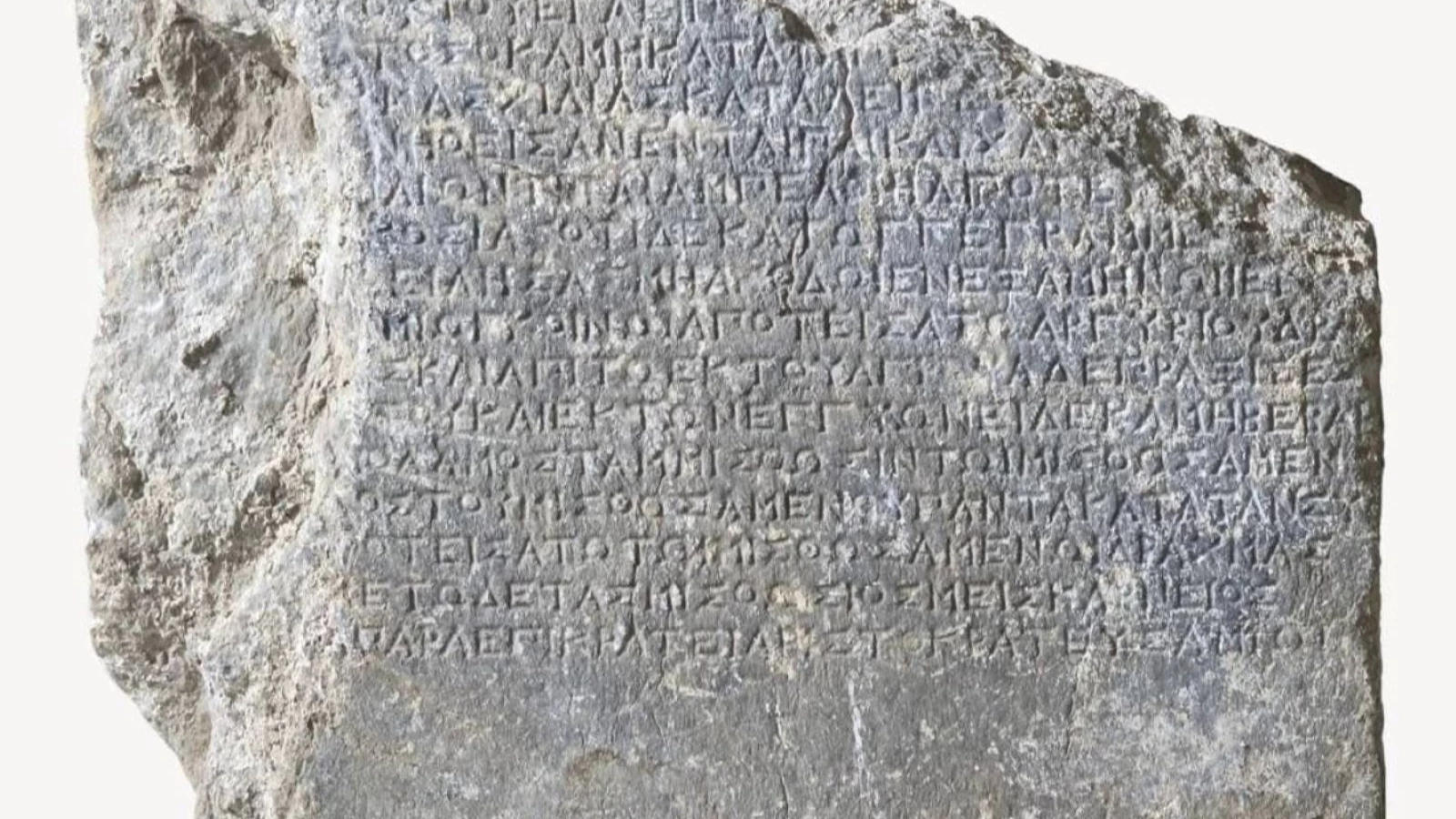
During the work carried out near Fethiye, archaeologists found a piece of stone with writing on both sides. As a result of the investigations, it was determined that this piece was connected to the ancient city of Amos. It is stated that the stone, which is preserved today in the Fethiye Archaeological Museum, is actually part of a larger stela. According to the dating, the work dates back to B.C. It dates back to the Hellenistic period, between 220 and 200 BC.
According to experts, this stone is not an ordinary inscription. The fact that text is engraved on both sides indicates that this is an official document displayed in public. The city of Amos was located in the southwest of Anatolia at that time, in a critical position in terms of maritime trade, and especially in B.C. It stood out as an important economic center in the 3rd and 2nd centuries.
IT IS SUSPECTIVE THAT IT WAS REMOVED AND USED AS A BALANCE WEIGHT ON SHIPS.
Another striking aspect of the discovery is the stone’s journey over time. It is estimated that this stela, which was first exhibited in the sanctuary of Apollo Samnaios, was removed and used for a different purpose in the Middle Ages. Researchers state that the stone may later have been used as a balance weight on ships.
OBLIGATION TO PLANT TREES AND VINES IN EXCHANGE OF RENTAL
Modern analyzes revealed the true value of the inscription. It turned out that the text on the stone was a detailed contract regarding the rental of agricultural lands. Accordingly, tenants were obliged to plant 800 grape vines and 40 fig trees for every 100 drachma rent. There were also rules down to details such as the depth at which trees should be planted. The text also includes legal sanctions and compensation conditions.
Experts emphasize that this finding is of great importance as it shows how developed and organized the agricultural, economic and legal systems were in the Hellenistic period.
