
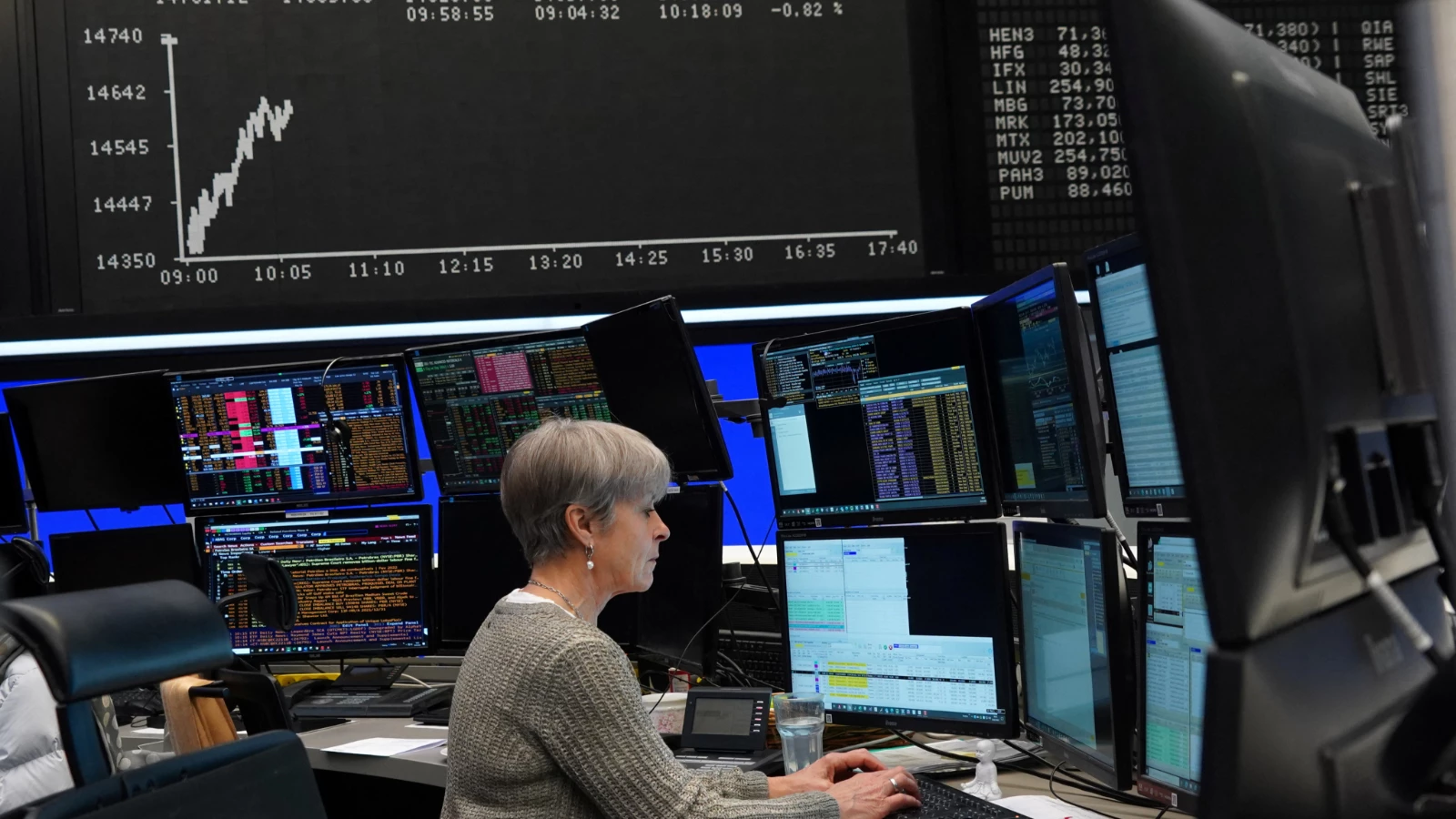
European stock markets are negative due to the lack of any significant developments that will end the conflicts in the Middle East and the effect of high oil prices.
As of 11.40 in the European markets, the Stoxx Europe 600 indicator index is traded at 593.8 points, with a 0.8 percent decrease, and the FTSE 100 index in the UK is traded at 10,229 points, with a 0.7 percent decrease.
In Germany, the DAX 40 index is traded at 23,378 points, with a 0.8 percent decrease in value, in Italy, the FTSE MIB 30 index is traded at 44,062 points, with a 0.9 percent decrease, in Spain, the IBEX 35 index is traded at 16,907 points, with a 1.4 percent decrease, and in France, the CAC 40 is traded at 7,897 points, with a 1.1 percent decrease in value.
While the ongoing conflicts in the Middle East raise concerns that Iran will further restrict its energy supply, this situation causes fluctuations in the oil market and has a negative impact on the stock markets.
The decreasing hopes that the conflicts between the USA, Israel and Iran will be resolved and Iran’s announcement that it will keep the Strait of Hormuz closed cause the risk perception to remain high in the markets.
Investors remain risk averse as markets reassess the potential duration of the conflict. Due to the continuation of the conflicts, the International Energy Agency’s (IEA) move to release the strategic oil reserve to the market could not prevent the rise in oil prices and the increase in concerns in the markets.
US President Donald Trump stated that US Federal Reserve (Fed) Chairman Jerome Powell should reduce interest rates “immediately” without waiting for the monetary policy meeting.
US Energy Secretary Chris Wright also stated that it is unlikely that oil prices will rise to $200 per barrel. On the other hand, it was reported that US Treasury Secretary Scott Bessent will meet with China’s Deputy Prime Minister for Economic Affairs, Hı Lifing, in Paris on March 15-16.
White House Spokesperson Karoline Leavitt also stated that they may introduce a temporary exemption to the law requiring the use of American ships for the transportation of goods in order to ensure uninterrupted transportation of energy products to US ports, but this step has not yet been finalized.
While the statements of the Iranian side are being followed, Iran’s new leader Mojtaba Husseini Khamenei, in his first message after taking office, stated that the Strait of Hormuz should continue to remain closed.
The Iranian Armed Forces announced yesterday that they retained control of the Strait of Hormuz and that they would not give the USA and its partners in the attack the right to pass through the Strait.
Analysts stated that geopolitical and political developments and oil prices in the region were monitored for the rest of the day, and noted that the intense data agenda, especially growth in the USA, the Personal Consumption Expenditures price index, which the Fed follows as an inflation indicator, and the number of open jobs in JOLTS, were also in the focus of investors.
